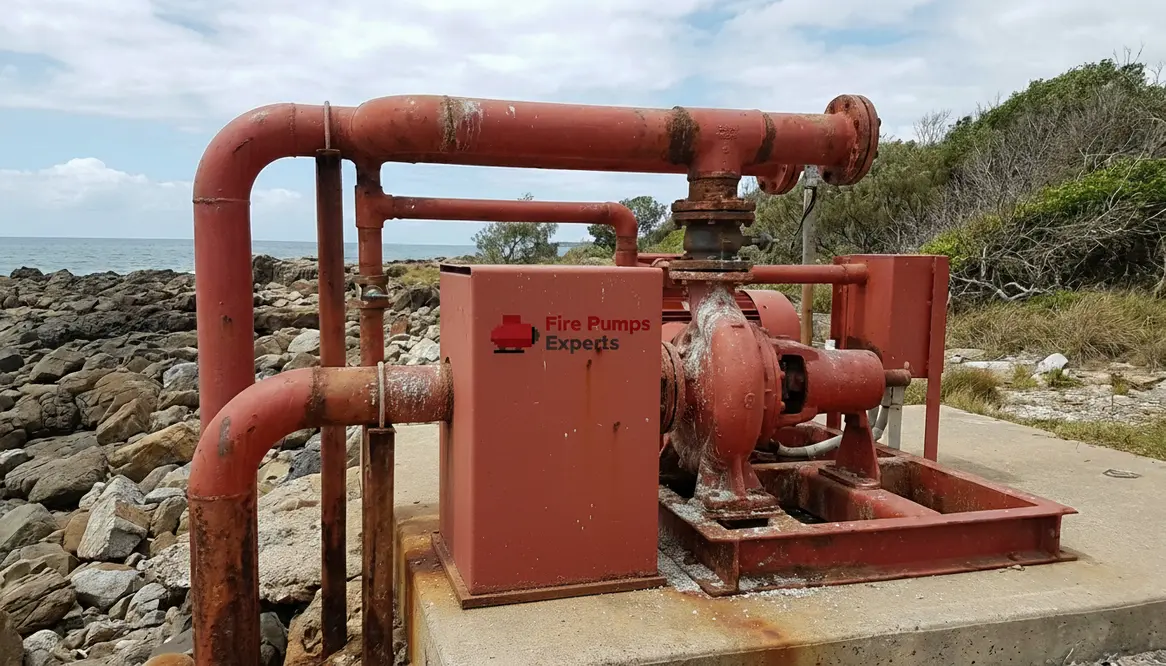
Fire Pump Coastal Corrosion Queensland Guide
I have spent enough time around coastal infrastructure in Queensland to know one thing for certain. Salt does not negotiate. It creeps, settles, and quietly eats away at anything unprepared. When I talk about fire pump coastal corrosion Queensland, I am not talking about a minor maintenance inconvenience. I am talking about a slow moving threat that can compromise critical fire protection systems in commercial and industrial facilities when it matters most.
So today, I will walk you through how I approach fire pump design in these harsh environments. And yes, I will keep it practical, a little entertaining, and just grounded enough so we do not drift into engineering poetry.
Understanding the Coastal Corrosion Problem in Queensland Facilities
First, let me paint the scene. You have salty air, high humidity, and frequent storms. Now add expensive fire protection equipment that must work perfectly under pressure. That combination can feel like casting a blockbuster where corrosion plays the villain. And trust me, it wins too often.
Corrosion in coastal Queensland does not just affect exposed surfaces. It infiltrates pump casings, fasteners, control panels, and even internal components. As a result, performance drops gradually, then suddenly. One day your system looks fine. The next day it behaves like it forgot its lines.
Because of this, I design with the assumption that corrosion is always present. Not maybe. Not sometimes. Always.
How Do I Design Fire Pumps to Resist Coastal Corrosion?
I start with materials. Always. If the materials cannot survive the environment, no clever engineering trick will save the system later.
Material selection becomes the backbone of the design:
Stainless steel components help resist salt attack, especially in critical wetted parts.
Bronze or coated cast iron can perform well when properly protected.
Specialized coatings act like sunscreen for your equipment. And unlike humans, these coatings actually last if maintained.
Next, I focus on protective systems. For example, epoxy coatings and cathodic protection significantly slow corrosion. Meanwhile, sealed enclosures protect sensitive electrical components from salt laden air.
Then comes layout. I position equipment to reduce direct exposure to sea spray and prevailing winds. It sounds simple, but placement decisions can add years to a system’s lifespan.
And finally, I design for access. Because if maintenance is difficult, it simply will not happen. Even the best system will fail if it is ignored.
Balancing Performance and Durability in Coastal Pump Systems
Here is where things get interesting. Designing for durability alone is not enough. A fire pump must still meet strict performance standards. Otherwise, you have built a very expensive paperweight.
Performance priorities
- Reliable flow under peak demand
- Stable pressure across large facilities
- Compliance with fire safety standards
- Fast system activation
Durability priorities
- Corrosion resistant materials
- Protected electrical systems
- Long service intervals
- Minimal environmental exposure
I treat these as equal partners. Because leaning too far in either direction creates problems. Overbuild for durability and you may sacrifice efficiency. Focus only on performance and corrosion will quietly dismantle your system like a villain in a slow burn thriller.
So I integrate both from the start. Not as an afterthought.
Maintenance Strategies That Actually Work in Coastal Environments
Now, let us talk about maintenance. This is where many systems fall apart, sometimes literally.
I design with a clear maintenance plan in mind. And I keep it realistic. Because a plan that looks good on paper but fails in practice is about as useful as a fire extinguisher made of chocolate.
Routine inspections must happen more frequently in coastal areas. Additionally, I recommend:
- Regular washing of external components to remove salt buildup
- Coating inspections and touch ups before damage spreads
- Testing under real load conditions to catch performance drops early
- Monitoring corrosion prone zones like joints and fasteners
Moreover, digital monitoring systems now allow facility managers to track performance trends. So instead of reacting to failures, you can act before they occur. That shift alone saves time, money, and a fair bit of stress.
Fire Pump Coastal Corrosion Queensland Compliance and Standards
Of course, none of this happens in a vacuum. In Queensland, compliance with fire safety standards is non negotiable. And coastal conditions only raise the stakes.
I align every design with relevant Australian standards while factoring in environmental exposure classifications. This ensures that systems are not only compliant on day one but remain compliant over time. When I talk to clients about fire pump coastal corrosion Queensland, this long view of compliance is usually where the lightbulb turns on, because it connects day one design decisions with year ten audit outcomes.
Furthermore, I work closely with facility operators to ensure documentation, testing schedules, and system upgrades stay on track. Because compliance is not a checkbox. It is an ongoing commitment.
And yes, regulators do notice when systems fall short. They have a way of showing up at the worst possible time.
Linking corrosion control to real world reliability
The phrase fire pump coastal corrosion Queensland sounds like something pulled from a design manual, but it really describes a chain reaction. Poor material choices lead to faster corrosion. Faster corrosion leads to sticky valves, weakened fasteners, and clogged strainers. Those failures show up exactly when you need the system to run at full capacity.
The facilities that perform best over time are the ones that treat corrosion control as part of operational reliability, not just an engineering side quest. That is why I tie inspection schedules, coating maintenance, and performance testing into one integrated plan instead of leaving them as scattered tasks on a calendar.
Practical steps for Queensland coastal facilities
If you are planning, upgrading, or rescuing a system that is already losing its battle with salt, there are a few moves that consistently pay off in the context of fire pump coastal corrosion Queensland planning:
- Start with a brutally honest condition assessment instead of assuming the pump house is “probably fine.”
- Upgrade the worst affected components first: strainers, fittings, external pipework, and exposed fasteners.
- Improve ventilation and drainage around the pump room so moisture is not given a permanent lease.
- Standardise coatings and touch up procedures so every maintenance contractor is working from the same playbook.
- Log every inspection and test result. Patterns of small problems are often more revealing than a single big failure.
These steps are not glamorous, but they are the reason some coastal systems age gracefully while others look tired and unreliable long before their time.
Conclusion
If you operate a commercial or industrial facility along the Queensland coast, ignoring corrosion is simply not an option. I design fire pump systems that stand up to salt, humidity, and time while delivering reliable performance when it counts. If you want a system that works as hard as your operation does, let us build it right from the start. Reach out today and take control of your fire protection strategy before corrosion takes control for you.