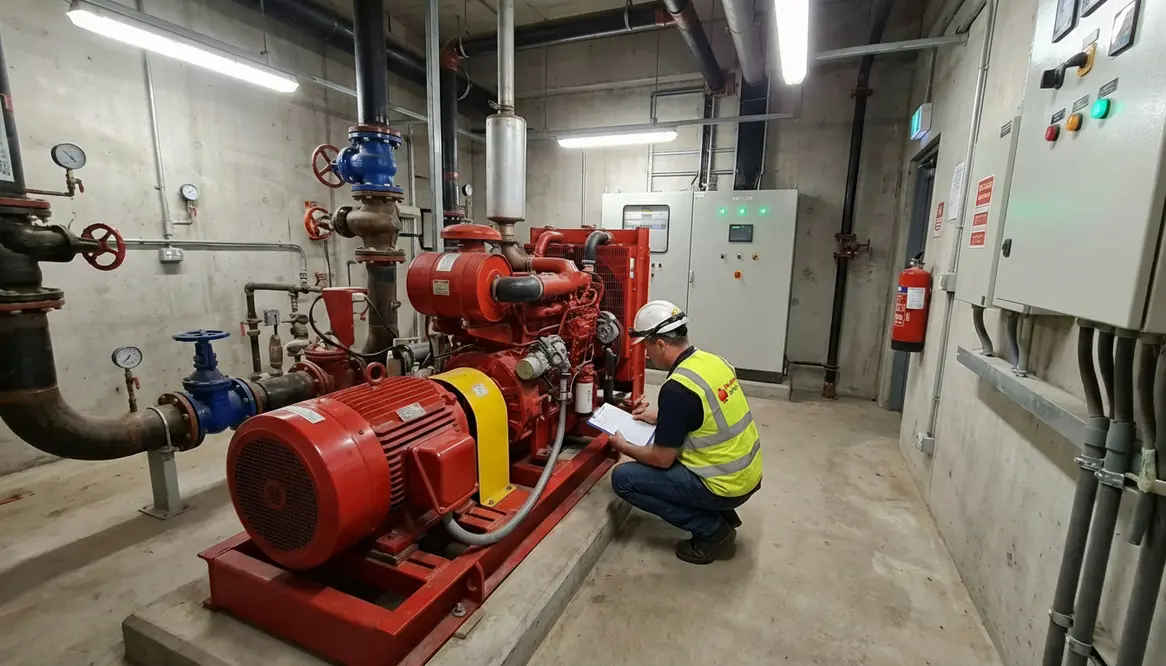
Fire Pump Compliance EU Multi Country Guide
I have spent years walking through plant rooms, listening to the low hum of machinery that most people never notice. And yet, when it comes to fire pump compliance EU multi country environments, that quiet hum carries a heavy responsibility. In the European Union, where borders blur but regulations do not always follow so neatly, keeping fire pump systems reliable across multiple jurisdictions is both an art and a discipline. It is not just about ticking boxes. It is about making sure that when the worst day arrives, the system does not hesitate. Because unlike your morning coffee machine, a fire pump does not get a second chance.
Understanding fire pump compliance EU multi country requirements
Let me answer the question I hear most often right away. What makes compliance across EU countries so tricky?
Simply put, harmonization exists, but interpretation varies. While EN standards provide a shared backbone, each country layers its own expectations, inspection habits, and enforcement styles. Therefore, I approach every facility as if it lives in two worlds. One governed by EU directives, and another shaped by local authority expectations.
For example, a system aligned with EN 12845 may pass smoothly in one country, yet raise eyebrows in another due to documentation gaps or maintenance intervals. Consequently, reliability depends not just on engineering, but on anticipating how inspectors think. And trust me, inspectors can be as unpredictable as a plot twist in a thriller movie.
How I keep fire pump systems reliable across borders
I focus on consistency first. If a system behaves the same way in Berlin, Milan, or Rotterdam, I sleep better at night. So I standardize components where possible, document everything clearly, and ensure that testing routines exceed the strictest local requirement rather than the easiest.
Moreover, I rely on three anchors:
- Performance testing that proves real world readiness, not just theoretical compliance
- Redundancy planning so one failure does not cascade into disaster
- Clear documentation that speaks the same language to every authority
That last one matters more than people expect. A well documented fire pump system can glide through inspections like a seasoned traveler with global entry clearance. Meanwhile, a poorly documented one gets pulled aside every single time.
What do inspectors actually look for in multi country facilities?
Inspectors want proof, not promises. So I make sure every system tells a clear story.
First, they check whether the pump delivers required flow and pressure under load. Then, they look at controller behavior, alarm integration, and backup power reliability. After that, they dig into maintenance logs. And yes, they will notice if someone has been cutting corners.
However, what often surprises facility managers is how much weight inspectors place on operational readiness. Can your team start the system manually? Do they understand failure modes? If not, compliance starts to wobble.
Think of it like a superhero movie. The gear is impressive, sure, but if the hero does not know how to use it, things fall apart fast. No one wants their fire safety plan to resemble an origin story gone wrong.
Balancing engineering standards with real world operations
I have seen beautifully designed systems fail because no one considered how they would actually be used. Therefore, I bridge the gap between design intent and daily operation.
Design Focus
- Meets EN standards
- Optimized hydraulic calculations
- Specified for peak performance
Operational Reality
- Maintenance team skill levels vary
- Parts availability differs by country
- Inspection frequency changes locally
By aligning these two perspectives, I create systems that not only pass inspections but also endure. Because in the end, reliability is not proven on paper. It is proven during that one moment when everything is on the line for fire pump compliance EU multi country operations.
Common mistakes I see in EU multi country fire pump compliance
Even experienced teams stumble here, and I say that with respect. This field is complex.
One common mistake is assuming that one certification satisfies all jurisdictions. It does not. Another is neglecting routine testing under real load conditions. A weekly churn test is helpful, but it does not tell the whole story.
Additionally, some facilities underestimate the importance of spare parts strategy. If a critical component fails and the replacement takes weeks to arrive across borders, compliance becomes irrelevant very quickly.
And then there is overconfidence. I have seen teams treat compliance like a one time achievement. In reality, it behaves more like a subscription service. You have to keep renewing it through disciplined maintenance and review.
If you are unsure where your facility stands, a structured review against the strictest jurisdiction you operate in is a practical starting point. From there, adapting for fire pump compliance EU multi country differences becomes far easier than scrambling reactively after a failed inspection.
Building a future ready compliance strategy
I always advise looking ahead rather than reacting. Regulations evolve, and so should your systems.
For instance, digital monitoring now allows real time performance tracking across multiple sites. Consequently, I can detect deviations early and act before they become failures. This proactive approach transforms compliance from a burden into a strategic advantage.
Furthermore, aligning stakeholders across countries creates a unified standard within your organization. That internal consistency often exceeds local requirements, which makes external compliance much smoother.
It is a bit like conducting an orchestra. Each country plays its own instrument, but when guided well, the result is harmony instead of noise. In the context of fire pump compliance EU multi country portfolios, that harmony means fewer surprises, faster approvals, and systems that are genuinely ready to perform.
If you want a practical reference point, resources such as https://firepumps.org and similar technical bodies can help you benchmark your own program and plan improvements.
FAQ
Conclusion
When I look at fire pump systems across Europe, I do not just see equipment. I see responsibility moving across borders, shaped by standards, people, and preparation. If you manage commercial or industrial facilities, now is the time to strengthen your approach. Review your systems, align your teams, and push beyond minimum compliance. Because in this field, reliability is not optional. It is the difference between control and chaos. Take action before the system has to.