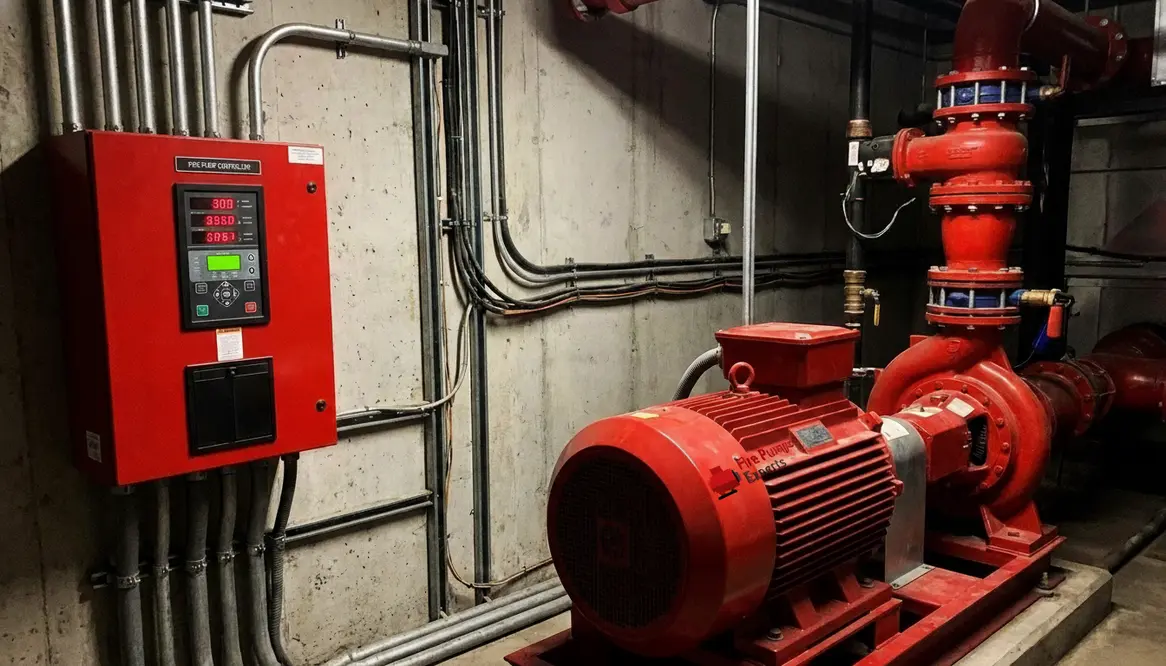
Fire Pump Controller Sequence of Operation Explained
I have seen a lot of building systems in my time, but the fire pump controller sequence of operation sits in a class of its own. It is not flashy, yet it can make the difference between a safe stop and a very bad day. In a commercial or industrial building, this controller watches the pressure, reads the signals, and tells the fire pump when to wake up and get to work. Think of it as the quiet stage manager behind the curtain. No applause, no drama, just disciplined action when the pressure drops and the fire system needs backup.
For major properties, this process must work with precision. So, let me walk you through how it operates, what each step means, and why the details matter more than most people ever realize.
How the controller decides to start the pump
The sequence begins with pressure. When the system senses a drop below the set point, the controller reacts fast. First, it receives the signal from the pressure switch or pressure transducer. Then, it checks whether the drop is real and not just a short glitch. If the low pressure stays in place, the controller starts the pump motor.
That sounds simple, but it is doing a lot in the background. It must confirm the right mode, protect the motor, and keep the system ready for full demand. In many commercial and industrial facilities, this start process happens automatically. And yes, it is one of those times when “automatic” is exactly what you want. Nobody wants to be the person manually negotiating with a fire pump during an emergency.
The controller also records the start event. As a result, facility teams can review what happened later during testing or inspection. That record matters because it helps prove the system responded as designed.
What happens during pump run and pressure recovery
Once the motor starts, the pump builds pressure in the fire protection system. From there, the controller keeps watching the system. If the pressure rises to the correct level, the pump may continue running based on the controller type and system design. In some setups, the pump stops only after manual shutdown. In others, it follows an automatic stop delay.
This part of the fire pump controller sequence of operation matters because the system must avoid short cycling. Short cycling can wear down equipment, cause nuisance alarms, and make maintenance crews sigh in the kind of silence that says, “not again.” So, the controller helps the pump run long enough to restore pressure and keep the system stable.
Also, the controller keeps monitoring for problems such as motor fault, phase loss, or power issues. If something goes wrong, it sends an alarm. That way, staff can act before a small fault grows into a bigger problem. In the world of fire protection, delayed action is never the star of the show.
Fire pump controller sequence of operation in a commercial building
In a large building, the process often involves more than one input and one output. So, here is a simple view of how it usually works.
Dual view of the sequence
Input side
Pressure drops below set point
Controller reads the signal
Power stays available or the controller flags loss of power
Alarm contacts send status to the fire alarm system
Output side
Controller starts the pump
Motor runs and pressure rises
Controller tracks run status and alarms
Pump stops based on system design or manual control
This sequence supports buildings that have high water demand, long pipe runs, or complex fire protection layouts. For example, warehouses, hospitals, towers, and manufacturing plants all depend on stable pump performance. Therefore, the controller must respond quickly and reliably every time. If the system hesitates, the whole fire protection plan feels it.
For a deeper look at service support for major facilities, I often point people to this commercial fire pump service overview. It helps connect the controller logic with real world maintenance needs. And if you want a local resource, the los angeles fire pump solutions page at https://kordfire.com/fire-pump/ is a useful place to start for commercial and industrial properties.
What I check during testing and maintenance
Testing tells the truth. Always. During inspection, I look at the pressure settings, controller mode, start response, alarm functions, and power source. I also check whether the controller matches the pump type and building need. If the settings drift, the sequence may still run, but not as it should. That is where problems begin wearing a fake mustache and pretending to be fine.
I also check the transfer of signals to the fire alarm panel, because the controller does not work alone. It has to speak clearly to the rest of the life safety system. In addition, I review records from recent runs. If the pump starts too often, starts too late, or fails to hold pressure, I treat that as a warning sign, not background noise.
Proper service keeps the controller ready for the moment it matters. For major properties, that is not just smart. It is the standard.
FAQ
Conclusion
I take the fire pump controller sequence of operation seriously because the system must perform under pressure, literally and without apology. When you understand how the controller senses, starts, runs, and protects the pump, you gain more control over safety and uptime. If you manage a commercial or industrial property, now is the time to review your system, check your settings, and schedule expert support. A reliable fire pump does not ask for attention twice. It earns trust one clean start at a time.