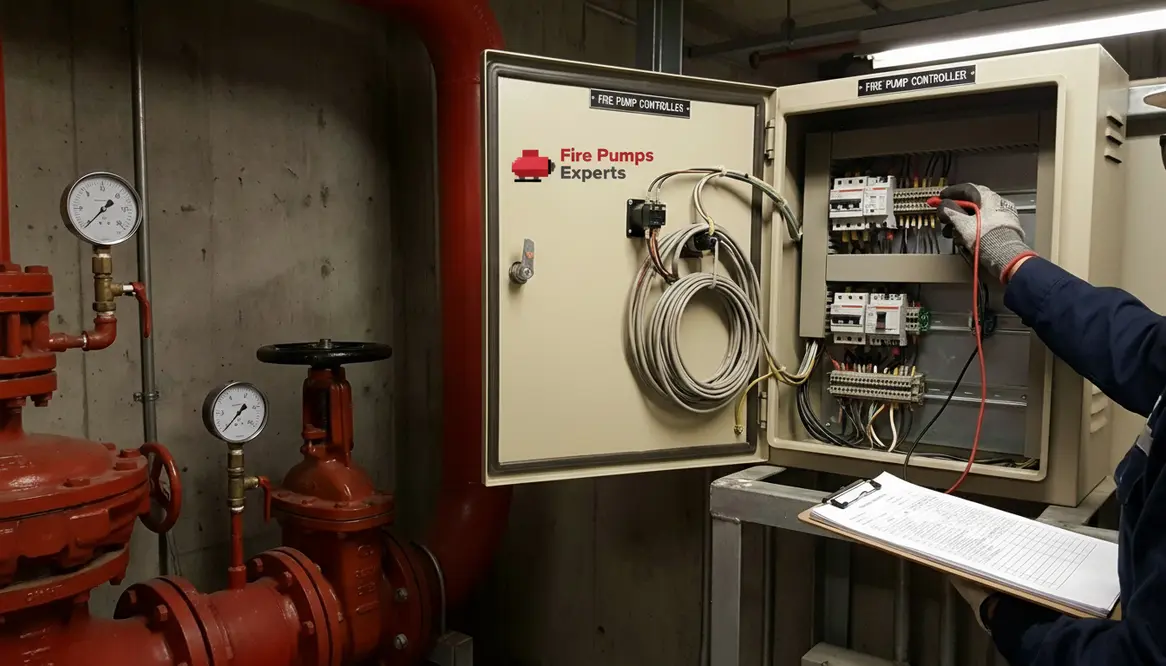
Fire Pump Controller Testing Guide for Large Facilities
I have spent enough time around pump rooms to know one thing for sure. When things go quiet, that is when you should start paying attention. Fire pump controller testing is not glamorous, but it quietly stands between a routine day and a very bad headline. In large commercial and industrial buildings, these systems do not get a second chance. So I approach this topic with a steady voice and a simple goal. Keep systems ready, keep people safe, and maybe make the process a little less dull along the way.
What does fire pump controller testing actually involve
At its core, fire pump controller testing checks whether the brain of your fire protection system can think clearly under pressure. The controller starts the pump, monitors performance, and responds to changing conditions. Therefore, testing ensures every signal, switch, and response works exactly as intended.
I usually begin with a visual inspection. I look for loose wiring, corrosion, or anything that feels out of place. After that, I simulate conditions that would trigger the pump. This confirms the controller starts automatically and maintains proper operation.
Moreover, I verify alarms, power transfers, and shutdown sequences. It is a bit like rehearsing a play where the audience is a fire. You do not want improv night.
Why consistent testing matters in large facilities
In commercial towers, manufacturing plants, and large campuses, the stakes climb quickly. A single controller failure can affect multiple floors or operations. As a result, routine testing is not just about compliance. It is about continuity.
Additionally, insurance providers and local authorities expect documented proof of system readiness. Skipping tests might save time today, but it invites larger costs later. Think of it like ignoring a check engine light. It never ends with a polite reminder.
Because of this, I always recommend aligning with standards like those outlined by industry fire pump guidelines. They provide a structured path that keeps systems reliable and inspections smooth.
How often should I test a fire pump controller
I get this question a lot, and the answer is refreshingly clear. Weekly, monthly, and annual checks each play a role. However, they do not all look the same.
Weekly tests focus on running the pump and confirming the controller responds properly. Monthly checks go deeper, reviewing signals and backup power transitions. Then annually, I conduct a full evaluation that leaves no component unchecked.
Furthermore, after any system modification or power event, I test again. Systems change, and controllers need to keep up. It is not paranoia. It is preparation.
Breaking down the testing process step by step
Inspection and setup
I start by checking the controller enclosure, ensuring it is clean and sealed. Then I confirm all indicators and gauges are functional.
Functional testing
I simulate a pressure drop to trigger automatic startup. This verifies the controller reacts without hesitation.
Power verification
I test both primary and backup power sources. A controller that only works half the time is not much of a hero.
Alarm and shutdown checks
I confirm alarms activate correctly and shutdown sequences follow proper timing.
Throughout this process, I document everything. Not because paperwork is thrilling, but because records tell a story. And in this case, it is a story of readiness.
Common mistakes I see during fire pump controller testing
Even experienced teams can overlook small details. However, those small details tend to cause big problems.
- Skipping documentation which makes compliance difficult
- Ignoring minor faults that later grow into system failures
- Infrequent testing that leaves gaps in performance history
- Untrained personnel handling complex systems without proper knowledge
On the lighter side, I have seen controllers treated like that one office printer everyone fears. Nobody touches it until it breaks. Unfortunately, fire systems do not respond well to avoidance strategies.
Choosing the right testing approach for your property
Every facility has its own rhythm. A high rise office building differs from a manufacturing plant, and both differ from a data center. Therefore, I tailor testing approaches based on system complexity and operational demands.
In many cases, I work alongside specialized service providers who understand large scale systems. This ensures testing goes beyond basic checks and addresses real world conditions.
Additionally, integrating testing into maintenance schedules helps avoid disruptions. Nobody enjoys surprise downtime, especially when it interrupts business operations or tenant comfort.
FAQ
Before going into quick answers, remember that consistent fire pump controller testing is about more than passing inspections. It is about knowing, with confidence, how your system will behave when the alarm sounds.
Keeping your system ready when it matters most
When I walk out of a pump room after a successful test, I carry a quiet confidence with me. Everything is ready. Everything works. And that is exactly how it should be. If you manage a commercial or industrial property, now is the time to take a closer look at your systems. Schedule your next inspection, partner with experienced professionals, and make sure your fire protection does not rely on luck. Because when the moment comes, preparation is everything.