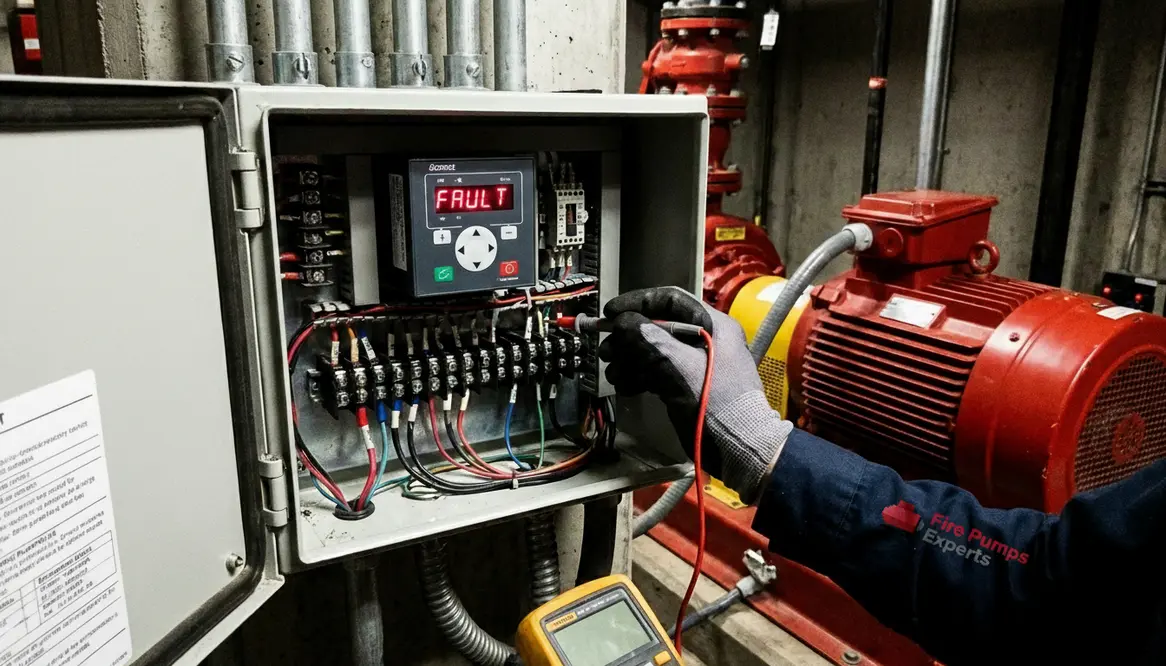
Fire Pump Controller Troubleshooting Guide
I have spent enough time around mechanical rooms to know one thing for certain. When a fire pump controller goes quiet at the wrong moment, it is never a small problem. That is exactly why fire pump controller troubleshooting matters. In large commercial and industrial buildings, these systems are not just equipment. They are the last line of defense when everything else has gone wrong. So today, I will walk you through how I approach diagnosing issues, calmly, methodically, and with just enough humor to keep us all awake.
Fire Pump Controller Troubleshooting Basics I Always Start With
Before I reach for tools or start blaming the wiring, I begin with the basics. Always. Because nine times out of ten, the issue is something simple wearing a clever disguise.
First, I check power. It sounds obvious, but I have seen seasoned professionals stare at a dead panel only to discover a tripped breaker hiding in plain sight. Next, I review the controller display for alarms or fault codes. These messages are not poetry, but they do tell a story if you read them closely.
Then, I inspect the connections. Loose terminals love to cause chaos. Meanwhile, I look for signs of heat damage, corrosion, or moisture. In large facilities, environmental factors can quietly sabotage even the best systems.
Finally, I confirm the controller is in the correct mode. You would be surprised how often a system is left in manual when it should be automatic. It is like leaving your car in neutral and wondering why it will not go anywhere.
What Causes a Fire Pump Controller to Fail in Commercial Systems?
Let me answer this plainly. Most failures are not dramatic explosions or cinematic sparks flying across the room. They are slow, predictable, and preventable.
Electrical issues sit at the top of the list. Voltage drops, phase imbalances, and worn components quietly build toward failure. Then there are mechanical triggers like pressure switch malfunctions, which can send confusing signals to the controller.
However, human factors play a role too. Poor maintenance schedules, skipped inspections, and outdated components can turn a reliable system into a liability. In large properties, where systems run continuously, even small neglect adds up quickly.
That is why I always recommend aligning with standards and resources like commercial fire pump system best practices. It keeps the guesswork out of critical decisions.
Common Causes
- Power supply instability
- Worn contactors or relays
- Faulty pressure sensors
- Improper system settings
Early Warning Signs
- Frequent false starts
- Delayed pump activation
- Unusual panel heat
- Inconsistent alarms
Step by Step Fire Pump Controller Troubleshooting in the Field
When I step into a facility, I follow a structured path. Not because I like rules, but because skipping steps leads to missed problems.
I begin with a visual inspection. If something looks wrong, it usually is. After that, I verify incoming voltage and ensure it matches the controller requirements. Then I test the control circuit, including start signals and pressure switches.
Next, I simulate conditions. I trigger the system manually to observe how it responds. This is where the controller reveals its personality. Some behave like disciplined soldiers. Others act like they just had too much coffee.
If the pump fails to start, I isolate whether the issue is electrical or mechanical. This distinction saves time and prevents unnecessary repairs. Finally, I document everything. Because in large facilities, the next technician will thank you, even if they never say it out loud.
Smart Diagnostics Using Modern Controller Features
Modern fire pump controllers are not shy about sharing information. In fact, they are quite talkative if you know where to look.
Digital displays now provide detailed logs, event histories, and diagnostic codes. I use these tools to trace patterns rather than just react to a single failure. For example, repeated voltage faults may point to a larger electrical infrastructure issue, not just the controller itself.
Additionally, remote monitoring has changed the game. Facility managers can now detect issues before they become emergencies. It is a bit like having a security camera for your pump system, except instead of catching burglars, you catch electrical gremlins.
Still, technology is only as good as the person using it. So I always combine digital diagnostics with hands on inspection. That balance keeps surprises to a minimum.
Preventing Problems Before They Start
I will say this clearly. The best troubleshooting session is the one you never need.
Preventive maintenance is where reliability is built. Regular testing, cleaning, and component checks keep systems running smoothly. In commercial and industrial buildings, where downtime is not an option, this approach is essential.
I recommend scheduled inspections that include controller calibration, battery checks, and verification of automatic start functions. Moreover, training staff to recognize early warning signs can prevent small issues from becoming major failures.
Think of it like going to the doctor. You do not wait until something breaks completely. You check in regularly to stay ahead of trouble.
FAQ Quick Answers for Fire Pump Controller Issues
Here are rapid-fire insights pulled straight from real-world fire pump controller troubleshooting in busy commercial and industrial facilities.
Conclusion: Keeping Your System Ready When It Matters Most
I have seen what happens when systems fail and when they perform exactly as designed. The difference often comes down to attention, consistency, and smart fire pump controller troubleshooting. If you manage a commercial or industrial facility, now is the time to tighten your maintenance approach, review your diagnostics, and partner with experts who understand the stakes. Because when the moment comes, your system should not hesitate, and neither should you.