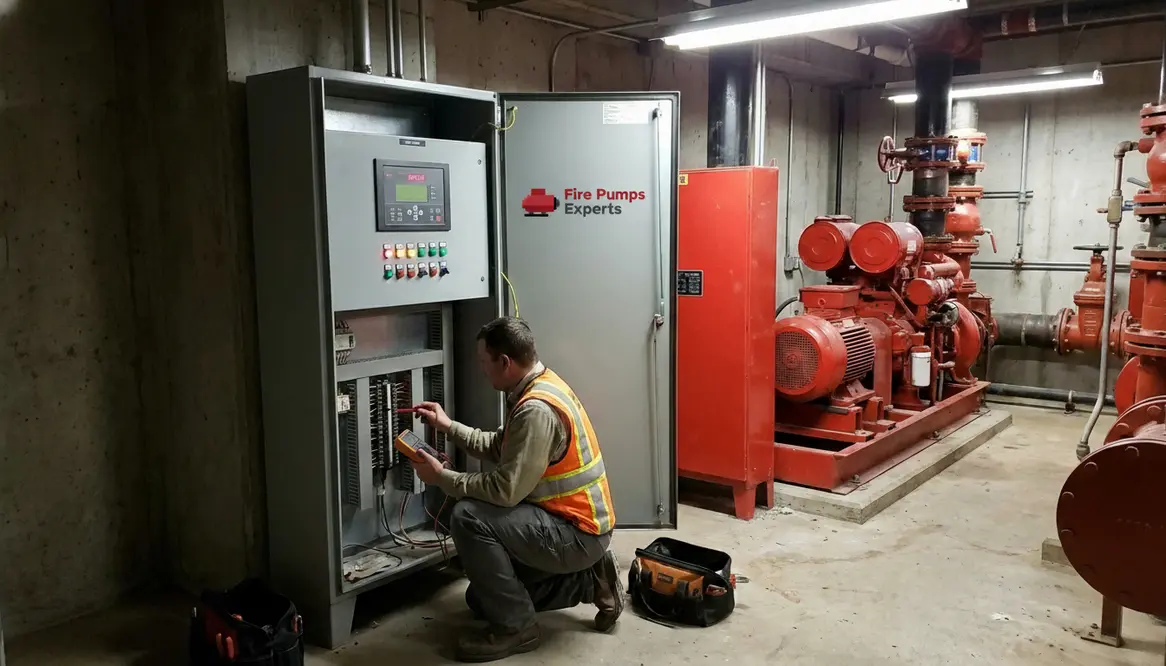
Fire Pump Controller Troubleshooting Guide
I have spent enough time around pump rooms to know this simple truth: when a fire pump controller acts up, it rarely sends a polite memo first. Instead, it blinks, hums, or worse, goes silent right when you need it most. That is where fire pump controller troubleshooting comes in. In large commercial and industrial buildings, these systems are the quiet guardians. When they falter, I step in with a calm approach, a sharp eye, and just enough humor to keep the tension from rising faster than the pressure gauge.
Understanding the Signals Before the Noise Gets Louder
First, I listen. Not just to the equipment, but to the story it tells. A controller rarely fails without leaving clues. Lights flicker. Alarms chirp. Panels display codes that look like they belong in a sci fi movie. However, each signal points somewhere specific.
So I start with the basics. I check power supply consistency, because even the most advanced controller cannot function without stable input. Then I review recent activity logs. Modern controllers store data, and that history often reveals patterns. If a system cycles too often or fails to start, it is usually trying to tell me something long before a full failure occurs.
Meanwhile, I remind clients that ignoring early warnings is like ignoring a check engine light. It will not fix itself, no matter how optimistic you feel.
Fire Pump Controller Troubleshooting: Where I Always Begin
I always begin with three core areas: power, communication, and mechanical response. These are the foundation of any effective fire pump controller troubleshooting process.
Power Checks
- Verify incoming voltage levels
- Inspect circuit breakers and fuses
- Confirm backup power readiness
System Response
- Test automatic start sequences
- Check pressure sensor accuracy
- Inspect motor engagement behavior
Once those areas are clear, I move into control logic. If the controller receives correct data but reacts incorrectly, the issue often lives in programming or internal components. At that point, guesswork has no place. Precision matters, especially when fire pump controller troubleshooting needs to uncover problems before they show up during an emergency.
Why Is My Fire Pump Controller Not Starting?
I get this question often, and the answer is usually simpler than expected. Still, simple does not mean obvious.
First, I check for a loss of pressure signal. If the system does not detect a drop, it will not start. Next, I inspect wiring connections. Loose or corroded terminals can quietly break communication. Then, I evaluate the controller mode. Yes, it happens more than anyone wants to admit. A unit left in manual mode will sit there like it is on vacation.
Additionally, I look at interlocks. Many commercial systems include safety conditions that prevent startup. These are essential, but they can also create confusion if not properly understood.
And occasionally, the issue is as dramatic as a failed motor starter. When that happens, no amount of button pressing will save the day. Structured fire pump controller troubleshooting at this point means confirming the starter’s health, not just cycling power and hoping for the best.
Common Faults I See in Large Commercial Systems
Working across major facilities, I have noticed patterns. Problems tend to repeat, even in different buildings. Therefore, recognizing them early saves time and money.
Frequent issues include:
- Voltage fluctuations damaging internal components
- Sensor calibration drifting over time
- Aging relays failing under load
- Poor maintenance leading to dust and heat buildup
However, one issue stands above the rest: neglect. These systems are often out of sight, and unfortunately, out of mind. Until they are not.
That is why I often recommend working with specialists like those found through commercial fire pump system experts, who understand the demands of large scale properties. Because when the stakes are high, shortcuts are simply not part of the conversation. Consistent inspections, testing, and methodical fire pump controller troubleshooting separate reliable protection from wishful thinking.
Fine Tuning Performance After Fixing the Problem
Fixing a fault is only half the job. After that, I fine tune the system. I recalibrate sensors, verify timing sequences, and test under simulated conditions. This ensures the controller performs not just adequately, but reliably.
Moreover, I take time to review system settings with facility managers. A controller configured years ago may not match current building demands. Adjustments can improve efficiency and reduce wear.
Think of it like tuning an instrument. Sure, it might play, but when it is properly tuned, it performs beautifully. And unlike a guitar, this performance protects lives and property. Careful fire pump controller troubleshooting followed by deliberate fine tuning turns a barely adequate system into one that can be trusted when the sprinklers and standpipes absolutely must come alive.
FAQ: Quick Answers You Can Use Right Away
Keep the System Ready Before It Is Needed
I have seen what happens when preparation meets opportunity, and when it does not. Fire protection systems do not ask for attention often, but when they do, the response must be immediate and precise. So take action now. Schedule inspections, address small issues early, and invest in expert support for your facility. Because when the moment comes, your system should not hesitate. And neither should you.