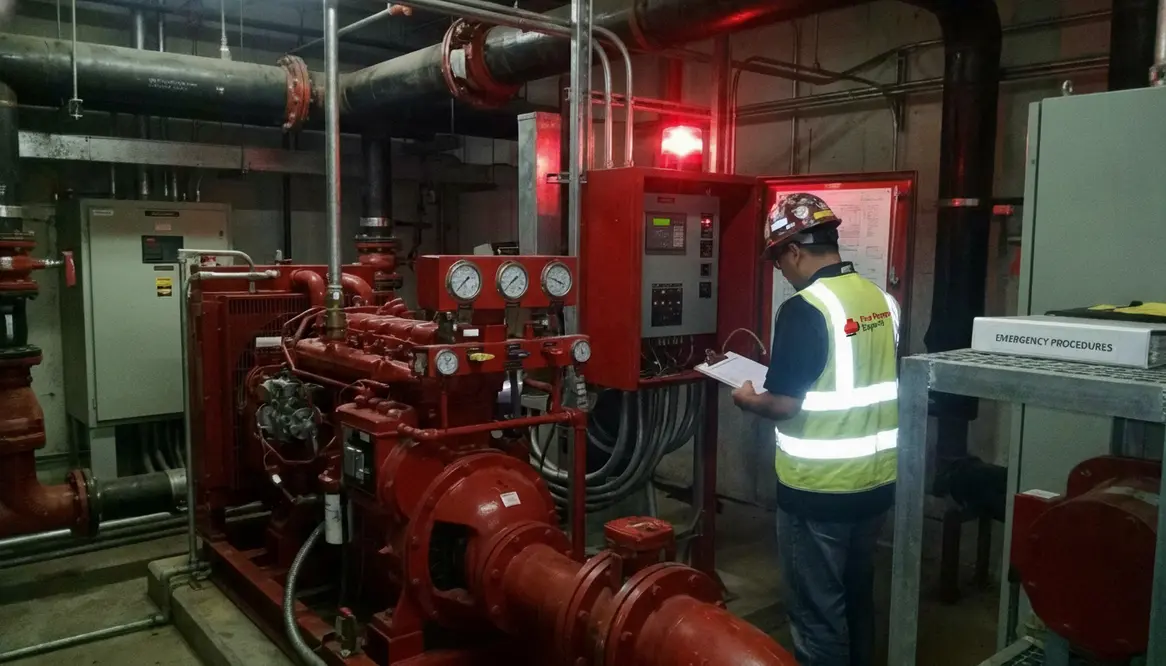
Fire Pump Emergency Procedure Guide for Facilities
A practical, fast‑acting fire pump emergency procedure that keeps people safe and business running when equipment decides to throw a tantrum.
Fire Pump Emergency Procedures Guide for Commercial and Industrial Facilities
When a fire pump fails, the clock suddenly sounds louder than a stadium drumline. That is why I treat the fire pump emergency procedure as a must know plan for every commercial and industrial property I work with. In a major building, a pump issue can change the whole response in minutes. So, I stay calm, move fast, and follow a clear path that protects people, property, and business uptime. A good plan does not just sit in a binder collecting dust like last season’s TV finale. It gets used, reviewed, and trained until it feels natural.
Recognize the Fire Pump Problem Fast
First, I look for the signs that the pump is not doing its job. If the pump does not start, runs rough, loses pressure, or makes a strange noise, I treat it as an urgent event. Likewise, if alarms show trouble at the controller, power source, or jockey pump, I do not wait around for a miracle. The system needs quick attention because a delay can put the whole fire protection setup at risk.
I also check whether the issue is electrical, mechanical, or water related. For example, a power loss may stop the pump from starting, while a closed suction valve can choke flow. In large facilities, one small error can act like a domino line in a movie scene, only less fun and much more expensive. Therefore, I focus on fast facts first: what failed, when it failed, and whether the system still has backup support.
Fire Pump Emergency Procedure Step by Step
When I activate the fire pump emergency procedure, I follow a clear order so no one makes a guess in the middle of a serious event.
Step 1: Alert the right people
I notify the facility lead, fire protection staff, and any onsite security or engineering team. If the building has an alarm monitoring service, I confirm that the event has been reported.
Step 2: Check the pump status
I look at the controller, power supply, valves, gauges, and water source. I want to know if the pump failed to start or if it started and lost output.
Step 3: Secure the area
If the situation creates a safety risk, I keep people away from the equipment room. A crowded pump room helps nobody.
Step 4: Use backup protection
If the property has a second pump, a backup power source, or a manual response plan, I put it into action right away.
Step 5: Call qualified service support
I contact a fire pump professional who works with commercial and industrial systems. This is not the time for a random guess and a wrench. That route belongs in a bad sitcom, not a plant room.
How I Handle Fire Pump Shutdown and Backup Checks
Sometimes the problem calls for a controlled shutdown. If I must isolate the pump, I do it carefully and only when the situation allows it. I never shut down a system without knowing what protection remains in place. Next, I check the jockey pump, power transfer gear, fuel supply for diesel units, and water level conditions. As a result, I get a better picture of what still works and what needs repair.
Here is how I keep the review tight:
What I Check
- Controller alarms
- Valves and pressure
- Power source
- Fuel or water supply
Why It Matters
- Shows electrical or start trouble
- Confirms the pump can move water
- Confirms the pump has energy to run
- Keeps the pump from dying mid response
That quick review gives me a real snapshot. Then I can decide whether the system needs immediate repair, full testing, or a larger inspection. In a busy facility, clarity saves time, and time saves headaches.
Training and Maintenance for Large Buildings
Make the plan second nature
A strong plan only works when people know it. So, I make sure the team trains on the emergency steps before a real alarm hits. Training should cover alarms, shutdown rules, backup systems, and who makes each call. In addition, I like to test response timing so the team knows how fast they can act under pressure. That matters in warehouses, high rise buildings, manufacturing sites, and other major properties where a delay can spread fast.
Keep the system ahead of the emergency
Regular maintenance matters just as much. I inspect the pump, test the controller, confirm valve positions, and review service logs. I also keep an eye on wear, leaks, and weak pressure signs. The best fire pump emergency response starts long before the emergency. That may sound obvious, but so does “don’t lose your keys,” and somehow we all still need the reminder.
When I walk through a site, I like to see the fire pump emergency procedure posted in the fire pump room, included in the digital safety manual, and built into onboarding training. If someone new joins the facility team, they should learn how to react to pump alarms almost as quickly as they learn where the coffee machine is.
Putting the Fire Pump Emergency Procedure to Work
For commercial and industrial facilities, the fire pump emergency procedure is more than a checklist. It affects insurance expectations, code compliance, and how confidently you can keep operations running during system issues. A missing step could mean evacuating a building when a targeted, well‑planned response would have kept things under control.
I like to run tabletop exercises with facility teams where we walk through scenarios: pump fails during a storm, controller alarm in the middle of the night, diesel unit low on fuel during a plant shutdown. When people talk through the same fire pump emergency procedure they have on paper, the weak spots show up fast, and the fixes are usually simple.
For deeper technical standards, I point teams to resources like https://firepumps.org, then bring those ideas back into a site‑specific plan that matches the actual equipment on the floor.
FAQ Fire Pump Emergency Procedures
Conclusion
If I want a building to stay protected, I treat fire pump readiness like a core business task, not an afterthought. I review the plan, train the team, and check the system before trouble shows up. If your commercial or industrial property needs a stronger response plan, now is the time to act. Build the procedure, test it, and keep it current so your people and property stay ready when it counts most.