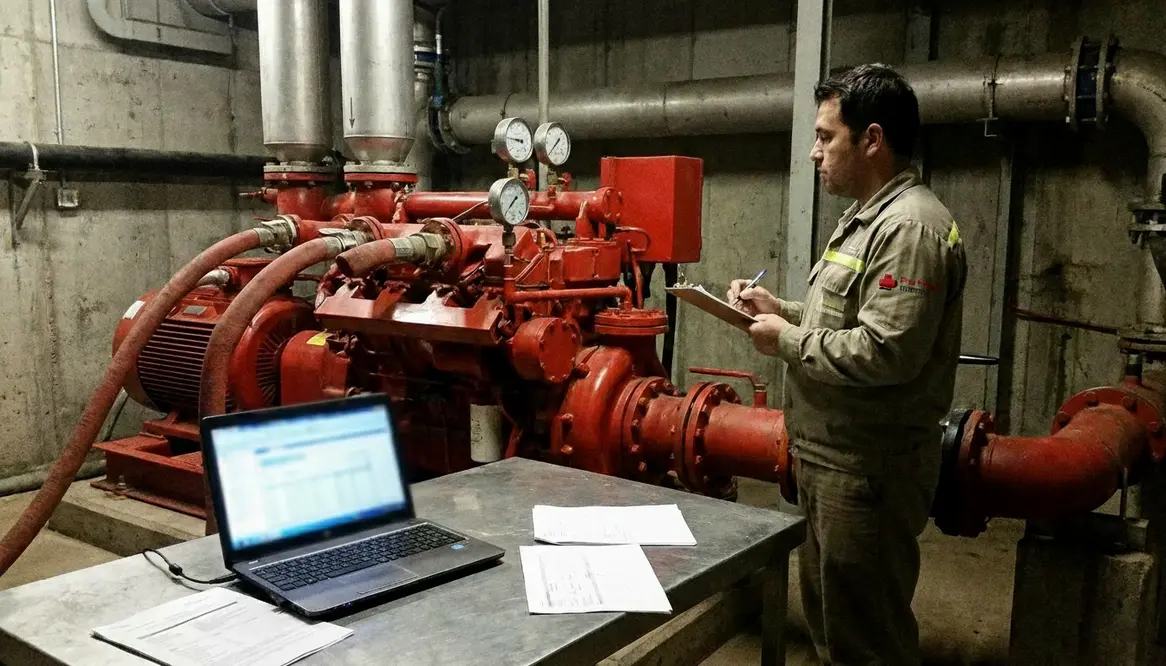
Fire Pump Flow Test Report: What It Must Include
I have read more than my fair share of reports over the years, but few carry the quiet authority of a well built fire pump flow test report. It is not just paperwork. It is proof that when pressure rises and seconds matter, your system will respond like a seasoned professional instead of a confused extra in a disaster movie. In commercial and industrial facilities, that kind of certainty is not optional. It is essential. So let me walk you through what truly belongs in one of these reports, with just enough personality to keep us both awake.
Why this report matters more than most people admit
At first glance, a flow test report might seem like another box to check. However, it tells a story about performance under real conditions. It reveals whether your fire pump can deliver the required water flow and pressure when the stakes are high.
Moreover, inspectors, insurers, and compliance officers rely on it heavily. A vague or incomplete report does not just raise eyebrows. It raises liability. And nobody wants to explain to a boardroom why their documentation reads like a mystery novel with the last chapter missing.
In large facilities, consistency matters. That is why many professionals lean on trusted resources like certified fire pump testing services for commercial systems to ensure reports meet both technical and regulatory expectations.
Core components every fire pump flow test report must include
Now we get into the good stuff. A proper report is not a loose collection of numbers. It is structured, deliberate, and complete.
System identification
System identification should come first. This includes pump type, manufacturer, model, and location within the facility. Think of it as the opening credits. We need to know who is on stage.
Test date and personnel
Test date and personnel follow closely. Who conducted the test and when it happened are not trivial details. They establish accountability and traceability.
Flow and pressure readings
Flow and pressure readings form the heart of the report. These readings are typically captured at churn, rated, and peak flow conditions. Each point shows how the pump behaves under increasing demand.
Water source details
Water source details also matter. Whether the system pulls from a tank, city supply, or reservoir affects performance and interpretation.
Controller and driver performance
Controller and driver performance should not be overlooked. Electric motors and diesel engines each have their own quirks. If something hesitates or underperforms, it needs to be documented clearly.
Observations and deficiencies
Finally, observations and deficiencies bring everything together. This is where experience speaks. A seasoned tester can spot early warning signs long before they become expensive problems. When done well, the final fire pump flow test report becomes a working roadmap for reliability instead of a forgotten file in a cabinet.
What data actually tells you about system health
Numbers alone do not mean much without context. However, when interpreted correctly, they can reveal a great deal.
Strong indicators
- Stable pressure across flow points
- Smooth pump startup
- Consistent engine or motor performance
- No unusual vibration or noise
Warning signs
- Pressure drops below rated expectations
- Delayed response during startup
- Fluctuating readings
- Visible leaks or overheating
On the surface, everything might look fine. Yet subtle inconsistencies often hint at wear, obstruction, or calibration issues. In my experience, those small clues are like plot twists. Ignore them, and the ending rarely goes well. A thoughtful fire pump flow test report turns those plot twists into early corrections instead of unpleasant surprises.
How I ensure accuracy and reliability in every test
I approach every test with the same mindset. Trust the process, but verify everything. First, I make sure all gauges and meters are calibrated. Even the best technician cannot overcome bad tools.
Next, I simulate real demand conditions. A test that does not reflect actual system stress is about as useful as a fire drill where everyone stays seated. It looks good on paper but solves nothing.
Then, I document everything in real time. Memory is a wonderful thing, but it is not a reliable data storage system. Writing it down as it happens keeps the report precise and defensible.
Finally, I review the results with a critical eye. If something feels off, it probably is. And that instinct, built over time, often separates a solid pump performance test record from one that truly protects a facility. When that instinct is paired with a structured fire pump flow test report, the outcome is a system you can trust when alarms start ringing.
Can a poorly written report put your facility at risk?
Short answer. Yes.
A weak report creates gaps in compliance and understanding. It can mask performance issues or leave decision makers guessing. In large scale buildings, that uncertainty can translate into delayed response, equipment failure, or worse.
Additionally, insurers and authorities expect clarity. If your documentation lacks detail or accuracy, it may not hold up under scrutiny. That is not a conversation anyone enjoys having, especially when it starts with “We thought it was fine.” A thorough, clearly written fire pump flow test report is one of the simplest ways to keep that conversation off the calendar.
Common mistakes I see and how to avoid them
Some patterns show up again and again. Fortunately, they are avoidable.
One common issue is incomplete data. Missing flow points or skipped observations weaken the entire report. Another is over reliance on automated readings without verification. Technology helps, but it should never replace human judgment.
Also, vague notes like “operating normally” do not add value. Specific details always win. Describe what you see, hear, and measure.
And then there is the classic copy and paste job. Reusing old templates without updating details is like serving leftovers at a formal dinner. People notice. The best fire pump flow test report is tailored to the system and the day it was tested, not cloned from last year’s paperwork.
FAQ about fire pump flow testing reports
Conclusion
A well crafted report is more than documentation. It is confidence, clarity, and control when it matters most. If your facility depends on reliable fire protection, do not settle for surface level testing. Work with professionals who understand the stakes and deliver detailed, accurate results every time. When the pressure is on, you will be glad your system and your paperwork are both ready to perform.