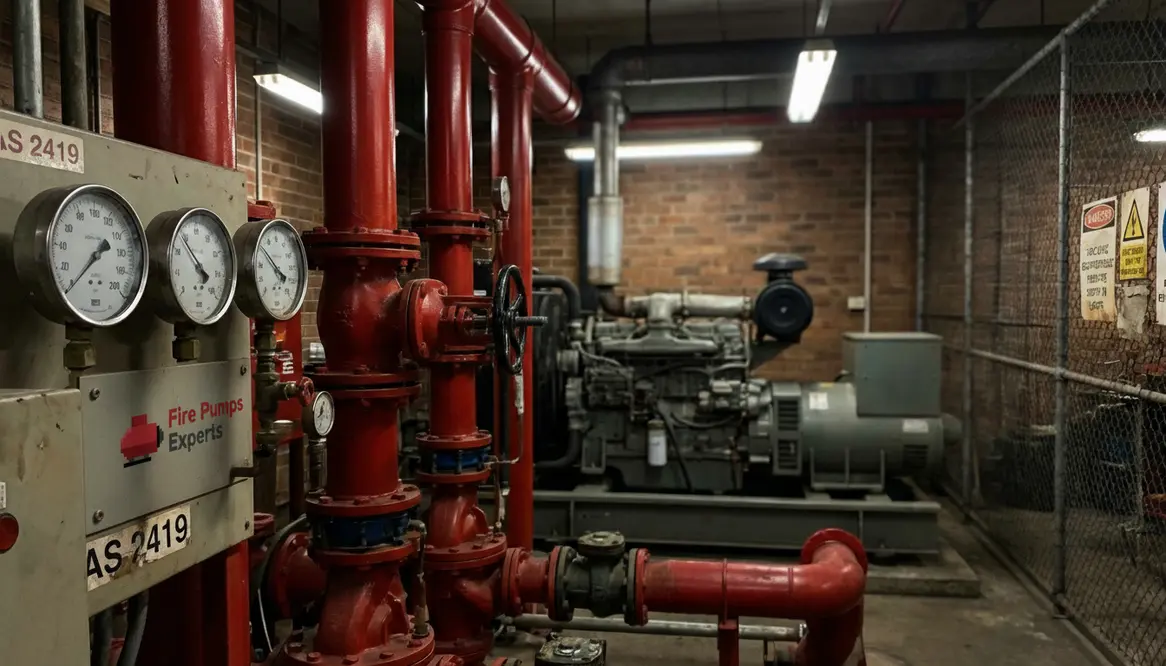
Fire Pump Generator Integration Australia Guide
Fire Pump Design for Facilities with Backup Generators in Australia
I have seen plenty of systems that look great on paper but fall apart the moment the lights go out. And in Australia, where conditions can shift from calm to catastrophic in a heartbeat, that is not a gamble worth taking. When I talk about fire pump generator integration Australia, I am talking about designing systems that keep water moving when everything else stops. Because in a real emergency, the fire does not care if your main power supply decided to take a day off.
So let us walk through how I approach this. Slowly, clearly, and with just enough wit to keep you awake. Think less dry textbook, more seasoned operator explaining things over a strong coffee.
How do I design fire pump systems with backup power in Australia?
I start with one simple truth. Power failure is not a possibility. It is an expectation. Therefore, I design as if the generator will carry the entire load when it matters most.
First, I align the fire pump selection with the generator capacity. That sounds obvious, yet I have seen mismatches that would make even a Hollywood disaster movie blush. The pump motor must start and run without overloading the generator. Otherwise, you end up with a very expensive water feature that does nothing useful.
Then, I consider starting methods. Direct online starting draws a high current spike. In some cases, I switch to soft starters or variable speed drives, but only when compliant with Australian standards and fire codes. Reliability always comes before cleverness.
Finally, I ensure the generator itself is rated for fire service duty. Not all generators are equal. Some are built for comfort loads. Others are built for survival. I always choose the latter.
Key components that make or break system reliability
Every strong system stands on a few critical pieces working in harmony. Miss one, and the whole thing wobbles like a poorly stacked Jenga tower.
Essential elements I never compromise on
- Dedicated fire pump controller that prioritises fire demand above all else
- Automatic transfer switch that shifts power quickly and smoothly
- Fuel supply resilience designed for extended operation, not just a short outage
- Proper cable routing and protection to survive heat and impact
- Compliance with AS 2941 and related standards
Moreover, I always test these components together, not in isolation. Because in real life, they do not perform solo acts. They perform as a band, and everyone needs to hit the right note.
Common mistakes I see in generator backed fire pump systems
Let me be blunt. Some designs look like they were assembled during a long lunch break. And unfortunately, fire does not forgive shortcuts.
One major mistake is undersizing the generator. It might run lighting and air conditioning just fine, but once the fire pump kicks in, everything collapses. It is like inviting a heavyweight boxer to spar with a featherweight. The outcome is predictable.
Another issue is poor coordination between electrical and hydraulic design teams. If they are not speaking the same language, the system suffers. I have seen setups where the pump curve and generator output were completely misaligned.
Additionally, neglecting routine testing is a silent killer. A system can sit idle for years, only to fail in seconds when needed. Regular load testing is not optional. It is essential.
Fire pump generator integration Australia in large facilities
When I work on large commercial or industrial sites, complexity increases fast. Hospitals, data centres, and high rise buildings demand a level of coordination that feels closer to conducting an orchestra than installing equipment.
What I focus on
- Load prioritisation strategies
- Redundant power pathways
- Separation of essential and non essential systems
- Scalable generator capacity
What I avoid
- Shared circuits with non critical loads
- Overcomplicated control logic
- Single points of failure
- Assumptions about ideal conditions
Furthermore, I design with future expansion in mind. Facilities grow. Demands increase. And no one wants to rip out a perfectly good system because it cannot keep up.
Compliance and standards I never ignore
Australia has clear guidelines for fire protection systems, and I follow them without shortcuts. AS 2419 for fire hydrants and AS 2941 for pumps guide much of the design process.
However, compliance is not just about ticking boxes. It is about understanding why those standards exist. They are written in response to real failures, real fires, and real consequences.
So I take them seriously. Because the moment you treat compliance as paperwork instead of protection, you are already behind.
How I future proof fire pump and generator systems
I like systems that age gracefully. Not the kind that panic the moment demand increases.
To achieve that, I build in flexibility. I allow for generator upgrades. I select pumps that can handle slight increases in flow demand. And I ensure control systems can adapt without a full redesign.
At the same time, I incorporate monitoring technology. Real time data helps operators spot issues before they become emergencies. It is a bit like having a smoke alarm for your infrastructure, minus the 3 am battery chirp that drives everyone slightly mad.
Understanding fire pump generator integration Australia
In practical terms, fire pump generator integration Australia is about more than just hooking a pump to a standby generator and hoping for the best. It means carefully mapping out starting currents, voltage drops, fault levels, and protection settings, then checking them against real site conditions instead of pretty theoretical assumptions. It means accepting that bushfires, storms, and grid failures will eventually show up and that your system has to perform under stress, not just during commissioning when everyone is watching.
On some projects I have reviewed, the paperwork said everything was fine, yet the first real generator test told a very different story. Breakers tripped, pumps stalled, and the so called emergency system quietly bowed out. That is why a robust approach to fire pump generator integration Australia always includes witness testing under realistic loads, clear documentation, and training for the people who will actually operate the plant long after the design team has left the site.
If you want to go deeper into the technical rabbit hole on pump performance and power supply behaviour, resources like https://firepumps.org can be useful, especially when lining up international practices with local Australian requirements. Just remember that no matter how good the reference material is, nothing replaces a well coordinated design team that actually talks to each other.
FAQ
Final thoughts and next steps
If you are serious about protecting your facility, then your fire pump system cannot be an afterthought. I design every system with resilience, compliance, and real world performance in mind. And when it comes to integrating generators, I make sure everything works when it matters most. If you are planning a project or upgrading an existing system, now is the time to get it right. Reach out and let us build something that holds strong under pressure.