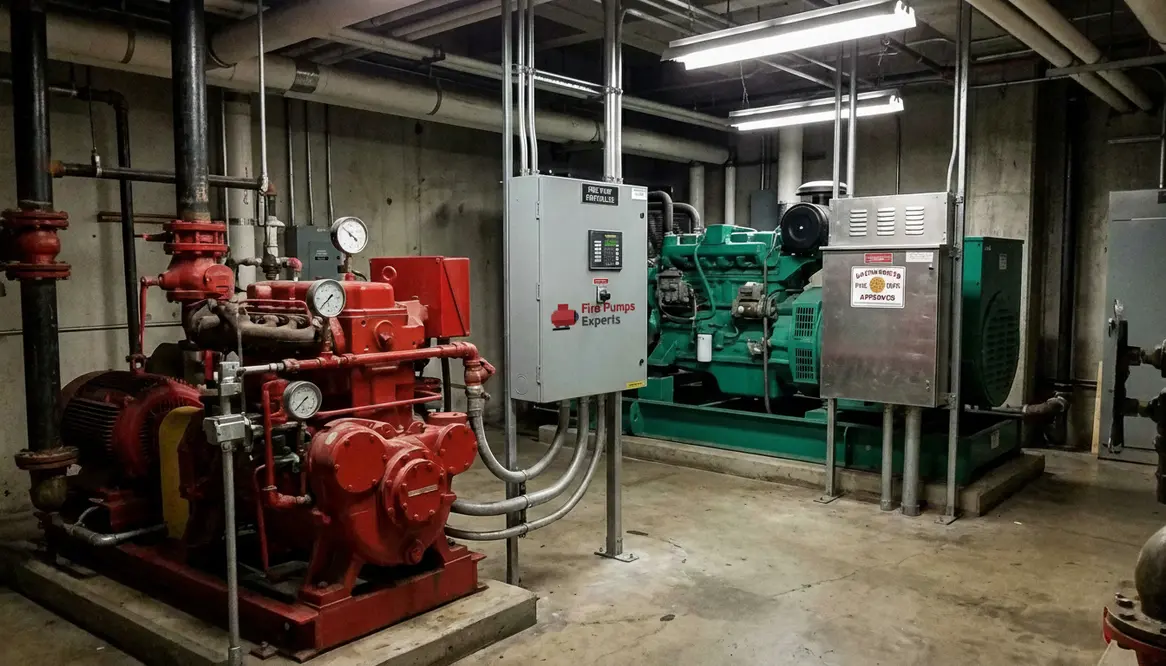
Fire Pump Generator Integration Sacramento Guide
I have spent years around mechanical rooms that hum like a low bass note, and I can tell you this: when the lights go out, your fire pump should not. That is where fire pump generator integration Sacramento becomes more than a technical phrase. It becomes peace of mind. In a region where power disruptions and strict codes intersect, designing a system that keeps water moving during an emergency is not optional. It is essential. And yes, like any good backup plan in a heist movie, it only matters if it actually works when everything else fails.
How do I design a fire pump system with generator backup in Sacramento?
I start with the codes because Sacramento does not play guessing games. California adopts NFPA 20, NFPA 25, and NEC requirements with local amendments. So first, I size the fire pump based on hazard classification, building height, and demand curves. Then, I match the generator capacity to handle locked rotor current and continuous pump load. That startup surge can hit like a Marvel villain, so I plan for it upfront.
Next, I ensure the transfer switch is listed for fire pump service. Not all switches are created equal. A standard unit might fold under pressure, and this is not the time for drama. I also route wiring in a way that protects it from fire exposure, because a backup system that melts is just decorative.
Finally, I coordinate with local inspectors early. It saves time, money, and a few headaches that even coffee cannot fix.
Code-driven design as the foundation
The backbone of every fire pump generator integration Sacramento project I work on is clear alignment with NFPA and California building standards. When those requirements shape the early calculations, the rest of the design falls into place much more smoothly.
Power reliability and why generator pairing matters
Power in California can be unpredictable. Between grid strain and wildfire prevention shutoffs, facilities need resilience. That is why I treat generator integration like a handshake between two critical systems. If they do not agree, nothing flows.
I calculate load priority so the fire pump always wins. Life safety equipment takes precedence, period. Meanwhile, I also verify fuel supply duration. A generator that runs for twenty minutes is not heroic. It is a cameo.
Additionally, I factor in voltage drop, controller compatibility, and automatic startup timing. Seconds matter. When alarms trigger, the system must respond instantly, not after a thoughtful pause like a dramatic actor.
Prioritizing life safety loads
When multiple systems share the same emergency power source, I always structure the sequence so the fire pump receives guaranteed capacity and clean power before anything that is not life safety related joins the party.
Key components I never overlook
Every strong design depends on details that quietly do their job. I focus on components that ensure reliability under stress.
Core Mechanical Elements
- Fire pump sized to building demand
- Jockey pump to maintain pressure stability
- Backflow preventer with proper clearance
- Dedicated suction supply with adequate pressure
Electrical and Control Essentials
- Listed fire pump controller
- Generator with sufficient kW and starting capacity
- Automatic transfer switch rated for fire systems
- Protected wiring pathways
Each piece plays a role. Remove one, and the system starts to feel like a band missing its drummer. Technically functional, but not something you want during a crisis.
Fire pump generator integration Sacramento for large facilities
When I design for industrial sites or high rise buildings, complexity rises fast. These facilities demand higher flow rates, longer run times, and tighter coordination between systems. So I approach fire pump generator integration Sacramento with layered redundancy.
For example, I often specify multiple generators or paralleling systems. That way, if one unit fails, another picks up the load. I also integrate monitoring systems that provide real time diagnostics. Think of it as giving your fire protection system a voice that says, I am good, or I need help.
Moreover, I coordinate with building management systems. This allows operators to track performance without guessing. Because in a commercial setting, guessing is expensive.
Layered redundancy for mission-critical protection
In these larger projects, fire pump generator integration Sacramento strategies usually include dual power feeds where possible, robust fuel storage planning, and clear visibility for operators through building dashboards and remote alarms.
Common design mistakes I see too often
I have walked into facilities where the design looked fine on paper but failed in practice. And yes, sometimes it feels like watching a sequel that should never have been made.
One mistake is undersizing the generator. Another is ignoring starting current requirements. Both lead to failure at the worst time. I also see poor placement of equipment, which makes maintenance difficult. If your technician needs to perform acrobatics just to inspect a valve, something went wrong.
Additionally, some designs skip proper testing protocols. Weekly churn tests and annual flow tests are not suggestions. They are essential. A system that is not tested is a system you cannot trust.
Avoidable pitfalls in emergency power planning
For any fire pump generator integration Sacramento project, clear access for maintenance, honest generator sizing, and consistent testing schedules are the three habits that prevent most of the ugly surprises I am called in to fix later.
Fire pump generator integration Sacramento compliance and inspections
Compliance is where design meets reality. Sacramento authorities require clear documentation, proper labeling, and successful acceptance testing. I always prepare for this phase early.
I coordinate with AHJs, schedule inspections strategically, and ensure all components meet listing requirements. Meanwhile, I document everything from wiring diagrams to load calculations. Because when inspectors ask questions, I prefer to answer with confidence rather than creative storytelling.
In the end, passing inspection is not about luck. It is about preparation and precision.
Documentation that keeps everyone aligned
From single line diagrams to sequence of operation descriptions, well-organized documentation makes fire pump generator integration Sacramento projects easier for owners, service teams, and inspectors to evaluate and approve.
FAQ
Conclusion
If you manage a commercial or industrial facility, this is not the place to cut corners. I design systems that work when everything else stops, and I take that seriously. Let us build a solution that keeps your building protected and compliant. Reach out today, and together we will create a fire pump and generator system that stands ready, no matter what Sacramento throws your way.
For additional technical background on pumps and emergency power, resources such as https://firepumps.org can be useful starting points before tailoring a design to your specific building and local codes.