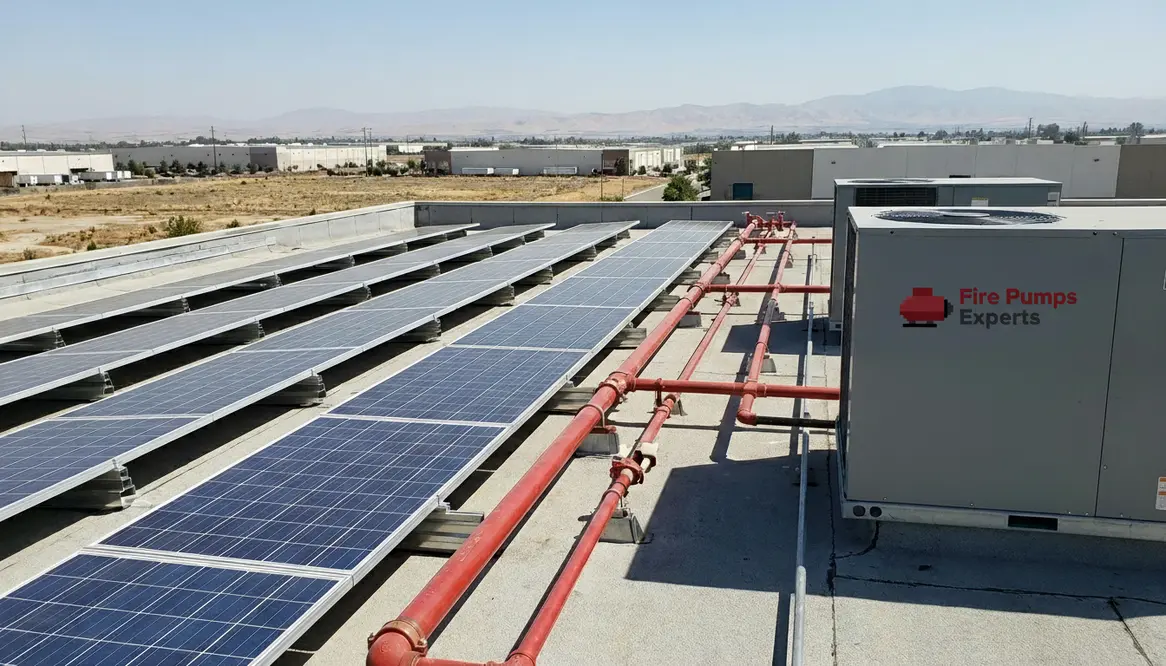
Fire Pump Solar Facility Fresno Design Guide
I have spent years walking mechanical rooms where the hum of equipment feels like a heartbeat. And in Fresno, where solar panels stretch across rooftops like fields of glass, the conversation around fire pump solar facility Fresno design has become more than technical. It is essential. Power is no longer just pulled from the grid. It is generated, stored, and sometimes… interrupted. So the question becomes simple. When fire strikes, will your system respond with certainty, or hesitation?
Fire Pump Solar Facility Fresno: What Changes When Solar Enters the Equation
At first glance, adding solar seems like a clean upgrade. Lower costs, greener footprint, maybe even a few bragging rights at the next board meeting. However, fire protection does not care about sustainability goals. It cares about pressure, flow, and reliability.
Because solar systems often rely on inverters and battery storage, power delivery can fluctuate. Therefore, I always remind facility managers that a fire pump cannot depend on “maybe.” It needs guaranteed performance. While solar can support operations, it rarely replaces the need for a stable, dedicated power source for fire pumps.
Think of it like this. Solar is your calm, responsible friend. A fire pump is the one who kicks down the door when things go sideways. Both matter, but they play very different roles.
How Do I Choose the Right Fire Pump for a Solar Powered Commercial Facility?
I start with one principle. The fire pump must operate independently of any variable energy source. That means I look closely at three core factors.
Power reliability
Power reliability comes first. Even if a facility uses solar heavily, I often recommend diesel driven fire pumps or electric pumps backed by a dedicated emergency generator. Why? Because smoke does not wait for batteries to recharge.
System demand
System demand comes next. High rise buildings, warehouses, and industrial plants in Fresno often require large flow rates. So I match pump capacity precisely to hazard levels, not just building size.
Code compliance
Code compliance ties it all together. NFPA 20 sets clear expectations, and solar integration does not change those rules. If anything, it makes strict adherence more important.
As a result, the best setup often blends traditional reliability with modern energy systems. It is less about choosing one over the other and more about making them coexist without conflict.
Power Integration Without Compromise
Now here is where things get interesting. Integrating fire pumps into solar equipped facilities requires careful electrical design. I have seen projects where teams assumed the solar system could carry emergency loads. That assumption did not age well.
Instead, I recommend isolating fire pump circuits. This ensures that even if the solar system shuts down during a fault, the pump remains unaffected. Additionally, transfer switches and controllers must be designed to prioritize the fire pump above all else.
And yes, this is the part where engineers start debating like it is a courtroom drama. But in the end, the verdict is always the same. Life safety systems do not share power nicely.
What Works Well
- Diesel driven fire pumps for full independence
- Electric pumps with dedicated generators
- Clear separation from solar circuits
- Robust transfer switch design
What to Avoid
- Relying solely on solar battery storage
- Shared circuits with non critical systems
- Undersized backup power sources
- Assuming inverter stability during emergencies
Fire Pump Solar Facility Fresno: Local Conditions That Shape Design
Fresno brings its own personality to the table. Heat, dry conditions, and large scale commercial developments all influence fire protection design. Because of high temperatures, equipment must handle thermal stress without losing performance.
Additionally, many facilities here operate at scale. Distribution centers, manufacturing plants, and multi building campuses demand fire pumps that can sustain long run times. Solar installations often cover large roof areas, which can complicate fire access and increase risk profiles.
So I factor in environmental stress, operational demand, and layout complexity. It is not just about meeting code. It is about building a system that holds steady when everything else feels like it is melting.
Maintenance and Testing in Hybrid Energy Environments
Once the system is installed, the real work begins. Regular testing is not optional. In fact, solar equipped facilities require even more attention because of their layered power systems.
I always advise weekly churn tests and monthly full flow tests, aligned with NFPA standards. Meanwhile, I ensure that backup power sources are tested under load. A generator that has not been tested is basically a very expensive decoration.
Furthermore, coordination between electrical and fire protection teams is critical. If one system changes, the other must adapt. Otherwise, you risk discovering problems at the worst possible moment.
And trust me, that moment will not be convenient.
Common Mistakes I See and How to Avoid Them
Over the years, patterns emerge. Some mistakes show up again and again, like reruns of a show nobody asked for.
One common issue is overconfidence in solar reliability. While solar is impressive, it is not designed for emergency response. Another mistake is underestimating load requirements. Fire pumps draw significant power, especially during startup.
Finally, poor integration between systems can create hidden vulnerabilities. Therefore, I always push for early collaboration between engineers, contractors, and facility managers. When everyone speaks the same language, the system performs better.
FAQ: Fire Pump Selection for Solar Powered Facilities
Before planning a new fire pump solar facility Fresno project or upgrading an existing one, a few recurring questions tend to come up. These quick answers help keep priorities straight while still leaving room for detailed engineering review.
Final Thoughts and Next Steps
When I design systems for solar powered facilities, I focus on certainty. Solar adds efficiency, but fire pumps demand reliability. If you are planning or upgrading a commercial or industrial property in Fresno, now is the time to get it right. Work with experts who understand both fire protection and complex power systems. Because when the moment comes, your system should not hesitate. It should respond, strong and steady, exactly as designed.