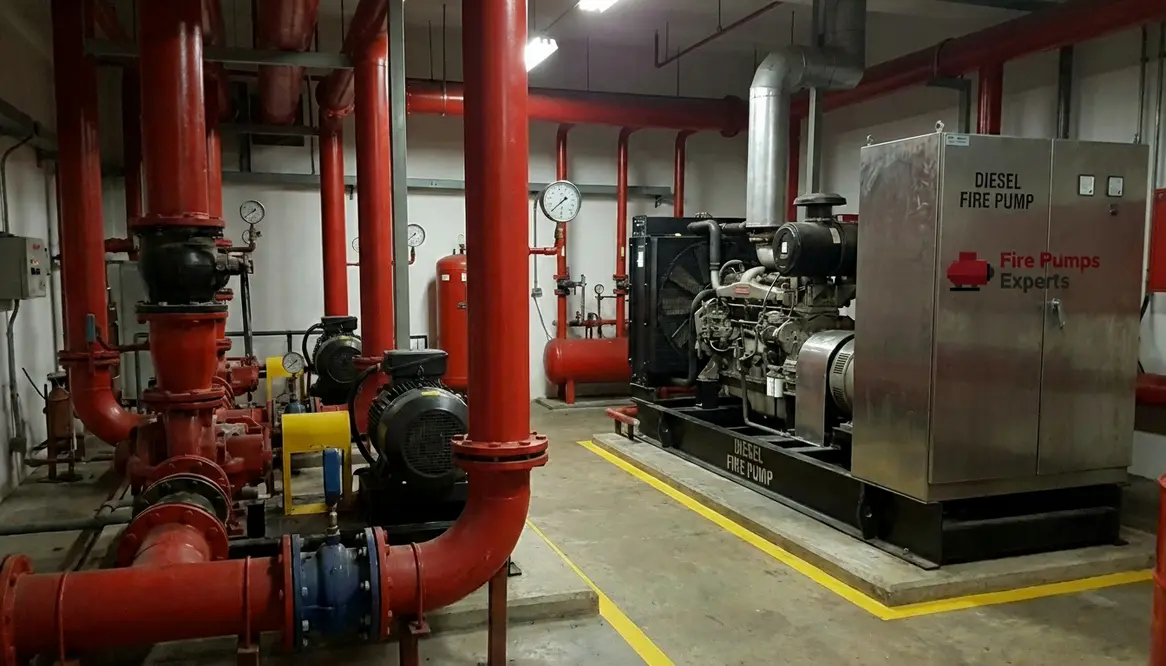
Fire Pump Hazardous Storage System Design Guide
I have spent years around high risk facilities, and I can tell you this right away. When hazardous materials are involved, there is no room for guesswork. Our fire pump hazardous storage systems sit at the heart of that protection strategy, quietly waiting for the moment they are needed most. And like a seasoned bodyguard in a tailored suit, they do not panic, they perform. In this article, I will walk you through how these systems are designed, why they matter, and how to make sure yours is ready when things go sideways.
What Makes Hazardous Storage Fire Protection Different?
Let me set the scene. You are not protecting office furniture or a stack of paperwork. You are dealing with flammable liquids, reactive chemicals, or pressurized gases. Therefore, the fire behavior changes fast, and it escalates faster than a plot twist in a thriller.
Because of this, I approach fire pump hazardous storage systems with a different mindset. The goal is not just suppression. It is control, containment, and buying time. Consequently, system pressure, flow rate, and reliability must align with the specific hazard class.
Moreover, codes like NFPA are not suggestions. They are the rulebook. Still, simply meeting code is not enough. I design systems that assume something will go wrong, because eventually, something always does.
Why These Risks Change the Rules
In ordinary occupancies, a missed detail might mean a messy incident. In hazardous storage, a missed detail can mean a runaway fire, explosions, and cascading failures across systems. That is why fire pump hazardous storage systems are engineered with sharper edges: tighter safety factors, more monitoring, and far less tolerance for “good enough.”
The materials burn hotter, react faster, and sometimes fight back when you apply water or foam. The result is a design challenge where every assumption must be justified and every component must earn its keep.
Designing Fire Pump Hazardous Storage Systems for Real World Conditions
Design is where theory meets reality. And reality tends to be messy. So I focus on three pillars.
First: Demand calculation
I determine the exact water flow and pressure needed to control a fire scenario. Not a generic one, but the worst credible case. This includes fuel load, storage height, and suppression method.
Second: Pump selection
I match the pump type to the risk. Electric pumps are common, but diesel driven units offer independence during power failure. In hazardous environments, redundancy is not a luxury. It is survival.
Third: System integration
The pump must work seamlessly with sprinklers, foam systems, or deluge systems. Otherwise, you end up with a beautifully engineered pump that cannot talk to the rest of the system. And that is about as useful as a superhero who forgot their cape.
Key Components That Do the Heavy Lifting
Every strong system relies on parts that pull their weight. I make sure each component earns its place.
Core equipment
- Fire pumps sized for peak demand
- Reliable drivers, electric or diesel
- Controllers with automatic start logic
- Pressure relief valves for safety
Support systems
- Dedicated water supply with backup capacity
- Fuel storage for diesel units
- Monitoring and alarm integration
- Test headers for routine verification
At this point, everything must work together. Otherwise, you are building a band where no one plays the same song. And trust me, fire protection is not the place for improvisational jazz.
How Do I Ensure Reliability Under Pressure?
This is the question I hear the most, and honestly, it is the right one to ask.
First, I build redundancy into the system. If one pump fails, another takes over. Then, I ensure the power supply is secure. In many industrial facilities, that means combining electric and diesel options.
Next, I focus on testing. Weekly churn tests and annual flow tests are not paperwork exercises. They are proof that the system will respond when called. Additionally, I use monitoring systems that alert operators before small issues become big problems.
Finally, I consider environmental factors. Hazardous storage areas can be corrosive, hot, or explosive. So I select materials and layouts that can survive those conditions. Because a system that cannot survive its environment will not protect it.
Common Design Mistakes I See Too Often
Now, let me be blunt for a moment. I have seen designs that look great on paper but fall apart in practice.
One major issue is undersizing the system. Designers sometimes rely on outdated data or overly optimistic assumptions. That is a gamble you do not want to take.
Another problem is poor layout. Long pipe runs, sharp turns, and elevation changes can reduce pressure in ways that are easy to overlook. However, during a fire event, those losses matter.
Then there is maintenance neglect. Even the best fire pump hazardous storage systems will fail if they are not maintained. It is like owning a sports car and never changing the oil. It might look impressive, but it will not last long.
Compliance Meets Practical Performance
Compliance is the baseline, not the finish line. I always align designs with NFPA standards and local regulations. However, I also go further by evaluating how the system performs in actual scenarios.
For example, I simulate fire events and review system response times. I also coordinate with facility operations to ensure accessibility and ease of testing. Because a system that is hard to maintain often ends up neglected.
In large commercial and industrial properties, scale adds complexity. Therefore, coordination between engineers, contractors, and facility managers becomes critical. When everyone is aligned, the system works as intended.
The most robust fire pump hazardous storage systems are the ones that live comfortably in both worlds: they satisfy every letter of the code while also performing under messy, imperfect, and stressful real events.
FAQ
Final Thoughts and Your Next Move
When I design or evaluate fire pump hazardous storage systems, I treat them like a silent promise. A promise that when everything else goes wrong, this system will step up and do its job. If you manage a commercial or industrial facility, now is the time to review your setup, test its limits, and upgrade where needed. Reach out to experts who understand the stakes, because in this world, preparation is not optional, it is everything.
If you are looking for deeper technical resources or real-world case studies on fire pump hazardous storage systems, start with well-vetted industry sources such as https://firepumps.org and align that knowledge with your facility’s unique risks and operational realities.