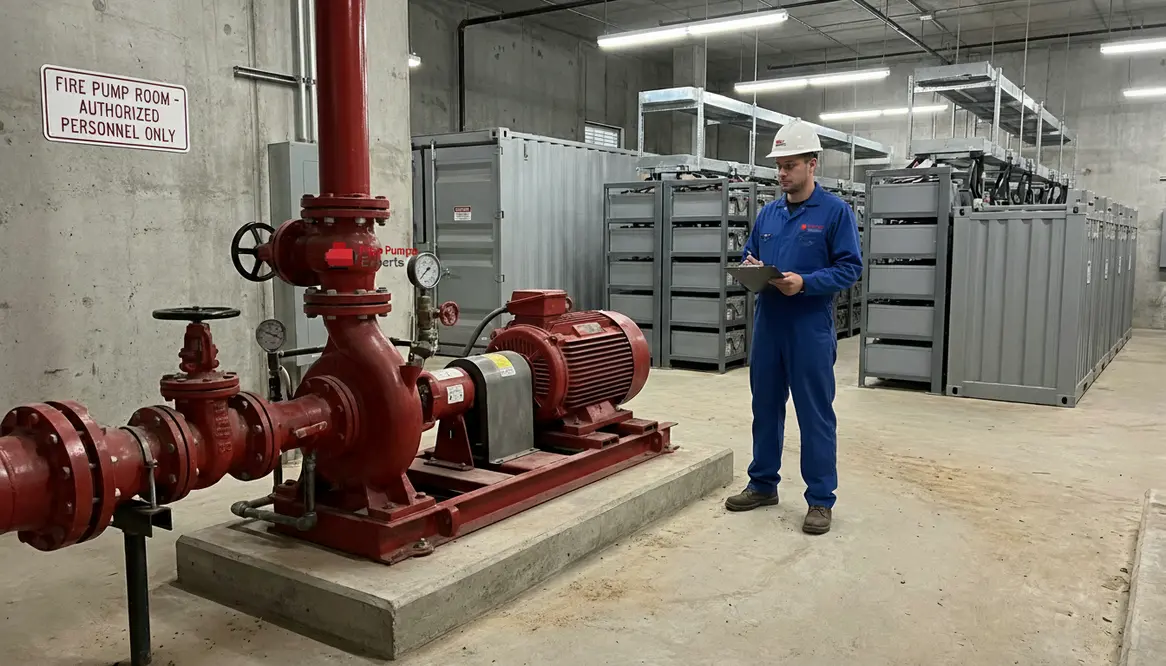
Fire Pump Battery Storage Fire Protection Guide
I have spent enough time around critical infrastructure to know one simple truth. When energy is stored at scale, risk quietly tags along for the ride. That is exactly where fire pump battery storage fire protection steps into the spotlight. In large commercial and industrial battery storage facilities, fire protection is not a background feature. It is the backbone that keeps operations stable, compliant, and insurable. And while fire pumps may not get the same attention as shiny new battery tech, they are the steady guardians working behind the scenes, ready to perform without hesitation.
What does a fire pump actually do in battery storage facilities?
I like to think of a fire pump as the calm professional in a room full of chaos. When a fire event begins, especially in lithium ion environments, water demand spikes fast. Sprinklers alone cannot always maintain the pressure needed. That is where the fire pump takes over.
It boosts water pressure to ensure suppression systems deliver consistent, high volume flow. Without that support, even the best designed system can fall short. And in battery storage, where thermal runaway can escalate quickly, seconds matter.
Moreover, these pumps are not just about force. They are about reliability. A properly designed system ensures that water reaches every critical zone, even in large scale facilities that stretch across acres of infrastructure.
Why battery storage changes the fire protection equation
Battery storage is not your typical fire scenario. Unlike conventional fires, lithium ion events bring heat, chemical reactions, and the potential for re ignition. It is a bit like trying to put out a campfire that keeps reigniting itself when you turn your back. Not exactly relaxing.
Because of this, fire protection strategies must adapt. Fire pumps must support extended operation periods and maintain steady pressure over time. Additionally, they need to integrate with detection and suppression systems that are designed specifically for battery hazards.
In my experience, facilities that underestimate this complexity often end up retrofitting systems later. And retrofits are rarely cheap or convenient.
Design priorities for fire pump battery storage fire protection
When I approach system design, I focus on a few non negotiables. These are not nice to have features. They are essential.
System resilience
Fire pumps must operate under extreme conditions. Backup power, redundant components, and robust controls are key.
Hydraulic performance
The system must meet peak demand without pressure drops. That means precise calculations, not guesswork.
Integration
Fire pumps must work seamlessly with detection, alarms, and suppression systems. No silos allowed.
Compliance
Codes and standards evolve quickly in this space. Staying aligned with NFPA and local regulations is critical.
Additionally, I always emphasize testing. A system that looks perfect on paper means very little if it cannot perform during a real event.
How do I choose the right fire pump system for a large facility?
Start with scale. Commercial and industrial battery storage sites demand systems that can handle high flow rates over extended durations. Smaller configurations simply will not cut it.
Next, consider reliability. Electric pumps are common, but diesel driven units often provide an extra layer of assurance when power systems fail. And let us be honest, if your fire protection system depends on the same power source as the hazard, that is a plot twist nobody wants.
Then there is layout. Facilities with complex footprints need carefully planned pump placement and piping design. Dead zones are unacceptable. Every inch of the storage area must remain protected.
Finally, partner with specialists who understand both fire protection and battery storage risks. This is not the place for generalists. Working with teams that know how to align performance, reliability, and compliance can be the difference between a smooth approval process and a painful redesign of your fire pump battery storage fire protection approach.
Common mistakes I see in battery storage fire protection systems
Even well funded projects can stumble. Here are a few pitfalls I encounter more often than I would like.
Underestimating water demand
Designs sometimes fail to account for prolonged suppression needs. Battery fires are not quick events.
Skipping redundancy
A single point of failure can compromise the entire system. Redundancy is not optional here.
Poor maintenance planning
Fire pumps require regular testing and servicing. Ignoring this is like buying a sports car and never changing the oil.
Disconnected systems
When detection, alarms, and pumps do not communicate effectively, response time suffers.
Avoiding these mistakes is not about perfection. It is about preparation and building fire pump battery storage fire protection that holds up under real pressure instead of just looking impressive on a schematic.
FAQ: Fire Pumps in Battery Storage Facilities
Questions tend to cluster around pump selection, runtime, and how everything fits into a broader risk management strategy. The goal is not just code compliance but a level of resilience that investors, insurers, and operators can confidently stand behind.
Final thoughts and next steps
I see fire pumps as quiet protectors in a high stakes environment. When designed correctly, they bring confidence to battery storage operations and keep facilities running safely. If you manage or develop a commercial or industrial site, now is the time to evaluate your system. Work with experts who understand the nuances of fire pump battery storage fire protection and build something that performs when it truly matters. Because in this line of work, preparation is everything, and the decisions you make about fire pump battery storage fire protection today will define how your facility responds on the day it is truly tested.