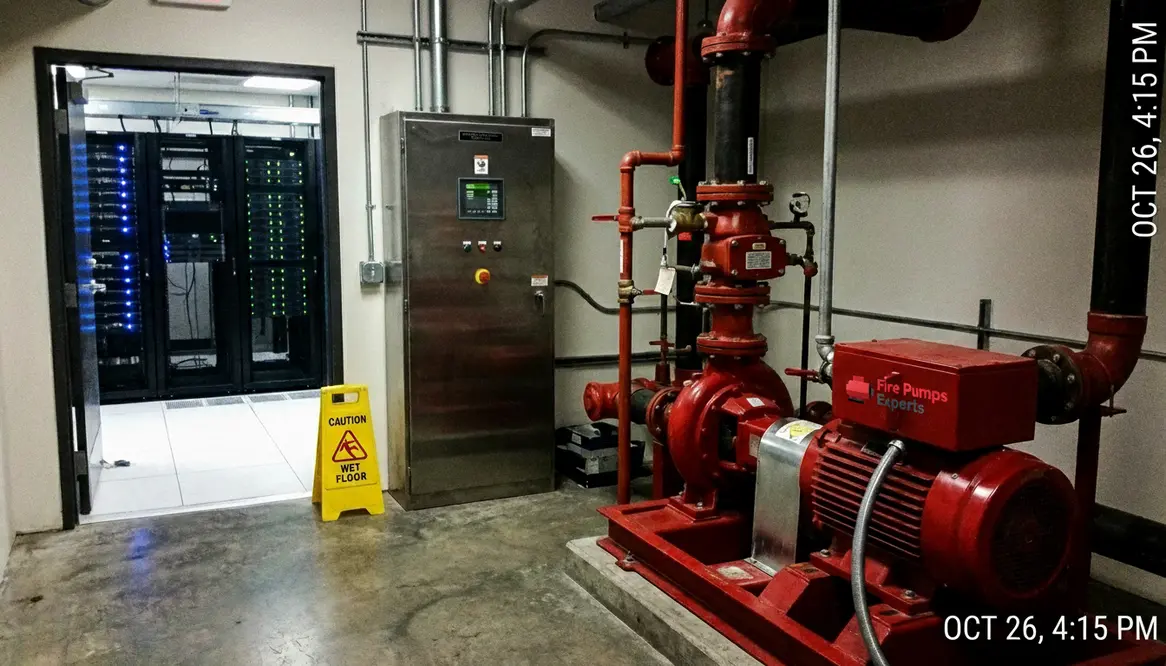
Fire Pump Pre Action System Design for Data Centers
I have spent years walking through humming data halls where a single spark could cost millions, and that is exactly why I take a fire pump pre action system design seriously. In data centers, we are not just protecting walls and wires. We are protecting uptime, contracts, and reputations. So when I talk about integrating fire pumps with pre action systems, I am talking about precision. I am talking about timing. And yes, I am talking about making sure your servers do not get an accidental shower like they just stepped into a sitcom gag.
Why data centers demand precision fire protection
Data centers operate in a world where downtime feels like a plot twist nobody asked for. Because of that, I always emphasize controlled fire suppression. Pre action systems only release water when two conditions are met, typically detection and heat. Therefore, they reduce the risk of accidental discharge.
However, without a properly integrated fire pump, even the best system can fall flat. Water needs to arrive at the right pressure and flow, instantly. Otherwise, the system becomes more of a suggestion than a solution. And in this industry, suggestions do not cut it.
How does a fire pump integrate with a pre action system?
Let me answer this the way a client once asked me during a late night commissioning. The fire pump acts as the muscle, while the pre action system acts as the brain. Once the detection system confirms a fire event, signals trigger the valve to open. At that exact moment, the fire pump must already be delivering adequate pressure.
In a strong fire pump pre action system design, I ensure the communication between detection panels, valves, and pump controllers is seamless. Moreover, I account for delays, redundancies, and backup power. Because if one piece hesitates, the whole system stumbles. And fires do not wait politely.
Design considerations I never overlook
When I approach integration, I focus on performance under stress. Not theory. Not best case scenarios. Real world conditions.
- First, I verify hydraulic calculations. The pump must meet peak demand instantly.
- Next, I align detection sensitivity with system response times. Too sensitive, and you risk nuisance trips. Too slow, and you risk escalation.
- Additionally, I always factor in power reliability. Data centers already invest heavily in backup power, so tying the fire pump into that ecosystem is not optional. It is essential.
Because a powerless fire pump is about as useful as a screen door on a submarine.
Where integration often goes wrong
I have seen systems that look perfect on paper but fail in execution. Usually, the issue lies in coordination. Contractors install components in isolation instead of as a unified system.
For example, mismatched control logic can delay valve release. Similarly, undersized pumps can struggle during peak demand. As a result, the system underperforms exactly when it matters most.
Therefore, I push for early collaboration between engineers, contractors, and facility managers. When everyone works from the same playbook, the system performs like a well rehearsed orchestra instead of a garage band on its first night.
Key components working together
Detection and control
I rely on advanced detection systems that trigger pre action valves with precision. These systems must communicate instantly with the pump controller.
Pre action valves
These valves act as gatekeepers. They prevent water from entering the pipes until conditions are verified. That extra step protects sensitive equipment.
Fire pumps
I select pumps that deliver consistent pressure without delay. Electric or diesel options depend on facility infrastructure and redundancy goals.
Supervisory systems
Monitoring ensures every component stays ready. Alerts allow teams to act before small issues grow into large failures.
What makes a system truly reliable in large facilities
Reliability does not come from a single component. It comes from layers of assurance. I design systems with redundancy in mind. Dual power sources, backup pumps, and fail safe controls all play a role.
Furthermore, I prioritize testing. Regular flow tests and system simulations reveal weaknesses before a real emergency does. Think of it like rehearsing for a big performance. You do not want opening night to be your first run.
In commercial and industrial properties, scale adds complexity. Therefore, integration must account for long pipe runs, pressure zones, and varying risk areas. Each detail matters. Each connection counts. Getting the fire pump pre action system design right in these environments is the difference between controlled response and chaotic failure.
If you are starting from scratch, studying proven reference projects and guidance from resources like https://firepumps.org can help shape a more resilient fire pump pre action system design that actually matches your facility’s risk profile and uptime expectations.
Conclusion and next steps
If you are responsible for a data center or large facility, now is the time to evaluate your system. A well executed fire pump pre action system design is not just a safety feature. It is a business safeguard. I encourage you to review your integration, test your performance, and work with experts who understand both fire protection and operational demands. Because when everything is on the line, your system should respond like a hero, not hesitate like a side character.