Fire Pump Inspection and Testing Requirements Austin
I have spent a lot of time around mechanical rooms. They hum, they echo, and occasionally they smell like yesterday’s rainstorm mixed with motor oil. But tucked inside many of those rooms is a quiet hero: the fire pump. In Austin, that hero must stay ready at all times. That is why fire pump inspection and testing requirements austin property managers follow are not just bureaucratic boxes to check. They are the difference between a controlled emergency and a headline on the evening news.
NFPA 25 sets the national standard for inspection, testing, and maintenance of water based fire protection systems. However, Austin enforcement makes those rules very real for large commercial campuses, high rise towers, distribution centers, and industrial plants. So today I am walking you through the process. Slowly. Clearly. No jargon jungle. Just the essentials that keep pumps spinning and buildings protected.
Think of this as your NFPA 25 tracker. Or if you prefer, your calm voice in the mechanical room saying, “Relax. We got this.”
What NFPA 25 Actually Demands From Fire Pump Systems
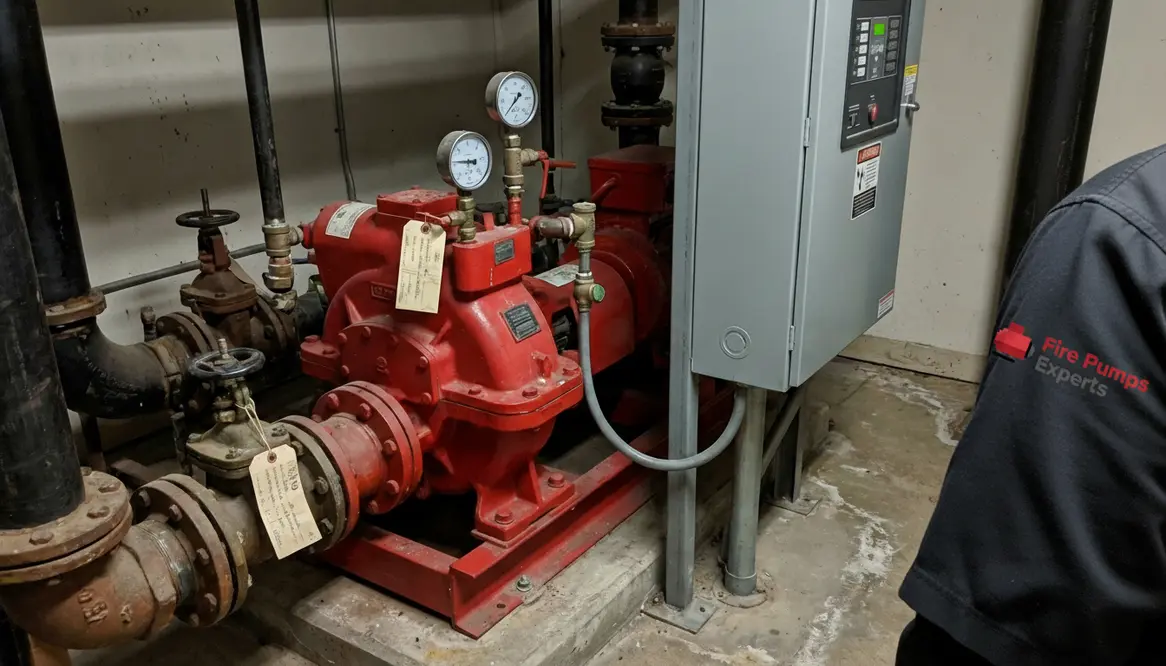
Let me start with a simple truth. Fire pumps are not decorations. They are pressure machines designed to deliver water when municipal supply falls short. Because of that role, NFPA 25 requires a strict inspection and testing routine shaped further by local fire pump inspection and testing requirements austin officials enforce across complex facilities.
First, weekly and monthly visual checks confirm the system is healthy. These checks include controller status, pump house temperature, suction and discharge pressures, and fuel levels for diesel units. In other words, you look at the pump the way a pilot checks a plane before takeoff.
Then the real fun begins. The pump must run regularly.
Electric fire pumps operate during a weekly churn test. Diesel pumps run weekly as well, typically for thirty minutes. During these runs, operators verify pressure stability, abnormal vibration, and controller alarms.
Next comes the heavy hitter. Annual flow testing.
This test measures performance at multiple demand levels. Technicians compare the results to the original pump curve. If the numbers drift too far, something is wrong. Perhaps wear inside the impeller. Perhaps a blocked suction line. Either way, the pump cannot simply shrug and say, “I’ll try harder next time.”
Therefore, corrective action becomes mandatory.
For commercial property teams in Austin, these steps create the backbone of compliance. Skipping them would be like skipping oil changes on a fleet of delivery trucks. Eventually, something expensive breaks.
Fire Pump Inspection and Testing Requirements Austin Facilities Must Track
Large facilities operate on schedules. Security patrols. Elevator service cycles. HVAC maintenance. Fire pumps deserve the same discipline. When I help property teams track compliance, I organize tasks into three layers: frequent checks, operational tests, and full performance verification.
Routine Monitoring
- Weekly churn test
- Controller status inspection
- Pump room condition review
- Diesel fuel and battery checks
- Pressure gauge verification
Scheduled Testing
- Annual flow performance test
- Relief valve testing
- Alarm signal verification
- Controller transfer switch test
- Full system inspection
However, tracking these items is not simply administrative busywork. Inspectors reviewing fire pump inspection and testing requirements austin properties must meet will often request documentation. That means logs, pressure readings, flow results, and service reports.
Without records, it is like claiming you went to the gym while holding a donut. The story sounds nice, but the evidence says otherwise.
Therefore many large Austin facilities now rely on digital inspection platforms. These systems track each weekly run, archive annual flow curves, and generate compliance reports on demand.
Because when the fire marshal asks questions, “Let me dig through my email” is not the answer you want.
If you also oversee facilities outside Texas, it helps to understand how national standards frame these expectations. Resources like NFPA 20 fire pump system guidance show how installation and performance requirements line up with the inspection rhythm you manage every week.
How Annual Flow Testing Reveals Hidden Pump Problems
If routine checks are the daily heartbeat, annual flow testing is the full physical exam.
During this process, technicians measure pump performance at three critical points. One hundred percent rated flow. One hundred fifty percent overload capacity. And churn pressure with no water demand.
Each point tells a story.
For example, if the pump struggles to reach rated flow, the impeller may be worn or partially blocked. If discharge pressure climbs too high, relief valves or system pressure regulators may be failing.
Additionally, technicians monitor vibration and motor amperage during the test. Subtle changes in these readings often reveal mechanical issues before they turn catastrophic.
I like to compare this process to a stress test for athletes. The pump works harder than usual so we can see how it behaves under pressure. Literally.
In Austin’s large commercial buildings, annual flow testing also confirms that system modifications have not altered hydraulic performance. A new tenant improvement. A warehouse expansion. A floor added to a tower. All of these can change demand.
Without proper testing, the pump might face a real emergency with the confidence of a rookie stepping onto the basketball court against the 1996 Chicago Bulls.
Not ideal.
Common Compliance Pitfalls in Large Austin Facilities
Even well managed properties sometimes drift out of compliance. I have seen it happen in corporate campuses, distribution centers, and high rise portfolios.
However, the causes are usually predictable.
Missing Weekly Runs
Maintenance teams get busy. Storm damage hits the roof. A tenant buildout demands attention. Soon the pump run schedule slips. Weeks later someone realizes the logbook looks suspiciously empty.
Outdated Documentation
Annual tests occur, yet records vanish into email attachments and forgotten folders. When auditors request documentation, retrieving it becomes a treasure hunt.
Ignored Controller Alerts
Fire pump controllers record alarms for voltage issues, phase loss, or engine trouble. Ignoring these warnings is like ignoring a check engine light while driving across Texas.
Eventually the truck stops.
Fortunately, most compliance issues are preventable through structured maintenance programs and professional testing services focused on large scale facilities.
Why Austin Enforcement Makes Fire Pump Compliance Serious Business
Austin continues to grow at an impressive pace. New towers rise downtown. Massive tech campuses spread across the metro. Distribution hubs move goods across the region day and night.
Because of this density, fire protection reliability becomes critical.
City inspectors enforce NFPA 25 standards to ensure commercial and industrial properties maintain functional suppression systems. Fire pumps sit at the center of that effort.
Additionally, insurance carriers watch these systems closely. Annual testing reports often play a role in underwriting decisions. If testing lapses, premiums can rise faster than Austin housing prices during a tech boom.
Therefore, facility managers who stay ahead of fire pump inspection and testing requirements austin authorities expect protect more than compliance. They protect operations, tenant safety, and asset value.
And if you manage a large facility, protecting uptime is the name of the game.
How I Track Fire Pump Compliance Without Losing My Sanity
Let us be honest. Compliance schedules can feel like juggling bowling pins.
However, a few simple habits keep everything manageable.
- First, I maintain a clear testing calendar that includes weekly runs, monthly inspections, and annual flow tests. When dates are visible, tasks rarely slip.
- Second, I document every run immediately. Pressures, temperatures, and controller readings all go into the log. Waiting until later invites memory errors.
- Third, I partner with experienced fire pump specialists who understand large commercial and industrial systems. These teams perform detailed testing and provide reports that satisfy both inspectors and insurance auditors.
And finally, I treat the pump room like mission control. Clean, organized, and monitored.
Because when alarms sound, the last thing anyone wants is confusion.
Those same habits also help align local practices with broader standards behind fire pump inspection and testing requirements austin facilities adopt to keep complex systems in line with national codes.
FAQ: Fire Pump Testing and Inspection in Austin
Keeping Austin Facilities Protected
Fire pumps rarely receive applause. They sit quietly in mechanical rooms waiting for the one day they must perform flawlessly. Yet the discipline behind their maintenance matters every single week. If your facility depends on reliable suppression systems, now is the time to review your testing schedule, verify documentation, and ensure your pump meets every NFPA 25 expectation and the specific fire pump inspection and testing requirements austin officials will measure you against.
Partner with specialists who understand large commercial systems and keep your building ready for whatever tomorrow brings.