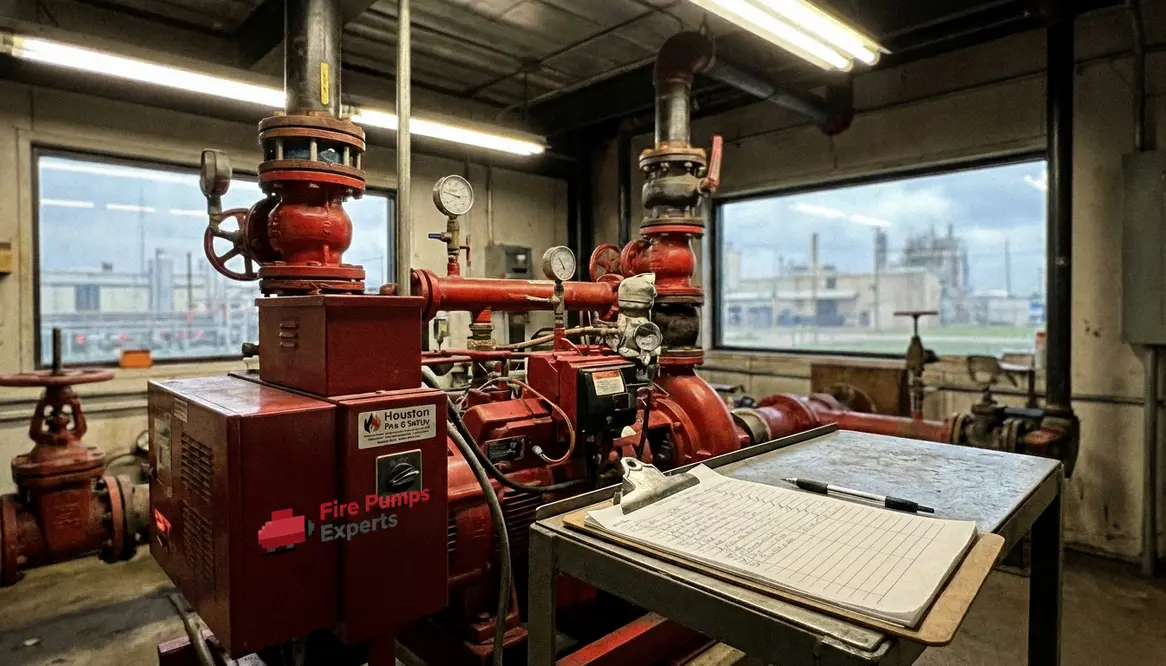
Fire Pump Inspection and Testing Requirements Houston
Introduction: Why I Take Fire Pump Readiness Seriously in Houston
I have spent years walking mechanical rooms in large facilities across Houston. I have heard the steady hum of pumps that protect hospitals, data centers, refineries, and high rise buildings. And I have also seen the opposite. Silent equipment that should have been ready but was not. That is why understanding fire pump inspection and testing requirements houston matters so much for commercial and industrial properties.
In a city filled with complex facilities, a fire pump is not just another piece of equipment. It is the muscle behind a fire protection system. Without proper inspection and testing, that muscle might fail when the building needs it most. Fortunately, NFPA 25 provides a clear path. When tracked properly, it becomes less of a regulatory headache and more of a reliable routine.
And honestly, once you understand the rhythm of inspections and tests, the process feels less like paperwork and more like preventive medicine for your building. Think of it as a yearly physical exam, except the patient weighs ten thousand pounds and lives in a pump room.
How I Interpret Fire Pump Requirements for Large Facilities
Houston facilities operate under a mix of local fire codes and the national standard known as NFPA 25. This standard governs inspection, testing, and maintenance of water based fire protection systems. When I evaluate a property, I always start there.
However, NFPA 25 does not exist to create paperwork. Instead, it exists to confirm that every component in the system will perform during an emergency. That includes controllers, valves, alarms, and of course the pump itself.
For commercial and industrial buildings, the expectations are consistent. Weekly checks confirm that the system is powered and ready. Monthly inspections verify valves, gauges, and pump house conditions. Annual flow testing pushes the system to demonstrate full performance.
Because Houston facilities often run complex operations, these inspections must fit into real world schedules. Hospitals cannot shut down. Manufacturing plants cannot stop production. Therefore, tracking these requirements becomes essential. A missed test does not just create compliance issues. It creates risk.
And trust me, the fire marshal has a remarkable ability to appear the exact week a required test was skipped. I swear they have a sixth sense.
What Does NFPA 25 Actually Require for Fire Pump Testing?
When someone asks me this question, I answer immediately. The standard is structured around frequency and performance verification.
First come routine inspections. These are visual checks that confirm the system is ready for operation. Next come operational tests where the pump actually runs. Finally, there are performance tests that measure flow and pressure.
Each level of testing builds confidence in the system.
Here is how I typically explain the structure to facility managers.
Routine Inspection Focus
- Controller power status
- Valve position
- Pump room temperature
- Fuel levels for diesel pumps
- Visual leak checks
Testing and Performance Focus
- Weekly or monthly pump churn tests
- Controller start verification
- Annual flow testing
- Pressure and flow measurement
- Alarm signal confirmation
While these tasks sound simple, the documentation behind them matters just as much as the test itself. After all, if a test happens and no one records it, it might as well have happened in the Twilight Zone.
Building a Practical NFPA 25 Tracking System
I learned early in my career that spreadsheets alone rarely survive the chaos of a busy facility. A pump test gets delayed. A maintenance supervisor changes. Suddenly the inspection log looks like a detective novel with missing chapters.
So I prefer a structured tracking system designed around the building itself.
Step 1: Map every fire protection asset
First, I map every fire protection asset in the property. That includes pumps, controllers, valves, and flow meters. Then I assign each component its inspection frequency according to NFPA 25.
Step 2: Build a calendar that works in the real world
Next, I build a digital calendar that triggers reminders before inspections are due. Because frankly, waiting until the due date is like remembering your anniversary at 11:59 PM. Technically you remembered, but you are still in trouble.
Step 3: Capture three simple data points every time
Finally, every test result gets logged with three simple details.
- Date and technician performing the test
- Measured pressures and performance results
- Any deficiency discovered during testing
This system creates a living history for the fire pump. Over time, patterns appear. Pressure drops become visible. Small mechanical issues surface early. And facility managers gain something priceless: predictability.
In Houston, where buildings can operate twenty four hours a day, that predictability keeps operations running smoothly and keeps you ahead of fire pump inspection and testing requirements houston instead of constantly chasing them.
Common Compliance Mistakes I See in Houston Pump Rooms
Even experienced facility teams sometimes overlook small details. Yet those details matter during inspections.
Mistake 1: Incomplete or scattered documentation
One of the most common problems involves incomplete test documentation. The pump may run every week, but without proper records the system technically fails compliance.
Mistake 2: Treating the pump room like storage space
Another issue involves blocked or poorly maintained pump rooms. Storage boxes appear. Spare equipment piles up. Before long, the pump room starts to look like a garage sale. Unfortunately, fire inspectors are not bargain hunters.
Mistake 3: Delaying annual flow testing
Additionally, annual flow testing often gets delayed because it requires coordination with technicians and water discharge planning. However, that test proves the pump can actually deliver the designed flow rate.
In large commercial buildings, skipping that step would be like owning a sports car but never checking if the engine still runs. It looks impressive in the garage, but the moment you press the gas pedal tells the real story.
Maintaining Compliance with Fire Pump Inspection and Testing Requirements Houston
When facilities stay organized, compliance becomes routine instead of stressful. That is why I always emphasize planning ahead.
Align inspections with operations
First, align inspections with building operations. Schedule tests during low occupancy periods whenever possible. Second, coordinate with certified technicians who understand high capacity fire pump systems found in industrial facilities and large commercial buildings.
Centralize records and make inspections faster
Moreover, keep documentation centralized. When inspectors arrive, they expect immediate access to logs, flow test reports, and maintenance records.
Treat the pump room like mission control
And finally, treat the pump room like mission control. Keep it clean. Keep it accessible. Keep it organized. The pump protecting a hundred million dollar property deserves at least that much respect.
After all, the system only gets one chance to perform during an emergency. Preparation ensures that moment goes exactly as designed and that your approach to fire pump inspection and testing requirements houston feels like part of operations, not an interruption.
Connecting NFPA 25 With Real-World Service Support
Understanding NFPA 25 and local enforcement is one thing. Having a partner that lives and breathes pump testing, documentation, and repairs is another. That is where a dedicated fire pump service provider becomes part of your long-term strategy for fire pump inspection and testing requirements houston.
A good service team does more than just show up once a year for a flow test. They help you plan weekly churn tests, troubleshoot recurring issues, and keep your documentation in a format inspectors actually like to read. If you want to see what that level of support looks like in practice, take a look at how dedicated fire pump services are structured at Kord Fire Protection.
When you combine a clear internal tracking system with an experienced fire pump service partner, NFPA 25 stops feeling like a rulebook and starts functioning like a playbook. The result is less scrambling, fewer surprises during inspections, and a pump room that quietly does its job every single week.
FAQ: Fire Pump Testing and Compliance
These are the questions I hear most often when Houston facility teams start tightening up their fire pump programs.
Conclusion
Fire pumps protect some of Houston’s most valuable commercial and industrial properties. When inspections and testing stay organized, compliance becomes simple and systems stay reliable. If your facility needs help navigating fire pump inspection and testing requirements houston, our team at FirePumps.org can help build a practical NFPA 25 tracking system that keeps your building protected, documented, and always ready for inspection.