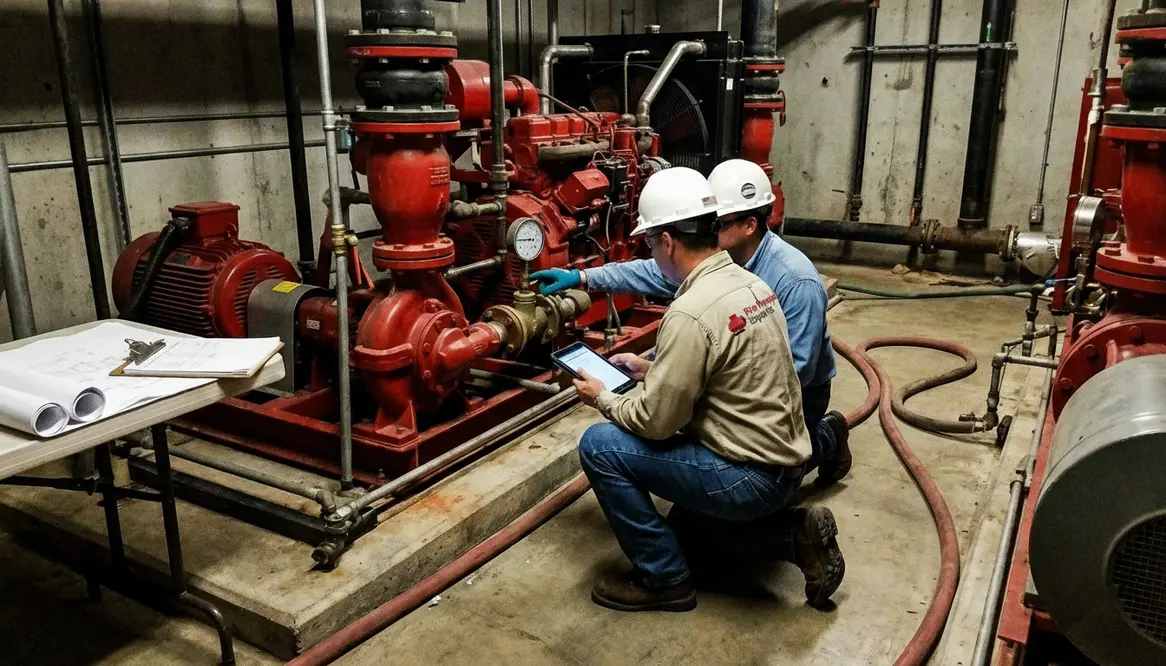
Fire Pump Acceptance Testing Witness Preparation Houston
There is a moment before every big systems test when the room goes quiet. Engineers check gauges. Facility managers glance at clipboards. Someone clears their throat like the opening scene of a courtroom drama. That moment matters, especially when you are preparing for fire pump acceptance testing witness test preparation houston. I have walked through plenty of mechanical rooms across Houston’s commercial towers, refineries, and industrial campuses, and I can tell you this truth right away. A smooth witness test never happens by accident. It happens because someone planned every valve turn, every pressure reading, and every checklist item long before the inspector arrives.
Today I am going to walk you through how I prepare for these tests step by step. Think of it less like cramming for a pop quiz and more like rehearsing a Broadway performance where the sprinkler system is the star. Because when the test day arrives, you want everything to run like a well rehearsed orchestra.
Fire Pump Acceptance Testing Witness Test Preparation Houston for Large Facilities
Houston has some of the most complex commercial and industrial properties in the country. High rise offices, energy facilities, medical campuses, distribution centers. These buildings rely on fire pumps that move enormous volumes of water quickly and reliably. Because of that, acceptance testing is not just a formality. It proves that the system can protect thousands of occupants and millions in assets.
First, I always remind facility teams that acceptance testing is the official performance proof of a new or upgraded pump system. The authority having jurisdiction, engineers, contractors, and property stakeholders all gather to witness the test. Therefore preparation becomes critical.
Without preparation, the day can turn into a very expensive troubleshooting session. I once watched a test delay because a single pressure gauge had not been calibrated. The room fell silent. You could almost hear the theme from Jaws playing quietly in the background.
However, when preparation is done correctly, the test moves with calm precision. Inspectors see the numbers they expect. Engineers nod approvingly. And the facility team sleeps better knowing the protection system performs exactly as designed.
What Do Inspectors Expect During a Fire Pump Witness Test
When people ask me what inspectors actually look for, the answer is simple and thorough at the same time. They want proof. Real measured proof that the pump performs at required flow and pressure levels.
Key performance elements under the spotlight
- Pump start sequence and controller function
- Churn pressure readings
- Flow performance at rated capacity
- Overload and peak flow conditions
- Relief valve operation
- Power supply stability
- Instrumentation accuracy
Now here is where preparation saves everyone time. Each component must already be installed, verified, and functional before the inspector even steps through the door. Otherwise the test stops. And inspectors are patient professionals, but even they prefer not to spend their morning watching someone hunt for a missing wrench.
Meanwhile large commercial properties often have complex pump rooms with diesel drivers, backup power systems, and sophisticated monitoring controls. Therefore documentation and readiness become just as important as mechanical performance.
Why preparation feels like directing a live show
In a way, fire pump acceptance testing witness test preparation houston is stage management. You are making sure the controller hits its cues, the gauges deliver solid readings, and the pump never misses a beat when the audience (your AHJ and stakeholders) are watching closely.
When you rehearse the sequence and verify every detail in advance, the test becomes a structured performance instead of an improvised scramble with people rifling through toolbags and binders.
If you want a deeper technical grounding around design and testing expectations, resources such as the NFPA 20 overview article on Kord Fire Protection are worth keeping in your back pocket when planning your next project’s pump room and acceptance strategy.
My Step by Step Preparation Process Before Test Day
Over the years I have developed a simple preparation routine that keeps projects moving smoothly. It works across office towers, industrial plants, and large campus properties.
1. Verify system installation
First I verify system installation. Every valve position, controller setting, and discharge path must match the design drawings. Even a partially closed valve can distort flow readings.
2. Confirm instrument calibration
Next I confirm instrument calibration. Pressure gauges and flow meters must read accurately. Otherwise the entire test becomes meaningless data.
3. Simulate operational readiness
Then I simulate operational readiness. I run the pump under controlled conditions before the official test. This step allows me to spot electrical issues, vibration concerns, or suction supply problems.
4. Prepare the documentation package
After that I prepare documentation. Inspectors expect submittals, manufacturer curves, pump data sheets, and system diagrams ready for review.
5. Coordinate the test team
Finally I coordinate the test team. Acceptance testing involves multiple professionals. Fire protection contractors, mechanical technicians, building engineers, and the AHJ all need clear roles.
Because of this coordination, the actual test often runs faster than people expect. In fact when preparation is done right, the inspector spends more time verifying numbers than waiting on adjustments.
And that, my friends, is the goal. Nobody enjoys watching a fire pump room turn into an episode of MythBusters.
Fire Pump Acceptance Testing Witness Test Preparation Houston Checklist for Complex Properties
When you are dealing with complex pump rooms and high stakes commissioning, a concise checklist keeps the chaos away. Think of this as your cockpit panel for fire pump acceptance testing witness test preparation houston on large commercial and industrial projects.
Mechanical readiness
- Pump alignment confirmed
- Suction and discharge valves fully verified
- Relief valve installed and adjusted
- Fuel supply checked for diesel systems
- Cooling lines operating
Operational readiness
- Controller programming verified
- Emergency power integration confirmed
- Flow test headers accessible
- Instrumentation calibrated
- Test documentation prepared
This checklist may seem straightforward. However in large commercial properties even a small oversight can disrupt the process. For example, I once saw a distribution facility delay testing because the discharge piping had not been flushed. The flow readings danced around like a jazz solo.
Therefore I treat preparation like a pre flight inspection. Every item checked. Every component ready.
How Preparation Reduces Risk for Commercial and Industrial Buildings
When we talk about fire pump acceptance testing witness test preparation houston, we are really talking about risk control for major facilities.
Large buildings depend on reliable fire suppression infrastructure. If the pump fails during an emergency, sprinkler systems lose the pressure they need to control a fire. That risk becomes unacceptable for industrial plants, medical centers, and large commercial complexes.
Operational risks reduced by solid preparation
- Delayed occupancy approvals
- Failed inspections requiring retesting
- Damage to new pump equipment
- System performance below design requirements
In addition, well prepared tests give facility managers valuable operational knowledge. They see exactly how the pump behaves under full load. They understand controller response times. And they observe system pressure profiles.
That insight helps maintenance teams manage the system long after construction crews leave the site.
Think of it as the difference between buying a sports car and actually driving it on the highway. One tells you it looks good. The other proves it performs.
Common Mistakes I See Before Witness Testing
Even experienced teams occasionally miss details before acceptance testing. Houston projects move fast, and timelines can compress preparation windows.
Issues that show up again and again
- Incomplete flushing of underground supply lines
- Controller settings left in factory default modes
- Insufficient water supply during peak flow testing
- Missing documentation for inspectors
- Improperly installed pressure sensing lines
However these problems are avoidable. With structured planning and early system verification, the majority of them disappear before the test day arrives.
And when everything works correctly, the witness test becomes almost uneventful. In the world of life safety systems, uneventful is a beautiful word.
FAQ About Fire Pump Witness Testing
What is a fire pump acceptance test?
It verifies that a newly installed fire pump delivers the required pressure and water flow according to its design performance curve.
Who attends a witness test?
Typically the authority having jurisdiction, fire protection engineers, contractors, facility representatives, and testing specialists.
How long does the test take?
Most tests take two to four hours depending on system size and flow requirements.
Why is preparation important?
Preparation prevents failed inspections, protects equipment, and ensures the pump performs correctly for life safety protection.
Are these tests required for commercial buildings?
Yes. Large commercial and industrial properties must complete acceptance testing to verify compliance with fire protection standards.
Final Thoughts
Preparing for a witness test is not just about passing an inspection. It is about proving that a critical life safety system will perform when people depend on it most. If your facility is approaching a commissioning milestone, the right preparation for fire pump acceptance testing witness test preparation houston can make the difference between a smooth approval and a costly delay. Reach out to experienced specialists who understand complex commercial systems and can guide your team through every step with confidence.