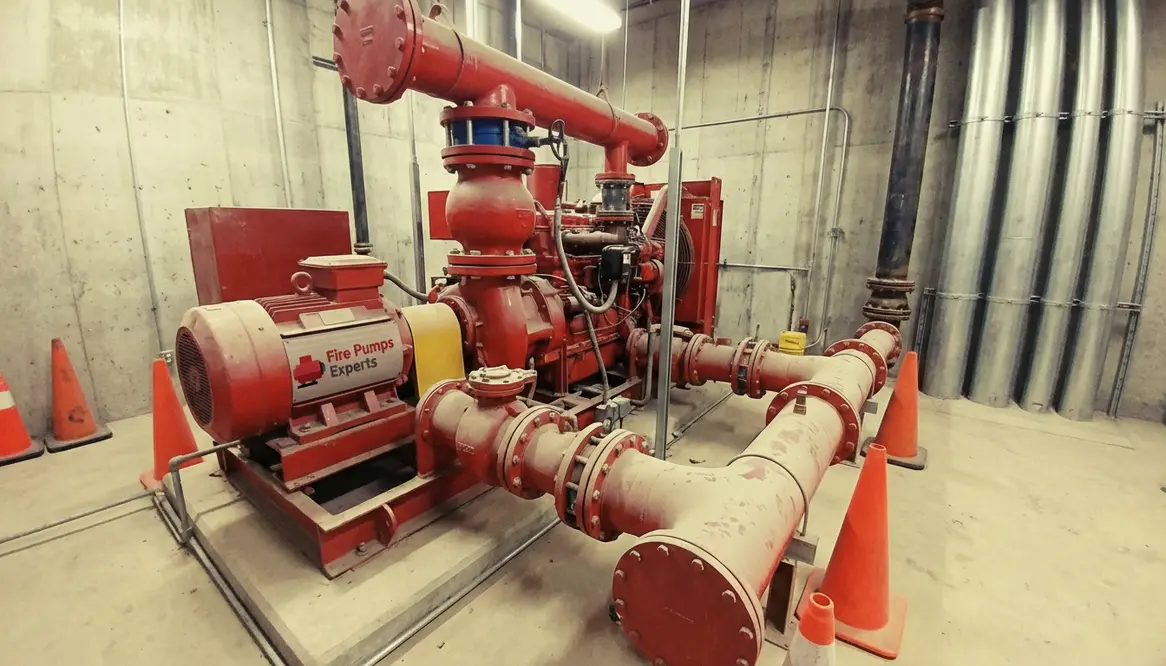
Fire Pump Installation for Kern County Businesses
Fire does not care about your schedule, your budget, or your insurance paperwork. It shows up uninvited and leaves a mess behind. That is exactly why fire pump installation matters so much for Kern County businesses that cannot afford long downtime or avoidable risk.
When I talk with facility managers about protecting their buildings, I always bring it back to one thing: reliability. Because when everything else fails, your fire protection system should not. A well-planned fire pump installation transforms “I hope this works” into “I know this will perform.”
For Kern County facilities, that reliability starts with understanding how your fire pump is selected, installed, tested, and maintained. Cutting corners on design or installation quietly sets the stage for failure the day you need performance the most.
Why Reliable Fire Pumps Matter for Kern County Businesses
I have spent enough time around commercial and industrial properties in Kern County to know one simple truth. Fire does not care about your schedule, your budget, or your insurance paperwork. It shows up uninvited and leaves a mess behind. That is exactly why fire pump installation matters so much. When I talk with facility managers about protecting their buildings, I always bring it back to one thing. Reliability. Because when everything else fails, your fire protection system should not.
Kern County is not exactly a stranger to heat, dry conditions, and the occasional spark that turns into something far more serious. Because of that, I see fire pumps as the quiet guardians of large facilities. They sit there, calm and ready, like a seasoned security guard who has seen it all.
However, a pump that fails under pressure is worse than no pump at all. It creates a false sense of security. Therefore, investing in dependable systems is not just smart, it is necessary. A properly executed fire pump installation ensures water moves fast and strong when the stakes are high.
And let’s be honest, nobody wants to explain to a board of directors why a preventable issue turned into a headline. That is not the kind of fame anyone is looking for.
Kern County conditions raise the stakes
Between long, hot summers, industrial operations, and expanding commercial development, Kern County properties live with a level of fire risk that demands more than bare-minimum compliance. When you pair local conditions with complex facilities, a reliable fire pump installation becomes part of the core business strategy, not just a box to check on a permit.
If you want an example of a provider focused specifically on Kern County fire protection needs, take a look at the Kern County Fire Protection page from Kord Fire Protection at https://kordfire.com/kern-county-fire-protection/, where they outline services including fire pump support tailored to local environments.
What Happens When a Fire Pump Fails at the Worst Time
I have seen scenarios where systems looked fine on paper but fell apart during real emergencies. It is a bit like trusting a flip phone in the age of smartphones. Technically it works, but you are missing what really matters.
The technical failure
When a pump underperforms, water pressure drops. Consequently, sprinkler systems lose effectiveness. Firefighters face delays. Damage spreads faster than anyone would like to admit. In large scale facilities, even seconds matter.
The operational fallout
Moreover, equipment damage, production downtime, and safety risks stack up quickly. A weak system does not just fail once. It creates a chain reaction of problems that ripple through the entire operation.
How solid installation lowers real-world risk
Thoughtful design and precise fire pump installation reduce the odds of those nightmare scenarios. Correct sizing, proper suction and discharge piping, dependable power sources, and realistic performance testing work together so that when your building is full, your production is running, and alarms sound, the system actually delivers the water you are paying for.
How I Evaluate Fire Pump Installation for Large Facilities
When I walk into a commercial property, I do not just look at the pump itself. I look at the entire ecosystem. Because every component plays a role in performance.
Key Factors I Focus On
- Water supply consistency and pressure levels
- System design tailored to building size
- Backup power integration
- Compliance with local and national codes
Common Red Flags
- Outdated or undersized equipment
- Poor maintenance records
- Inconsistent testing schedules
- Improper initial setup
At the same time, I always remind clients that installation is not a one time event. It is the foundation. If that foundation is shaky, everything built on top of it becomes a gamble.
Designing for today, planning for tomorrow
When a new fire pump installation is on the table, I am not just thinking about today’s tenant mix or production lines. I am looking at possible expansions, shifts in occupancy type, and code changes that might push the system harder in a few years. A system that barely passes today’s hydraulic calculations is already behind for tomorrow’s operations.
Is Compliance Enough to Keep Your Property Safe?
Short answer. No. Compliance is the baseline, not the finish line.
Many facility owners assume that passing inspections means they are fully protected. While inspections are important, they often represent a snapshot in time. Real reliability comes from consistency, testing, and proactive upgrades.
Additionally, Kern County environments can be tough on equipment. Dust, heat, and heavy usage all take their toll. Therefore, systems that meet code today might struggle tomorrow if they are not maintained properly.
I like to think of compliance as getting a driver’s license. It proves you can drive, but it does not guarantee you will avoid every accident.
Turning compliance into resilience
The goal is to take that code-compliant baseline and layer on realistic testing, clear documentation, and smart upgrades. That might mean modern controllers, better monitoring, or a redesigned suction line that prevents performance loss. A strong fire pump installation, backed by disciplined maintenance, turns “barely passing” into “built to perform.”
The Long Term Value of Professional Fire Pump Installation
There is a certain peace of mind that comes with knowing your system will perform when needed. I have seen businesses operate more confidently when they trust their infrastructure.
Properly executed pump system setup does more than protect assets. It supports business continuity. It keeps employees safe. It helps avoid costly shutdowns that can ripple across operations.
Furthermore, insurance providers often look favorably on facilities with dependable systems. While it may not earn you a trophy, it can certainly ease financial pressures over time.
Upfront investment vs. downstream chaos
And if we are being honest, investing upfront usually costs less than dealing with the aftermath of a preventable disaster. That is a lesson many learn the hard way, unfortunately. Paying for a thoughtful fire pump installation and ongoing testing is far less painful than rebuilding inventory, production capacity, or reputation after a high-profile incident.
FAQ About Fire Pumps for Commercial Properties
What does a fire pump do?
It boosts water pressure so sprinkler systems can control or extinguish fires effectively.
How often should fire pumps be tested?
Weekly and monthly testing is standard, with annual performance testing recommended.
Can a building operate without a fire pump?
Some can, but large commercial and industrial facilities typically require them for adequate protection.
How long does installation take?
It depends on system size and complexity, but most projects range from several days to a few weeks.
What affects fire pump reliability the most?
Proper installation, regular maintenance, and consistent testing are the biggest factors.
Conclusion
When I look at Kern County businesses, I see opportunity, growth, and resilience. However, none of that matters without protection. A dependable fire pump system stands between a minor incident and a major loss. If you are managing a large facility, now is the time to take a closer look at your setup. Reach out, ask questions, and make sure your system is ready. Because when it comes to fire, ready beats regret every single time.