Fire Pump Logistics Ontario CA for Warehouses
I have spent enough time around large facilities to know one thing for certain. When things go wrong, they do not whisper. They roar. That is exactly why fire pump logistics Ontario CA is not just a technical checkbox for logistics hubs. It is the quiet guardian that stands ready before anyone even smells smoke. In a region where distribution centers move goods like veins move blood, the right fire pump system keeps everything alive and compliant. And yes, while it may not be as glamorous as a blockbuster hero moment, it absolutely saves the day without asking for applause.
Understanding the Role of Fire Pumps in Logistics Facilities
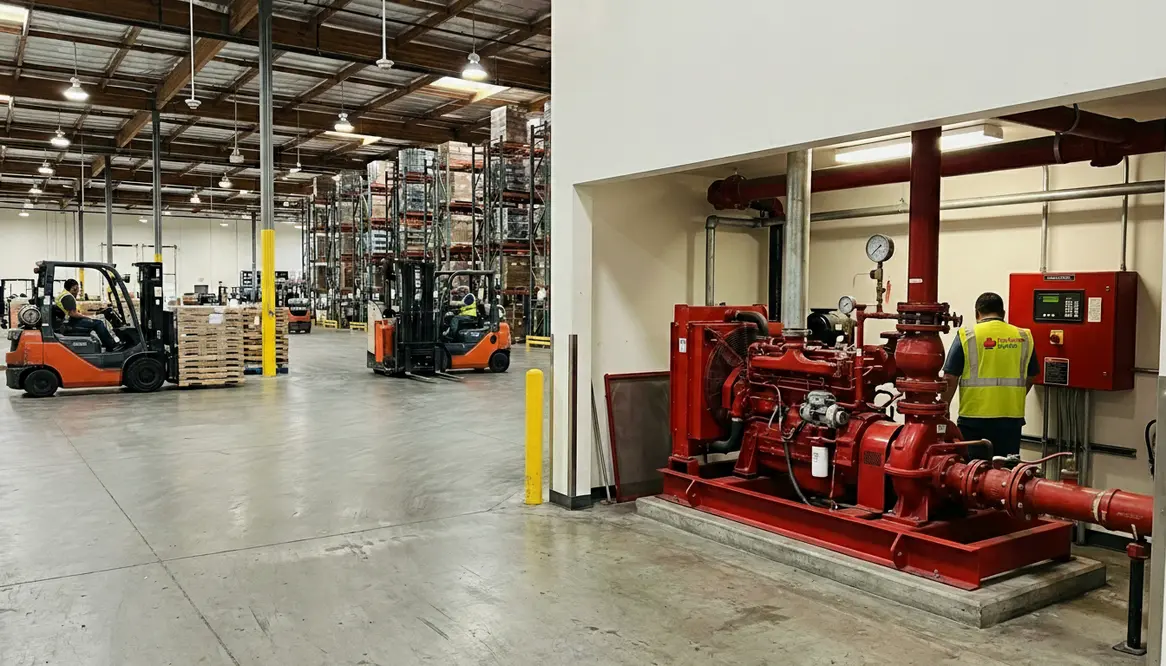
First, I like to ground things in reality. Logistics hubs in Ontario are not small operations. They are vast, high ceiling environments filled with racks, conveyors, and constant motion. Because of that, municipal water pressure alone often falls short. That is where fire pumps step in.
They boost water pressure to meet the demands of sprinkler systems during a fire event. Without them, even the best designed system becomes a polite suggestion rather than a real defense. Moreover, these facilities store diverse materials, which means fire risk is never uniform. I have seen warehouses that look calm on the outside but carry serious hazard classifications inside.
So, while the pump itself might sit quietly in a mechanical room, it carries a responsibility that rivals any superhero. Think Batman, but with less brooding and more horsepower.
How I Approach Fire Pump Selection for Logistics Hubs in Ontario CA
When I evaluate fire pump logistics Ontario CA needs, I do not start with the pump. I start with the building. Every time.
First, I look at the hazard classification. High piled storage changes everything. Then, I consider building size, ceiling height, and sprinkler design. After that, I review the available water supply. Only then does the pump type come into focus.
Typically, I choose between electric and diesel driven pumps. Electric pumps are efficient and reliable when power is stable. However, if backup power is questionable, diesel becomes the safer bet. It is not flashy, but it shows up when needed, much like that one friend who always has jumper cables.
Then comes flow and pressure requirements. Oversizing might sound safe, but it can cause system instability. On the other hand, undersizing is simply not an option. Precision matters here. Every gallon per minute counts.
What Factors Matter Most When Selecting a Fire Pump?
I get this question a lot, and honestly, it deserves a straight answer.
Key Considerations
- Water supply reliability and pressure
- Hazard classification of stored goods
- Building height and layout
- Local fire code requirements in Ontario
- Backup power availability
Common Pitfalls
- Ignoring future expansion needs
- Choosing cost over compliance
- Overlooking maintenance access
- Underestimating testing requirements
- Assuming all pumps perform the same
As a result, the best decisions come from balancing these factors rather than chasing a single metric. A fire pump is not a one size solution. It is more like casting the right actor for a role. Get it wrong, and the whole production feels off.
Compliance and Ontario Standards I Never Ignore
Now, let’s talk about the rules. Because in Ontario, codes are not suggestions. They are enforced with real consequences.
I always align with NFPA 20 standards alongside Ontario Fire Code requirements. Additionally, local authorities may have specific expectations depending on the municipality. Therefore, I make it a point to coordinate with fire officials early in the design phase.
Testing is another area I refuse to treat lightly. Weekly churn tests and annual flow tests are essential. Without them, even the best system can fail when it matters most. And trust me, a failed fire pump test is not the kind of surprise anyone enjoys.
Designing for Long Term Performance, Not Just Day One
It is easy to design for installation day. It is much harder to design for year ten. Yet that is exactly what I aim for.
I think about maintenance access, component durability, and system monitoring. For example, installing a pump in a cramped room might save space today, but it creates headaches for every inspection that follows.
Additionally, I consider system redundancy where needed. Logistics hubs do not pause operations easily. So, minimizing downtime during maintenance becomes a real advantage.
And yes, I admit it, there is a certain satisfaction in knowing a system will perform flawlessly years down the line. It is like planting a tree you may never sit under, except this tree sprays water at very high pressure.
Integrating Fire Pumps Into Large Scale Logistics Operations
Finally, integration matters. A fire pump does not operate in isolation. It works alongside alarms, sprinklers, and building management systems.
I often coordinate with multiple stakeholders including engineers, facility managers, and safety officers. This ensures the system responds quickly and communicates clearly during an emergency.
Moreover, I make sure the system aligns with operational realities. Busy loading docks, automated systems, and constant movement all influence how protection systems should be configured. Because in a real emergency, confusion is the last thing anyone needs.
In facilities that grow fast, revisiting fire pump logistics Ontario CA planning is not optional. It keeps protection levels matched to inventory changes, layout shifts, and new automation that may alter fire load. Treated as an ongoing part of operations rather than a one-time project, it quietly supports the entire logistics engine.
Why Fire Pump Logistics Ontario CA Belongs in Your Strategy
In competitive distribution markets, uptime, insurance ratings, and regulatory inspections all converge on the same point: reliable fire protection. That is where planning around fire pump logistics Ontario CA pays off. It strengthens resilience, makes audits less stressful, and keeps operators focused on moving product instead of worrying about what happens if a sprinkler system has to perform at full demand.
I have watched projects stall because a late-stage review uncovered a missed pump requirement. I have also seen projects sail through approvals because the fire protection strategy, including pump selection, was treated as a core design element from day one. The difference in time, cost, and stress between those two experiences is dramatic.
Done right, fire pump logistics Ontario CA becomes one of those behind-the-scenes strengths that keeps a warehouse viable, insurable, and trusted by clients who expect their inventory to be protected as carefully as their balance sheets.
FAQ
What type of fire pump is best for logistics hubs?
Electric pumps work well with stable power. Diesel pumps are better when backup reliability is critical.
How do I determine the right pump size?
It depends on hazard classification, sprinkler demand, and available water supply.
Are fire pumps mandatory in Ontario warehouses?
They are required when municipal pressure cannot meet sprinkler system demands.
How often should fire pumps be tested?
Weekly visual checks and annual full flow testing are standard practice.
Can I upgrade an existing fire pump system?
Yes, but it must meet current codes and be evaluated for system compatibility.
Conclusion
Choosing the right fire pump system is not just about compliance. It is about protecting people, property, and operations that never truly stop. If you are planning or upgrading a logistics facility, I encourage you to take a closer look at your fire protection strategy. Work with experts who understand large scale systems and local requirements. The right decision today can prevent serious losses tomorrow. And that is a return on investment worth making.