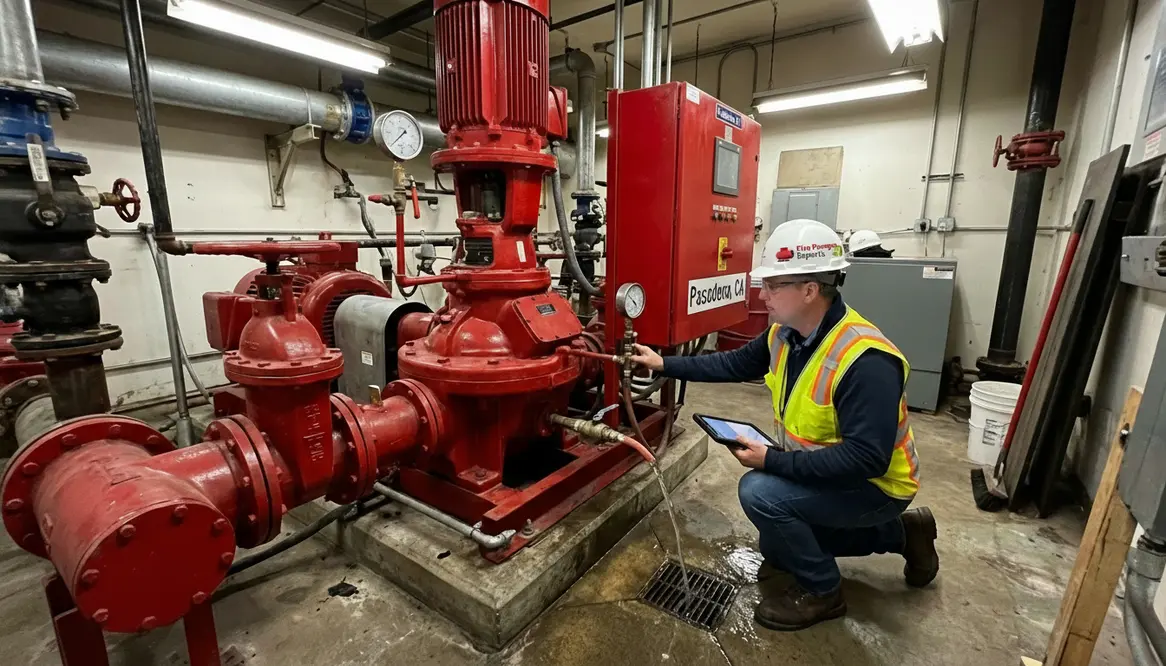
Fire Pump Partial Load Testing Pasadena Benefits
I have spent enough time around commercial pump rooms to know this simple truth. When a fire pump fails, it does not ask for a second chance. That is exactly why fire pump partial load testing Pasadena has become such a valuable approach for large facilities that cannot always run full capacity tests. In a city where uptime matters and disruption costs real money, we look for smarter ways to verify performance without shutting everything down. And yes, sometimes that means testing a powerhouse system without letting it flex every muscle. Think of it as a dress rehearsal instead of opening night.
Why Full Load Testing Is Not Always Practical
Now, in a perfect world, every commercial or industrial building would run full flow tests on demand. However, reality tends to walk in like an uninvited guest. Water supply limits, environmental restrictions, and infrastructure constraints often make full load testing difficult in Pasadena.
Because of that, I often recommend alternative methods. Partial load testing gives us meaningful data without overwhelming the system or the surrounding utilities. Moreover, it allows facilities to stay operational, which is critical for hospitals, high rise buildings, and industrial plants.
And let’s be honest, nobody wants to explain to management why a routine test flooded the parking lot. Again.
Why Pasadena Facilities Lean On Partial Load
Urban water systems, tight site layouts, and sensitive neighbors do not always play nicely with full flow tests. Fire pumps might be ready to roar, but the surrounding infrastructure is quietly begging for mercy. That is where strategies like fire pump partial load testing Pasadena really earn their keep. They let you validate performance while keeping utilities, tenants, and city inspectors relatively calm.
For many mission-critical buildings, the question is not whether to test. It is how to test without wrecking everything around the pump room. Partial load methods step into that gap and provide a workable balance between safety and practicality.
How Fire Pump Partial Load Testing Pasadena Works
So how do we test without going all in? We simulate demand in controlled stages. Instead of pushing the pump to its maximum rated capacity, we measure performance at lower flow levels and compare those readings against expected curves.
In addition, we monitor key indicators like pressure stability, motor performance, and controller response. These factors tell a story. And if you listen closely, the system will let you know if something feels off.
Here is where experience matters. Numbers alone do not always reveal the full picture. I often compare results over time, looking for subtle changes. Because a small drop today can become a major failure tomorrow.
What We Measure
- Discharge pressure at multiple points
- Motor amperage and voltage balance
- Controller start and transfer timing
- Churn performance stability
Why It Matters
- Confirms operational readiness
- Detects early mechanical issues
- Protects water supply systems
- Maintains compliance without disruption
Is Partial Load Testing Reliable Enough for Compliance?
Short answer. Yes, when done correctly.
That said, partial load testing does not replace full flow testing forever. Instead, it serves as a practical solution between major test cycles or when conditions limit full capacity runs. Authorities and inspectors in Pasadena often accept this approach when documentation is thorough and consistent.
Furthermore, modern testing equipment allows us to gather precise data. With the right calibration and process, partial load testing can provide a reliable snapshot of system health. It is not cutting corners. It is adapting intelligently.
And if anyone tells you otherwise, they might still be using flip phones and paper logs.
Benefits for Large Commercial and Industrial Facilities
When I walk into a large facility, I already know the stakes are high. Downtime costs money. Risk affects lives. So the testing method must balance safety with practicality.
Partial load fire pump testing offers several clear advantages:
- It reduces water waste, which matters in regions with strict conservation rules
- It avoids strain on aging infrastructure
- It allows testing during normal operations
- It minimizes disruption to tenants and processes
Additionally, this approach supports ongoing maintenance strategies. Instead of waiting for annual tests, facility managers can monitor performance more frequently. And that consistency builds confidence.
Because at the end of the day, a fire pump is not just a piece of equipment. It is a silent guardian. Yes, I went full superhero there. But it fits.
Why Pasadena Sites Lean On This Strategy
Hospitals, tech campuses, high rises, and industrial facilities in Pasadena have a shared problem: they need rock-solid fire protection without wrecking production schedules or tenant comfort. That is why fire pump partial load testing Pasadena shows up more and more in maintenance plans. The method respects both the pump curves and the realities of busy buildings.
Paired with scheduled full-flow events and NFPA-driven inspections from resources like https://firepumps.org, these programs keep systems ready for real emergencies instead of just passing clipboard inspections.
Common Mistakes I See During Testing
Even the best systems can fail if the testing process is flawed. Over the years, I have seen patterns that repeat more often than they should.
First, incomplete data collection. If you are not capturing accurate readings, you are guessing. And guessing has no place in fire protection.
Second, ignoring trends. One test might look fine, but multiple tests tell the truth. Therefore, I always compare results over time.
Finally, relying on outdated procedures. Technology evolves. Standards shift. So should your testing approach.
And yes, I have seen someone treat a fire pump test like a casual weekend chore. That is like treating a parachute like a backpack. It works right up until it really matters.
Fire Pump Partial Load Testing Pasadena Best Practices
When I approach a test, I focus on precision and consistency. Every step matters.
I begin with system checks. Then I verify instrumentation accuracy. After that, I run controlled flow scenarios while recording performance metrics. Finally, I analyze results against manufacturer curves and historical data.
Equally important, I document everything clearly. Inspectors and stakeholders need confidence in the process. And good records provide that assurance.
Moreover, I recommend scheduling routine partial load tests alongside periodic full load testing when feasible. This layered approach delivers both convenience and thorough validation.
In practice, that means building a long-term plan where fire pump partial load testing Pasadena methods handle regular checkups, while full-capacity events step in on a less frequent but still essential schedule.
FAQ
Conclusion
When it comes to protecting large facilities, guessing is not an option. Fire pump partial load testing Pasadena offers a smart, efficient way to maintain readiness without unnecessary disruption. If you manage a commercial or industrial property, now is the time to take a closer look at your testing strategy. Reach out, schedule an evaluation, and make sure your system is ready when it matters most. Because when the moment comes, it should just work. No drama. No surprises.