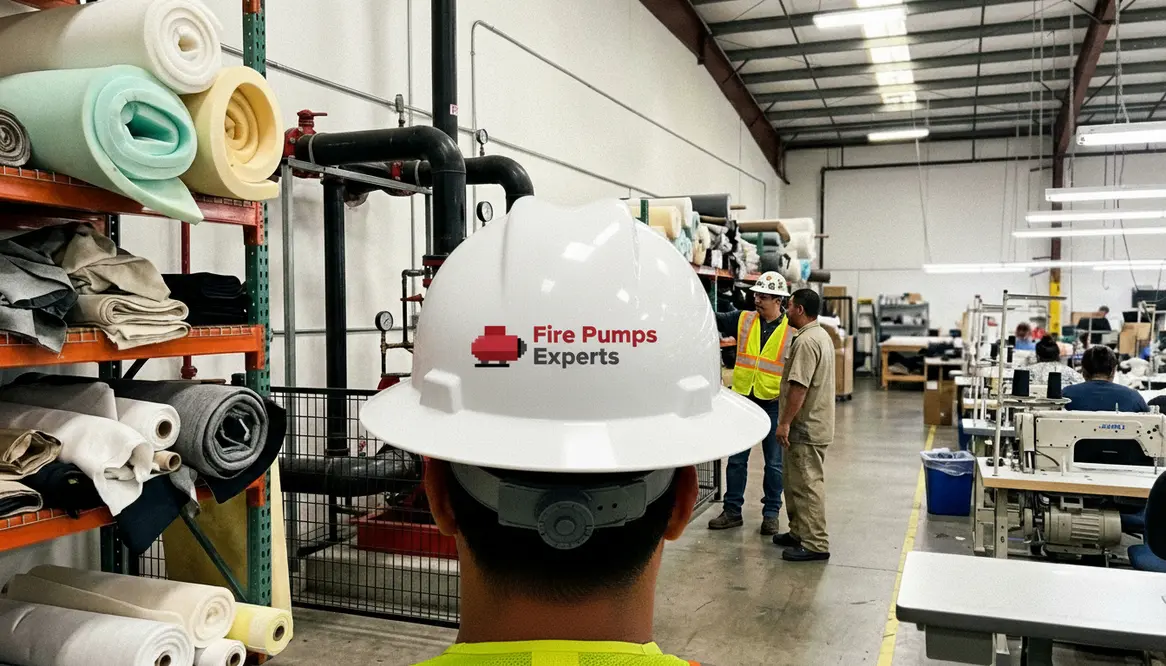
Fire Pump Planning for Combustible Material Factories
I have spent years around industrial facilities, and upholstery factories always stand out. They are alive with motion, fabric, foam, and a quiet risk that never clocks out. That is exactly where Fire pump planning for combustible material use comes into play. When you work with materials that burn faster than gossip in a small town, you cannot afford guesswork. So today, I will walk you through how I approach fire pump systems in these environments, with a steady hand and maybe a small chuckle or two along the way.
Why Upholstery Factories Demand Specialized Fire Pump Systems
Let me be clear. Upholstery factories are not your average commercial space. They house foam, fabric, adhesives, and dust particles that can turn a spark into a headline. Because of that, I always treat these facilities as high hazard environments.
Now, while sprinklers get most of the glory, they are only as reliable as the water supply behind them. That is where fire pumps step in. They ensure consistent pressure and flow when municipal systems fall short. And trust me, during a fire is a terrible time to discover your water pressure has stage fright.
Moreover, I design systems that anticipate rapid fire spread. This means higher capacity pumps, reliable backup power, and smart zoning. In other words, I do not just install equipment. I build confidence into the system.
How I Approach Fire Pump Planning for Combustible Material Use in Factories
When I begin planning, I start with the materials. Foam density, fabric storage height, and adhesive usage all shape the fire load. From there, I calculate the demand curve. Not guess. Not estimate. Calculate.
Then, I match the right pump type. Electric pumps work well when power is stable. However, diesel pumps provide independence when things go sideways. And yes, they are louder, but in an emergency, subtlety is overrated.
Additionally, I factor in redundancy. A single point of failure is like relying on one coffee machine in a busy office. It sounds fine until Monday morning hits. Therefore, I often include backup pumps and dedicated water storage to ensure uninterrupted operation.
What System Components Actually Matter Most?
I get this question a lot, and I always answer it the same way. Everything matters, but some parts carry more weight.
Core components I prioritize
- Fire pump unit sized for peak demand
- Controller that reacts instantly
- Water storage tanks for consistent supply
- Jockey pump to maintain pressure stability
Supporting elements I never ignore
- Reliable power source with backup
- Pipe design that avoids pressure loss
- Monitoring systems for real time alerts
- Routine testing access for maintenance
As a result, the system becomes more than equipment. It becomes a coordinated response network. Think of it like a well rehearsed orchestra, except instead of music, it delivers water exactly where it is needed.
Designing for Real World Factory Conditions
On paper, everything looks neat. In reality, factories are busy, messy, and constantly evolving. Therefore, I design with flexibility in mind.
For example, storage layouts change. New machinery appears. Production ramps up. Consequently, I ensure the fire pump system can handle future demand without a full redesign. This often means planning for higher capacity upfront.
In addition, I consider environmental conditions. Dust, heat, and vibration can affect performance. So, I select durable components and place them strategically. Not in the most convenient spot, but in the smartest one.
And yes, I always account for human behavior. Because no matter how advanced the system is, someone will eventually prop open a fire door. It is practically tradition.
Maintenance Strategies That Keep Systems Ready
Even the best system fails without proper care. That is why I emphasize routine testing and inspection. Weekly churn tests, monthly inspections, and annual performance testing are not optional. They are essential.
Furthermore, I recommend automated monitoring. These systems alert facility managers before small issues become big problems. It is like having a smoke detector for your fire pump system, minus the 3 a.m. false alarms.
Most importantly, I train staff. Because when people understand the system, they respect it. And when they respect it, they are less likely to ignore warning signs.
Balancing Compliance and Practical Performance
Codes and standards guide my work, but I do not treat them as the finish line. Instead, I see them as the baseline.
While I follow NFPA requirements closely, I also consider how the system performs under real stress. For instance, I evaluate flow rates under peak usage and simulate worst case scenarios. Because passing inspection is good. Performing under pressure is better.
So, when I handle Fire pump planning for combustible material use, I go beyond compliance. I build systems that respond when it matters most. No hesitation. No excuses.
FAQ: Fire Pump Systems for Upholstery Factories
Fire pump planning for combustible material use in upholstery facilities raises a lot of practical questions, especially when balancing safety, cost, and production realities. Below are some of the most common ones I hear, along with the answers I give when walking a factory manager through the design and upgrade process.
Conclusion
If you operate an upholstery factory, you already know the risks never take a day off. That is why I take fire pump systems seriously, designing each one to perform under pressure and adapt to real conditions. If you are ready to strengthen your facility with reliable protection, now is the time to act. Connect with experts who understand industrial fire systems and build something that works when it truly counts.
If you want a deeper technical breakdown, start with resources from trusted industry groups such as https://firepumps.org and then compare those baseline recommendations with your own plant\u2019s realities, from storage heights to shift patterns. The stronger your grasp of Fire pump planning for combustible material use, the easier it becomes to justify smart investments that protect people, property, and production.