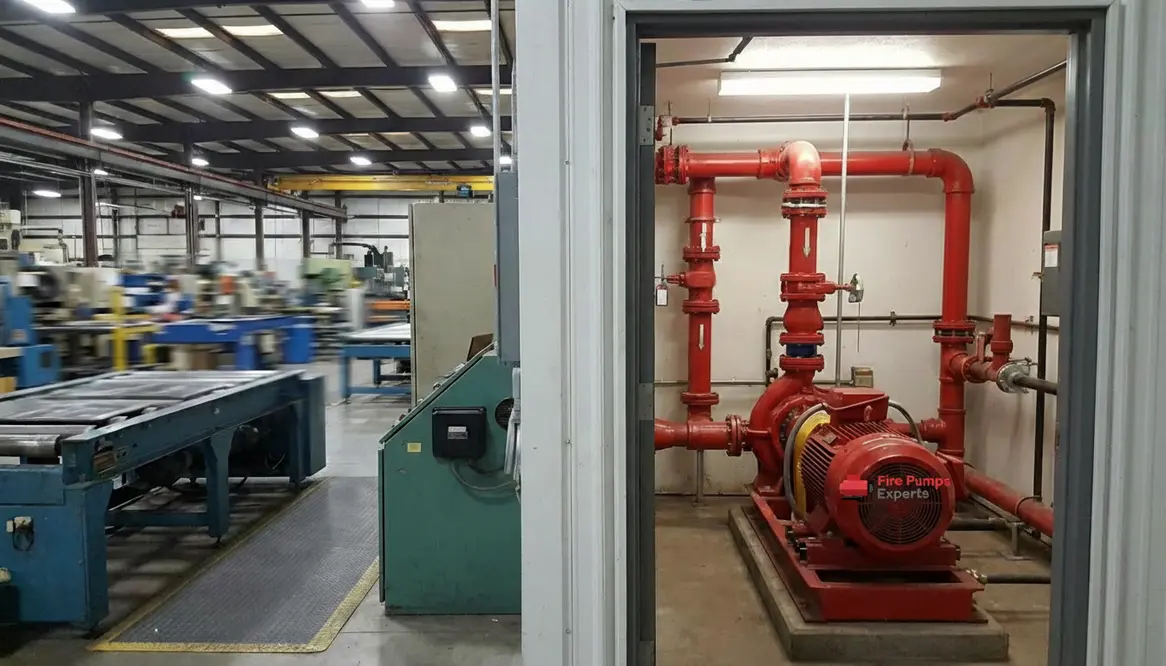
Fire Pump Planning for Industrial Production Spaces
I have spent years around heavy equipment, loud production floors, and the kind of machinery that hums like it has a personality. In that world, Fire pump planning for industrial production spaces is not just another line item on a checklist. It is the quiet guardian that stands ready when everything else goes wrong. And trust me, when something goes wrong in a manufacturing facility, it rarely whispers. It roars. So today, I will walk you through what truly matters when planning fire pump systems for these environments, with just enough wit to keep you awake and maybe even smiling.
Understanding Fire Pump Requirements in Manufacturing Environments
First things first, manufacturing facilities are not your average buildings. They carry higher fire loads, complex layouts, and processes that can escalate a small spark into a full production shutdown faster than you can say “insurance claim.” Therefore, fire pump requirements must match that intensity.
I always start with hazard classification. Facilities dealing with chemicals, high heat processes, or dense storage need stronger and more reliable fire pump systems. Additionally, water supply consistency becomes critical. A weak supply is like bringing a squirt gun to a dragon fight. It looks brave, but it will not end well.
Moreover, codes and standards such as NFPA 20 guide the design. However, compliance alone is not the goal. Performance is. I design systems that exceed minimums because downtime costs more than overpreparing.
How Do I Size a Fire Pump for My Industrial Facility?
Flow demand comes first
I hear this question often, and the answer is both simple and layered. I begin with flow demand. That includes sprinkler systems, hose streams, and any special suppression systems in place. Then, I calculate the total water demand at peak conditions.
Then pressure and friction loss
Next, I evaluate pressure requirements. Large facilities often have multiple levels or long pipe runs, which means friction loss becomes a real factor. Consequently, I account for that loss to ensure water reaches every critical point.
Matching numbers to pump capacity
Finally, I match those numbers with pump capacity. Oversizing can cause inefficiency, while undersizing creates risk. Think of it like casting a superhero. Too weak, and the villain wins. Too strong, and you destroy half the city in the process.
Key Components That Make or Break Performance
When I plan a system, I do not just look at the pump. I look at the entire ecosystem. Because a fire pump is only as good as the system supporting it.
Core components I always prioritize
- Reliable power supply, including backup generators
- Controller systems with clear diagnostics
- Proper suction piping to avoid cavitation
- Test headers for routine performance checks
Common weak points I watch closely
- Undersized water storage tanks
- Poorly designed pipe layouts
- Lack of redundancy in critical systems
- Neglected maintenance access
In addition, I always consider long term maintenance. If a system is hard to test or repair, it will eventually be ignored. And ignored systems tend to fail at the worst possible time. Almost like they are waiting for dramatic effect.
Fire Pump Planning for Industrial Production Spaces That Never Sleep
Many manufacturing facilities operate around the clock. That changes everything. Continuous operations mean systems must be durable, responsive, and easy to monitor.
Therefore, I often recommend electric fire pumps with diesel backups. This combination ensures reliability even during power outages. Furthermore, automation plays a big role. Real time monitoring systems allow facility managers to detect issues before they become emergencies.
Another factor is zoning. Large facilities benefit from segmented fire protection zones. As a result, a problem in one area does not compromise the entire operation. It is the difference between a controlled response and a full scale shutdown.
Designing for Expansion and Future Risk
Here is something I have learned. Manufacturing facilities rarely stay the same. New equipment arrives. Production lines expand. Storage increases. And suddenly, yesterday’s fire pump system is today’s weak link.
So I plan ahead. I build flexibility into the system. That might mean installing pumps with additional capacity or designing piping networks that can handle future extensions. Consequently, businesses avoid costly redesigns later.
Also, I consider emerging risks. For example, lithium ion battery storage is becoming more common. These introduce unique fire hazards that demand specialized suppression strategies. Ignoring these trends is like ignoring a storm warning because the sky still looks blue.
Fire Pump Planning for Industrial Production Spaces That Meets Real World Demands
At the end of the day, planning is not about theory. It is about real world performance. I walk through facilities, observe workflows, and identify risk points that blueprints often miss.
Additionally, I collaborate with engineers, safety managers, and operations teams. Each perspective adds depth to the plan. Because a fire pump system should not just exist. It should integrate seamlessly into the facility’s daily operations.
And yes, I test everything. Regular testing ensures the system performs as expected. Because when the moment comes, there is no time for guesswork. Only action.
FAQ: Fire Pump Requirements for Manufacturing Facilities
Conclusion
When I approach fire pump planning, I treat it as an investment in continuity, safety, and peace of mind. The right system does more than meet code. It protects people, equipment, and productivity. If you are managing a commercial or industrial facility, now is the time to act. Evaluate your system, plan for growth, and ensure your fire protection stands ready when it matters most. Because in this line of work, preparation is everything.