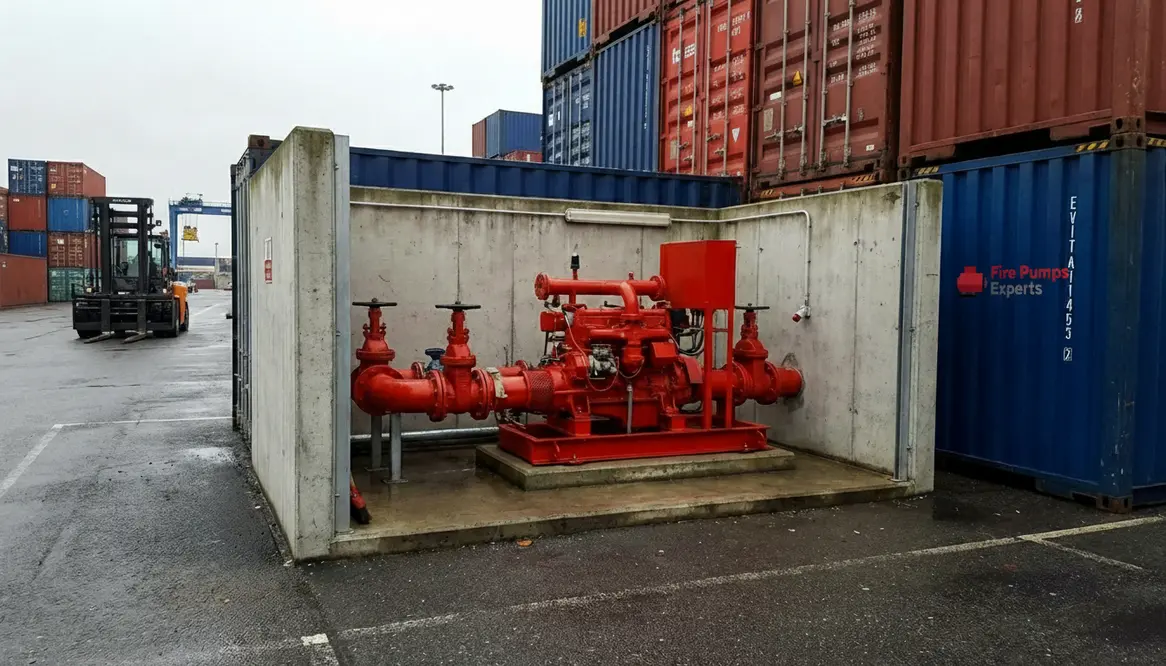
Fire Pump Planning for Maritime Supply Chains
Resilient ports do not happen by accident. They are built, pipe by pipe, valve by valve, decision by decision.
I have spent years walking the concrete veins of port logistics facilities, where containers stack like skyscrapers and the hum of global trade never really sleeps. In that world, Fire pump planning for maritime supply chains is not just a technical task. It is a quiet guardian. Within the first moments of an emergency, it decides whether a small incident stays small or becomes tomorrow’s headline. And trust me, nobody wants their facility trending for the wrong reasons. Not even accidentally.
Ports are unforgiving to lazy design. Salt air corrodes, schedules do not slow down, and anything labeled “temporary fix” tends to become suspiciously permanent. That is why Fire pump planning for maritime supply chains demands equal parts precision, practicality, and stubborn refusal to accept “good enough.”
Understanding Fire Pump Systems in Port Logistics Facilities
At their core, fire pump systems move water with purpose and pressure. However, in port environments, the stakes rise fast. I am dealing with massive storage zones, hazardous cargo, and long response distances. Therefore, I design systems that react instantly and sustain performance over time.
Unlike a standard commercial building, a port facility demands resilience. Salt air corrodes. Equipment runs nonstop. So I choose materials and layouts that hold their ground. Moreover, I align pump capacity with real risk profiles, not guesswork.
It is a bit like casting a superhero. You do not pick someone who looks good in the suit. You pick someone who can actually save the day.
How do I design fire pump systems for port logistics facilities?
I begin with flow demand and hazard classification. Then I map the facility like a strategist, not just an engineer. Because placement matters as much as power.
I calculate peak water demand across multiple zones. After that, I factor in redundancy. If one pump fails, another must step in without hesitation. In port logistics, downtime is not an inconvenience. It is a liability.
Next, I integrate control systems that communicate clearly. Alarms, sensors, and monitoring tools must work in harmony. Meanwhile, I ensure compliance with codes, but I do not stop there. Codes are the floor, not the ceiling.
And yes, I test everything. Because assumptions, much like cargo ships in a storm, tend to drift.
Fire pump planning for maritime supply chains and risk mitigation
When I approach Fire pump planning for maritime supply chains, I think beyond equipment. I think about continuity. A port facility cannot simply pause operations. Every delay ripples across industries.
So I design systems that isolate incidents quickly. Zoning becomes critical. If a fire starts in one section, the system contains it without starving other areas of protection.
Additionally, I coordinate with emergency response teams. A fire pump system should not operate in isolation. It should support human decision making, not complicate it.
Because at the end of the day, the goal is simple. Keep people safe. Keep operations moving. And avoid turning a minor spark into a blockbuster disaster. Nobody needs that kind of drama, even if Hollywood might disagree.
Key Components I Prioritize in Industrial Fire Pump Systems
Primary Pump Units
I select pumps that match both flow and pressure demands without overengineering.
Backup Systems
Redundancy is non negotiable. Diesel backups often step in when power fails.
Control Panels
Clear and responsive controls ensure operators act fast and correctly.
Water Supply Integrity
I verify that supply sources remain stable under peak demand conditions.
Monitoring Systems
Real time data helps detect issues before they escalate.
Corrosion Resistance
Salt exposure demands materials that can handle harsh environments.
Each component plays a role. Together, they create a system that behaves less like machinery and more like a well rehearsed orchestra.
Common mistakes I avoid in port fire protection planning
I have seen what happens when planning cuts corners. It usually ends with expensive lessons.
- First, I avoid underestimating hazard levels. Port facilities store everything from textiles to chemicals. Treating them the same is a recipe for failure.
- Second, I never ignore maintenance access. A system that cannot be serviced easily will not stay reliable for long.
- Third, I do not rely on outdated layouts. Ports evolve quickly. Therefore, fire protection must evolve alongside them.
- Finally, I resist the temptation to overcomplicate. A system should be robust, not confusing. Because in an emergency, clarity wins every time.
Strategic value of Fire pump planning for maritime supply chains
Beyond immediate safety, Fire pump planning for maritime supply chains influences insurance costs, tenant confidence, and operational credibility. When stakeholders know the facility can withstand emergencies without collapsing the schedule, negotiations get easier and partnerships get stronger.
Modern ports are under pressure to prove resilience, not just productivity. Thoughtful design of fire pump systems sends a clear message: this site is prepared, the risks are understood, and shortcuts are not part of the business model. That is the quiet power behind Fire pump planning for maritime supply chains done properly.
For deeper technical references and standards that often guide these decisions, resources like https://firepumps.org can be helpful starting points when aligning design choices with industry expectations.
FAQ: Fire Pump Systems for Port Logistics Facilities
Conclusion: Building resilience into every system
When I design fire pump systems for port logistics facilities, I am not just meeting requirements. I am building confidence into every pipe and every valve. If you are managing a commercial or industrial port property, now is the time to evaluate your system. Let us strengthen your protection strategy, improve reliability, and keep your operations moving without interruption. Because in this business, preparedness is not optional. It is everything.