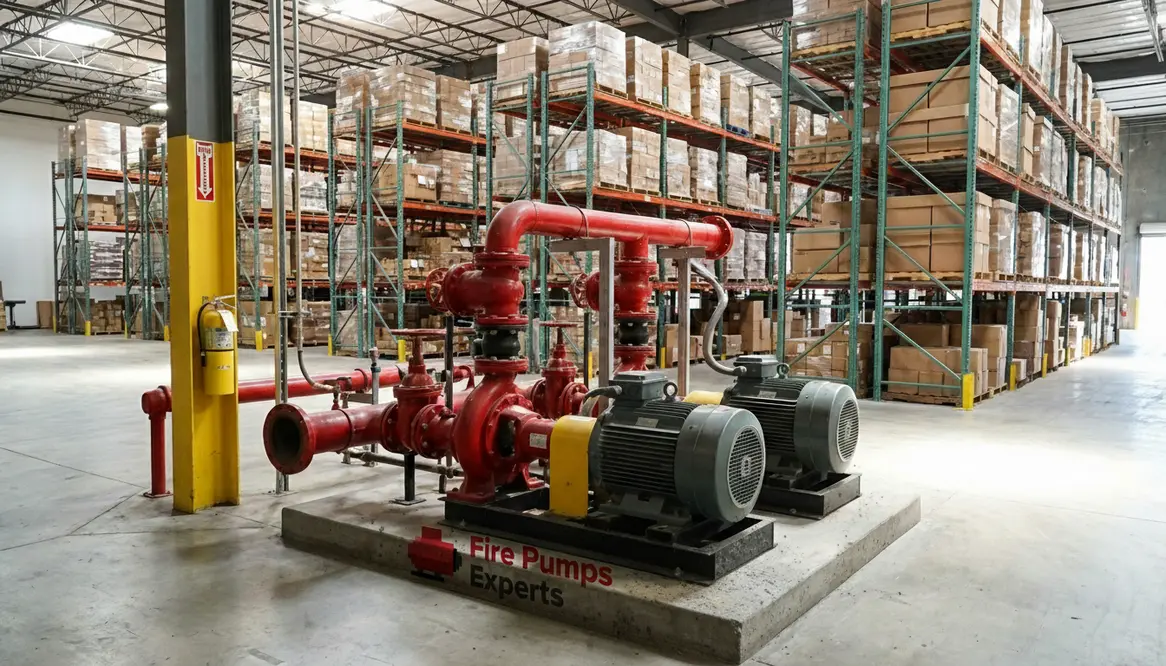
Fire Pump Rack Storage Riverside Selection Guide
I have spent enough time around industrial facilities in Riverside to know one thing for certain. Fire protection is not the place for guesswork or crossed fingers. When it comes to fire pump rack storage Riverside systems, the stakes climb as high as the storage itself. Tall racks, dense commodities, and narrow aisles create a perfect storm where fire can move fast and hit hard. So today, I am walking you through how I approach fire pump selection for these demanding environments, with a calm head and a sharp eye.
Understanding Rack Storage Hazards in Riverside Facilities
Rack storage is not just stacking boxes higher. It changes how fire behaves. Because materials are arranged vertically, flames travel upward quickly, pulling heat and smoke along like a freight train. Therefore, I always start by evaluating commodity type, storage height, and aisle configuration.
For example, plastics stored in high piles burn hotter and faster than standard goods. Meanwhile, narrow aisles limit sprinkler reach. As a result, the fire pump must deliver enough pressure and flow to support aggressive sprinkler demand. Otherwise, you are basically bringing a garden hose to a blockbuster action scene. And we all know how that ends.
How do I choose the right fire pump for rack storage systems?
I focus on three essentials right away. Flow rate, pressure, and reliability. Each one plays a role in making sure the system performs under real fire conditions, not just on paper.
First, I calculate the required flow based on sprinkler design criteria. Then, I match that with a pump that can sustain pressure across the entire system, even at the highest rack level. Additionally, I consider future expansion because facilities rarely stay frozen in time.
Electric pumps often work well in facilities with stable power. However, I lean toward diesel driven pumps when reliability is critical. Power outages and fires tend to show up at the same party, uninvited.
Key Design Factors for Fire Pump Rack Storage Riverside Systems
Designing for Riverside facilities brings its own flavor. Local codes, seismic considerations, and water supply conditions all shape my decisions. So I do not just pick a pump. I build a strategy around it.
Water Supply Evaluation
I always test available water supply first. If city pressure falls short, the pump must compensate. Otherwise, the entire system struggles when it matters most.
System Demand Curve
I align pump performance with the system curve. This ensures efficient operation instead of overworking the pump like it owes us money.
Seismic Stability
Riverside sits in an active region. Therefore, I make sure pumps and components meet seismic requirements to stay functional after ground movement.
Redundancy Planning
In high value facilities, I often recommend backup pumps. Because when millions in inventory are on the line, one layer of protection feels a bit optimistic.
Avoiding Common Mistakes in Pump Selection
I have seen facilities oversize pumps thinking bigger equals better. In reality, oversized pumps can cause pressure issues and system wear. On the flip side, undersized pumps fail to meet demand. Neither scenario ends well.
Another common issue is ignoring system changes. If storage height increases or commodities change, the fire pump must be reevaluated. Yet many facilities forget this step. It is like upgrading your car engine but keeping bicycle brakes. Not ideal.
Finally, I pay attention to testing and maintenance access. A perfectly selected pump means little if it cannot be tested easily. Convenience matters more than people admit.
Matching Fire Pumps to High Density Storage Performance
High density storage pushes systems harder than standard layouts. Therefore, I look beyond minimum requirements. I consider peak demand scenarios, not just average ones.
For fire pump rack storage Riverside applications, I often coordinate closely with sprinkler designers. This ensures the pump supports real world discharge patterns. Additionally, I factor in friction loss across long pipe runs. Because water does not teleport, despite what sci fi movies might suggest.
In many cases, I also recommend variable speed controllers. These allow the pump to adjust output based on demand, improving efficiency and reducing wear over time.
Why Local Expertise Matters in Riverside Installations
Riverside is not a one size fits all environment. Water supply conditions vary widely between districts. Moreover, local codes can shift expectations for fire protection systems.
That is why I rely on local data, not assumptions. I review hydrant flow tests, confirm authority requirements, and coordinate with inspectors early. As a result, projects move smoother and avoid last minute surprises.
And let me tell you, surprises in fire protection projects are about as welcome as a plot twist in a movie you already spoiled for yourself.
FAQ
Take the Next Step with Confidence
Choosing the right fire pump is not just a technical decision. It is a commitment to protecting people, property, and operations. I approach every project with precision and a long term mindset. If your facility depends on rack storage, now is the time to review your system and make sure it is ready for real world demands. Connect with a specialist and get your protection strategy where it needs to be, especially if you are evaluating options for fire pump rack storage Riverside facilities or referencing resources like https://firepumps.org for additional context.