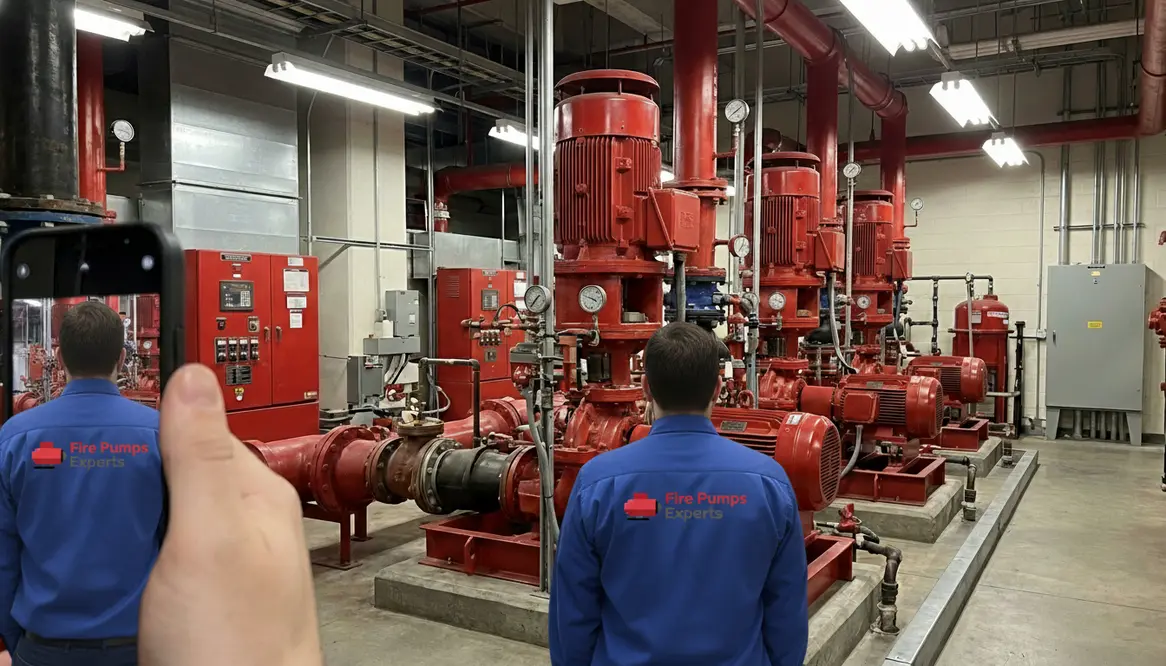
Fire Pump Requirements for Arenas Safety Guide
Fire safety for major assembly spaces is not the kind of topic that gets a standing ovation. Still, it is the quiet hero behind every packed arena, convention center, and large commercial venue. Early in my work with large scale properties, I learned that understanding Fire Pump Requirements for Arenas is not just a code issue. It is a life safety backbone. When thousands gather under one roof, the margin for error disappears. And while no one buys a ticket to admire a fire pump, trust me, it is doing more heavy lifting than the halftime show.
What makes fire safety different in large assembly spaces?
I have walked through enough large venues to tell you this. The challenge is not just size. It is density, movement, and unpredictability. People gather, they move in waves, and sometimes they panic. So, the systems behind the walls must stay calm even when everything else does not.
First, occupant load changes everything. A warehouse might be large, but an arena full of fans? That is a different beast. Therefore, fire protection systems must scale quickly and respond instantly.
Second, evacuation paths must remain clear and intuitive. In an emergency, nobody wants to solve a maze. Clear signage and lighting do more than guide people. They reduce hesitation.
Finally, integrated systems matter. Fire alarms, sprinklers, and pumps must communicate like a well rehearsed band. If one misses a beat, the whole performance suffers.
Fire Pump Requirements for Arenas and why they matter
Now let me slow this down, because this is where things get serious. Fire Pump Requirements for Arenas are not just regulatory boxes to check. They are engineered responses to worst case scenarios.
Arenas and large venues often sit at the edge of municipal water capacity. That means pressure and flow can fall short when demand spikes. So, fire pumps step in as the reliable backup quarterback. And unlike in sports movies, this one cannot afford a dramatic learning curve.
Three critical performance factors
Flow capacity must meet peak sprinkler demand. This includes multiple zones activating at once.
Redundancy ensures that if one pump fails, another takes over without hesitation.
Power reliability keeps systems running during outages. Because fires do not wait for the grid to recover.
In short, these requirements ensure that when water is needed, it shows up with purpose and pressure.
How I design safer systems for high occupancy buildings
When I approach a large assembly project, I do not start with equipment. I start with behavior. How do people enter, gather, and exit? Once I understand that, I build systems around those patterns.
Then, I layer protection. Detection comes first, followed by suppression, and finally containment. Each layer supports the next. It is less like stacking bricks and more like composing music. Everything must work together.
Moreover, I consider failure points. What happens if a valve sticks? What if power drops? Planning for failure is not pessimism. It is professionalism.
Key Design Priorities
- Rapid detection systems
- Zoned sprinkler coverage
- Reliable fire pump integration
- Clear evacuation routing
Common Risk Factors
- Overcrowding during events
- Blocked exit pathways
- Inconsistent maintenance
- Power supply vulnerabilities
Smart maintenance keeps systems from becoming expensive decorations
I will be honest. The most advanced fire system in the world becomes useless if no one maintains it. And yes, I have seen million dollar systems treated like gym memberships. Purchased with good intentions, rarely used properly.
Routine inspection is not optional. Pumps must be tested under load. Controllers need verification. Valves must remain accessible and functional.
Additionally, documentation matters. If a system fails and no one knows its last service date, that is a problem. Records create accountability, and accountability keeps systems alive.
And let us not forget training. Staff should know how systems work. Not in theory, but in practice. Because when alarms sound, Google is not going to help in real time.
Fire Pump Requirements for Arenas in modern compliance planning
Codes evolve, and so should your systems. Modern Fire Pump Requirements for Arenas reflect lessons learned from past incidents. They demand higher reliability, better monitoring, and stronger integration.
For example, remote monitoring now plays a larger role. Facility managers can track pump performance in real time. That means issues are caught early, not during emergencies.
Also, energy efficiency has entered the conversation. While safety remains the top priority, newer systems balance performance with smarter energy use.
Most importantly, compliance is not a one time event. It is an ongoing process. Regular updates ensure that systems meet current standards and continue to protect occupants effectively.
FAQ about fire safety in major assembly spaces
Below are some of the most common questions that come up when discussing Fire Pump Requirements for Arenas and broader fire protection strategies in large assembly venues.
Final thoughts and next steps
Fire safety in major assembly spaces is not about reacting. It is about preparing with precision. If you manage or operate a large commercial property, now is the time to evaluate your systems, especially your fire pump setup. Work with experts who understand the scale and complexity of these environments. Because when safety is done right, no one notices. And that is exactly the point.