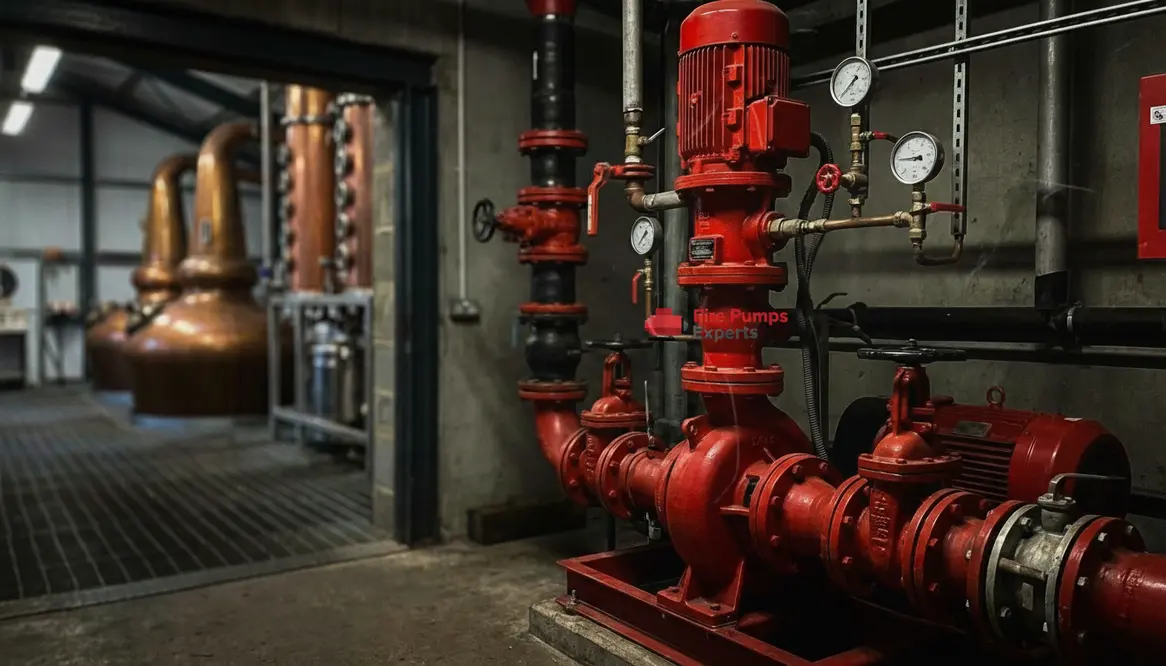
Fire Pump Requirements for Distilleries Explained
How to keep stills singing, barrels aging, and disasters out of the headlines.
I have spent enough time around distilleries to know one thing for certain. Where there is alcohol, there is both art and risk. Fire protection in alcohol production environments is not just a regulatory checkbox. It is the quiet guardian standing between a controlled craft and a catastrophic event. And while copper stills may gleam like something out of a movie, the real hero often sits tucked away in a pump room, humming with purpose.
So let me walk you through what really matters when it comes to fire pump requirements in distilleries. I will keep it grounded, a little entertaining, and just serious enough to remind you that ethanol does not negotiate.
Why Distilleries Demand Serious Fire Protection
Distilleries combine heat, vapor, and flammable liquid in a way that would make even a seasoned firefighter raise an eyebrow. Because of this, fire protection systems for distillation facilities must perform under pressure, literally.
Unlike a typical commercial building, distilleries face rapid fire spread due to vapor ignition. Therefore, fire pumps must deliver consistent and reliable water flow at the exact moment it is needed. If that pump hesitates, even for a second, the situation can escalate quickly.
And yes, I have seen systems that looked impressive on paper but failed in practice. That is a bit like owning a sports car that only drives well downhill. Not ideal.
Risk profile most people underestimate
In many facilities, a small fire might smolder, trigger an alarm, and allow time for intervention. In distilleries, vapor ignition can turn a minor leak into a large fire in seconds. That is why Fire protection in alcohol production environments demands systems that act instantly, not eventually.
Sprinkler performance, pump reliability, and water supply all need to work together as if they have rehearsed the scene a thousand times. Because when something actually goes wrong, there are no rehearsals left.
What Fire Pump Capacity Does a Distillery Actually Need
This is the question I hear most often, and thankfully, the answer is not mysterious. It is precise.
Fire pump sizing depends on hazard classification, building layout, and suppression system demand. However, in alcohol production settings, the hazard level often lands in Extra Hazard Group 2. That means higher flow rates and stronger pressure requirements.
In practical terms, I typically see systems designed to deliver between 1500 and 3000 gallons per minute. However, I always emphasize that guessing is not a strategy. Hydraulic calculations must guide the design.
Additionally, local codes and NFPA standards play a major role. So while one distillery may operate safely at a certain capacity, another might require significantly more. Context matters. Always.
Key Components That Keep Fire Pumps Reliable
A fire pump is not just a pump. It is part of a system that must work flawlessly together.
Here is what I focus on when evaluating systems:
Power and brains
Power Supply
Electric pumps need reliable backup power. Diesel pumps, on the other hand, bring independence but require maintenance discipline.
Controller Systems
Controllers must respond instantly. Delays are unacceptable in high risk environments.
Water and proof
Water Supply
A strong pump means nothing without a dependable water source. Storage tanks or municipal supply must meet demand.
Testing Access
Regular testing ensures readiness. If testing is difficult, it often gets ignored. And that is where problems begin.
When these elements align, fire suppression in distilleries becomes far more dependable. When they do not, well, that is when headlines happen.
Fire Protection in Alcohol Production Environments Requires Smart Design
Targeted protection, not guesswork
Designing systems for distilleries is not about overbuilding. It is about building smart.
For example, I always recommend separating critical equipment areas with dedicated protection zones. That way, a fire in one section does not compromise the entire operation. Additionally, foam systems often complement water based systems in areas with high ethanol concentration.
Ventilation, vapors, and that “invisible” risk
Moreover, ventilation plays a quiet but powerful role. Proper airflow reduces vapor buildup, which in turn reduces ignition risk. It is not flashy, but it is effective.
And yes, sometimes I compare it to cooking. You can have the best ingredients, but if your timing and heat control are off, dinner is ruined. In this case, dinner is your facility.
That is why Fire protection in alcohol production environments has to account for air movement, vapor behavior, and how different rooms interact under both normal and emergency conditions, not just where the nearest sprinkler head sits on the ceiling.
Common Mistakes I See in Distillery Fire Pump Installations
I wish I could say mistakes are rare. They are not. However, they are avoidable.
Here are the usual suspects:
- Undersized pumps
This often happens when future expansion is ignored. Distilleries grow. Your system should too. - Poor maintenance planning
A neglected fire pump is like a forgotten gym membership. It looks good on paper but does nothing in reality. - Improper system integration
Fire alarms, suppression, and pumps must communicate seamlessly. If they do not, response time suffers. - Ignoring code updates
Standards evolve. Systems must evolve with them.
By addressing these issues early, facilities can avoid costly retrofits and dangerous gaps in protection.
FAQ About Fire Pump Requirements in Distilleries
Fire protection in alcohol production environments tends to generate the same practical questions. Here are clear, straightforward answers to the ones that come up most often.
Final Thoughts and Next Steps
When I look at fire protection in alcohol production environments, I see more than compliance. I see continuity, safety, and peace of mind. If you operate or manage a distillery, now is the time to evaluate your fire pump system with a critical eye. Work with specialists who understand industrial scale risks. Visit https://firepumps.org to explore solutions built for serious facilities, because when it comes to fire, preparation is everything, and second chances are rare.