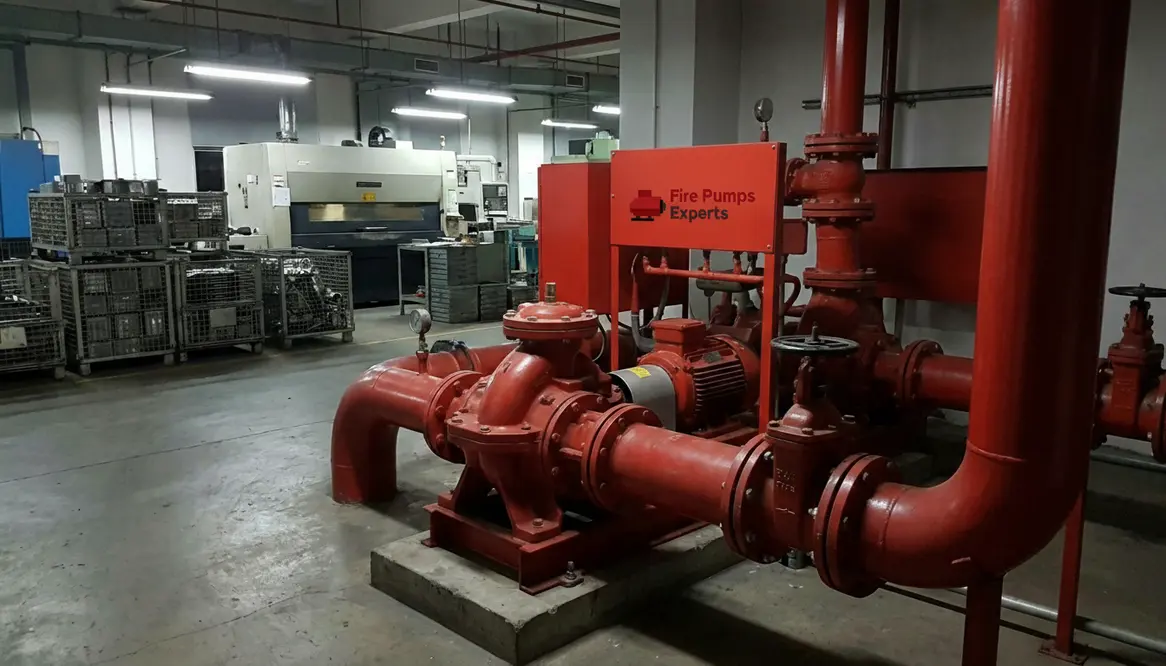
Fire Pump Requirements for Manufacturing Facilities
I have spent years walking through manufacturing floors where machines hum like a steady bassline and production never really sleeps. And yet, beneath that rhythm, there is always a quieter system standing guard. Fire protection. The same principles that guide government building fire protection also shape how we protect large scale manufacturing facilities. However, in industrial spaces, the stakes feel heavier. More fuel. More heat. More opportunity for things to go sideways. So I approach fire pump requirements with a calm, deliberate focus, because when things go wrong, speed and pressure are everything.
What Fire Pump Requirements Apply to Manufacturing Facilities?
When I look at a manufacturing site, I do not just see walls and equipment. I see risk profiles. Therefore, fire pump requirements begin with codes like NFPA 20, which governs installation, and NFPA 13, which shapes sprinkler demand. Together, they define how much water you need and how fast you need it.
Most facilities require a dedicated fire pump when municipal supply cannot meet pressure or flow demands. And trust me, relying on city water alone is a bit like expecting a garden hose to handle a five alarm blaze. It is optimistic. Not wise.
Typically, I ensure:
- Proper pump sizing based on hazard classification
- Reliable power source, often diesel or backup electric
- Redundant controls to avoid single points of failure
- Compliance with inspection and testing standards
Meanwhile, I always align these requirements with broader fire safety frameworks similar to those used in public sector fire protection systems, because consistency saves lives.
Understanding Water Demand and System Pressure
Now, here is where things get interesting. Manufacturing facilities rarely play by simple rules. One area may store flammable liquids, while another runs high heat machinery. As a result, water demand fluctuates across the building.
I calculate demand by evaluating the most demanding hazard first. Then, I design the fire pump to meet that peak need without hesitation. Because in a real emergency, there is no warm up period. The system either delivers or it does not.
Additionally, pressure matters just as much as flow. Without proper pressure, water will not reach upper levels or remote zones. And if you have ever watched water lazily dribble out of a hose, you already know that is not going to stop anything but mild disappointment.
Choosing the Right Fire Pump Type
Not all fire pumps are created equal. In fact, choosing the wrong type is like casting the wrong actor in a blockbuster. Sure, they might look the part, but the performance falls apart under pressure.
Electric Fire Pumps
I often recommend these when power is stable and reliable. They are efficient, quieter, and easier to maintain. However, they depend on uninterrupted electricity, which can be a gamble during emergencies.
Diesel Fire Pumps
These bring independence. No grid reliance. They start strong even during outages. While they require more maintenance, they offer peace of mind where power reliability is questionable.
In many manufacturing environments, I lean toward redundancy. Because if one system fails, another must step in without hesitation. It is not paranoia. It is preparation.
Installation Factors That Can Make or Break Performance
I have seen perfectly good equipment fail because of poor installation. And that is a painful lesson. So I focus on details that others sometimes overlook.
First, location matters. Fire pumps need protection from flooding, extreme heat, and vibration. Secondly, suction piping must be clean and properly sized to prevent cavitation. That unpleasant rattling sound is not just noise. It is damage in progress.
Then there is accessibility. If maintenance teams cannot reach components easily, inspections get delayed. And delays lead to risk.
Consequently, I treat installation as part engineering, part choreography. Everything must flow smoothly, without friction or obstruction.
How Do I Maintain Fire Pump Reliability Over Time?
Short answer. I stay consistent.
Longer answer. I follow strict inspection, testing, and maintenance schedules. Weekly churn tests. Monthly checks. Annual performance testing. Each step ensures the system remains ready.
Moreover, I document everything. Because data tells a story. It reveals wear patterns, pressure drops, and early warning signs before failure occurs.
And yes, sometimes it feels repetitive. Like watching the same episode of a show you have already memorized. But when the emergency hits, that routine becomes the reason everything works.
Aligning with Broader Fire Protection Standards
Although manufacturing facilities have unique risks, I often draw parallels to government building fire protection strategies. Both demand reliability, redundancy, and strict compliance. The difference lies in scale and hazard intensity.
Therefore, I integrate systems that communicate clearly across alarms, sprinklers, and pumps. Because during an emergency, confusion is the real enemy.
In addition, I coordinate with engineers, safety managers, and local authorities. This collaboration ensures that every layer of protection supports the next. Like a well rehearsed orchestra, except the stakes are far higher than a missed note.
Frequently Asked Questions
Conclusion
When I design fire pump systems for manufacturing facilities, I think beyond compliance. I think about continuity, safety, and control when it matters most. If you are managing a commercial, industrial, or even a complex site that mirrors government building fire protection expectations, now is the time to evaluate your system. Reach out, assess your risks, and make sure your fire protection stands ready. Because in this line of work, preparation is not optional. It is everything.