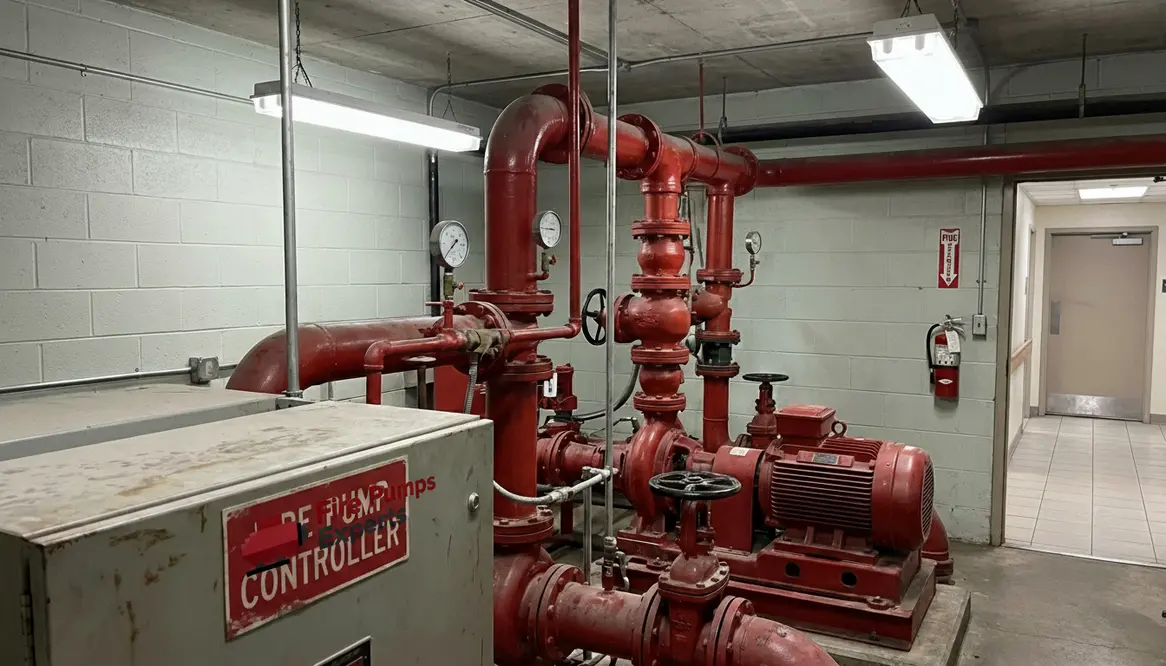
Fire Pump Requirements for Public Health Buildings
I have spent enough time around public health buildings to know one thing for certain: when safety fails, it fails loudly. Fire safety, however, works best when it is quiet, steady, and ready. That is where Fire Pump Requirements for Public Health Buildings step in early, often within the first lines of any serious safety plan. These systems are not decorative. They are the quiet heroes behind the walls, waiting for a moment we all hope never comes. And yet, like a well cast superhero who only appears in the third act, they must perform flawlessly when called.
Why Fire Safety in Community Health Facilities Demands Precision
Community health services operate differently from standard commercial buildings. People inside are often vulnerable, sometimes immobile, and always dependent on the environment being controlled and predictable. Because of this, fire protection is not just about meeting code. It is about anticipating human limitations.
Therefore, I always approach fire safety here with a layered mindset. Detection must be immediate. Suppression must be reliable. Evacuation must be realistic. And importantly, water supply systems must never hesitate.
That is exactly why fire pump standards for healthcare facilities exist. They ensure consistent water pressure even when municipal systems fall short. Without that, sprinklers become little more than expensive decorations. And nobody wants that, unless you enjoy irony at the worst possible time.
How Do Fire Pump Systems Support Public Health Buildings?
Let me answer this plainly. Fire pumps take over when the normal water supply cannot keep up with demand. In large health facilities, demand rises fast during a fire event. Multiple sprinkler zones activate, and pressure drops quickly.
So, the pump steps in and says, not today.
In practical terms, I look for systems that:
- Maintain steady pressure across multiple floors
- Activate automatically without delay
- Integrate with alarm and monitoring systems
- Handle peak demand without performance dips
Moreover, compliance with Fire Pump Requirements for Public Health Buildings ensures redundancy. That means backup power, secondary controls, and durability under stress. Because if a system fails during a fire, it is not a system. It is a liability.
Designing Fire Protection That Matches Real World Conditions
I have seen beautifully designed systems fail because they ignored reality. On paper, everything worked. In practice, not so much.
Public health buildings often operate 24 hours a day. That means constant electrical load, varying water usage, and high occupancy. Consequently, fire protection design must reflect these conditions.
For example, I always consider:
- Peak occupancy hours and patient density
- Floor layout complexity and travel distances
- Equipment that could accelerate fire spread
- Backup power reliability under extended outages
Additionally, fire pump compliance for medical facilities requires testing under load conditions. Not simulated conditions. Real ones. Because a system that works only in theory belongs in a classroom, not in a hospital.
Operational Readiness and Maintenance Culture
Even the best system will fail if ignored. That is not pessimism. That is experience talking.
Routine testing is not optional. It is the difference between confidence and guesswork. I recommend weekly churn tests and monthly flow tests, supported by detailed logs. And yes, someone actually needs to read those logs.
Furthermore, staff training plays a huge role. When personnel understand how systems behave, they respond faster and more effectively. A calm, informed response beats panic every time.
What I Always Prioritize
- Scheduled pump inspections
- Control panel familiarity
- Clear emergency procedures
- Coordination with local fire services
What Gets Overlooked Too Often
- Battery backup checks
- Valve positioning errors
- Outdated documentation
- Delayed repairs on minor faults
Interestingly, most failures begin as small issues. A valve slightly off. A sensor slightly delayed. Then one day, those small things decide to team up like villains in a crossover episode. And that is when trouble starts.
Fire Pump Requirements for Public Health Buildings in Practice
When I evaluate systems against Fire Pump Requirements for Public Health Buildings, I focus on performance under pressure, both literally and operationally.
These requirements typically demand:
- Dedicated power supply with backup generators
- Automatic start within seconds of pressure drop
- Protection against overheating and mechanical failure
- Accessibility for maintenance without disrupting operations
However, compliance alone is not the goal. Performance is. I want systems that exceed minimum standards because real emergencies rarely respect minimum expectations.
Also, coordination matters. Pumps must work seamlessly with sprinklers, standpipes, and alarm systems. If one part lags, the entire system feels it. Think of it like a band. If the drummer loses rhythm, the whole performance falls apart. And in this case, the audience definitely notices.
Technology and Smarter Fire Safety Systems
Today, fire safety is getting smarter. Sensors talk to control panels. Systems report their own health. And operators receive alerts before problems escalate.
Therefore, I always encourage integrating monitoring technology. Remote diagnostics can identify pressure drops, motor issues, or abnormal activity early. That means faster fixes and fewer surprises.
At the same time, automation should never replace human oversight. It should support it. Because while technology is impressive, it does not walk the floor or notice subtle changes the way experienced staff can.
For deeper technical discussions and reference material, resources such as https://firepumps.org can help frame how Fire Pump Requirements for Public Health Buildings evolve alongside new technologies.
FAQ: Fire Safety for Community Health Services
What is the role of a fire pump in health facilities?
It ensures consistent water pressure for sprinkler systems during emergencies.
How often should fire pumps be tested?
Weekly churn tests and monthly flow tests are standard practice.
Why are fire pump requirements stricter in public health buildings?
Because occupants may need assistance evacuating, increasing risk.
Do fire pumps need backup power?
Yes, backup generators are essential for uninterrupted operation.
Can smart monitoring improve fire safety?
Yes, it helps detect issues early and supports faster maintenance.
Conclusion: Turning Preparedness into Protection
Fire safety in community health services is not a checklist. It is a commitment. When I invest in strong systems, regular testing, and smart design, I build more than compliance. I build trust. If you manage or design large scale facilities, now is the time to evaluate your fire protection strategy. Make sure your systems meet real demands, not just minimum standards. Because when the moment comes, preparation is the only thing standing between control and chaos.