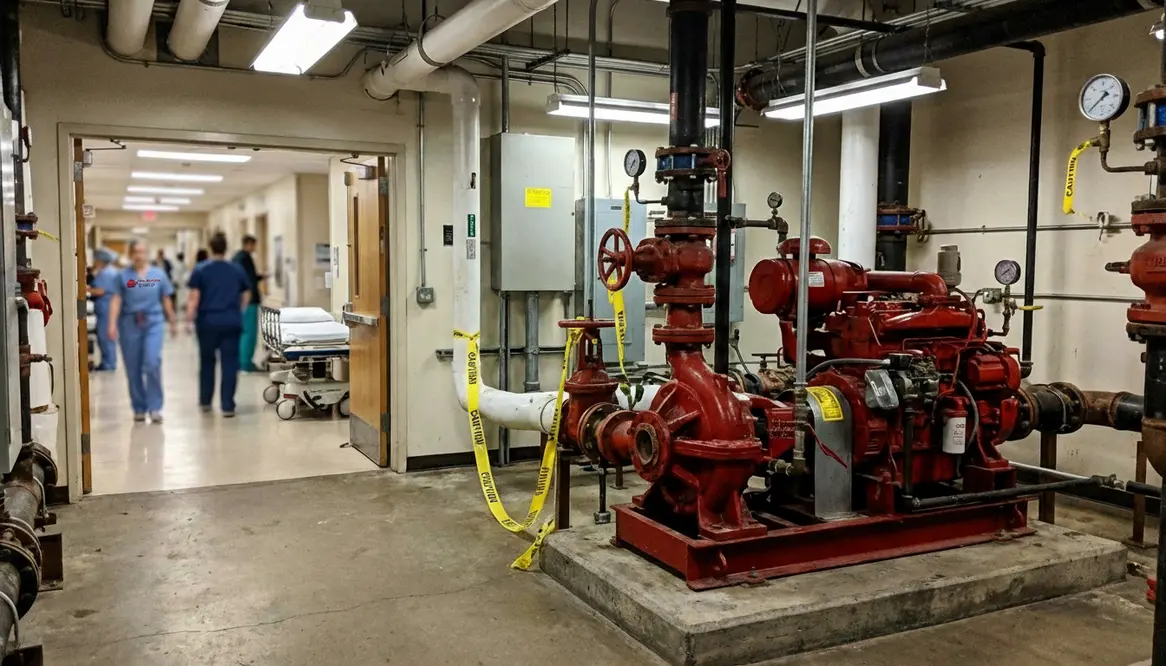
Fire Pump Requirements for Urgent Care Centers
What it really takes to keep high traffic medical buildings protected when the pressure is on.
I have walked through more medical buildings than I can count, and let me tell you, they never sleep. Hallways hum with motion, monitors blink like a sci fi set, and somewhere, someone is always in a hurry. That is exactly why Fire Pump Requirements for Urgent Care Centers matter so much. In high traffic medical spaces, fire safety is not just a box to check. It is a system that quietly stands guard while everything else moves at full speed. And yes, it needs to work every single time. No dramatic second chances, no heroic last minute saves. Just steady, reliable protection.
Why Fire Safety in Medical Buildings Demands More Than the Basics
I have seen how quickly a calm environment can shift. In a hospital or urgent care center, patients cannot always move on their own. Staff already juggle critical tasks. So, when fire safety systems fail, the stakes climb fast.
Because of this, I focus on layered protection. Fire alarms, sprinklers, and especially pumps must work together. Additionally, these systems must handle constant foot traffic, equipment loads, and round the clock operations. It is not like shutting down an office at five and hoping for the best.
And let’s be honest, nobody wants a fire drill turning into an episode of a disaster movie. This is real life, not an action sequel.
Fire Pump Requirements for Urgent Care Centers Explained Clearly
When I talk about fire pumps in urgent care settings, I keep it simple. They exist to maintain water pressure when the standard supply cannot keep up. In busy medical facilities, that moment can come fast.
So what matters most?
- Reliable pressure that supports sprinkler systems across multiple floors.
- Backup power because outages do not wait for convenient timing.
- Routine testing since a pump that has not been tested is just expensive decoration.
Furthermore, compliance is not optional. Local codes and national standards exist for a reason. I always recommend aligning with both, because cutting corners here is like bringing a spoon to a fire fight. It just does not work.
How Do High Traffic Facilities Maintain Continuous Fire Readiness
I get this question a lot, and the answer is discipline. Systems must be inspected, tested, and maintained on a schedule that respects the building’s intensity.
First, I ensure that inspections happen without disrupting patient care. That takes planning. Then, I verify that all components, especially pumps, valves, and controllers, operate under real conditions.
Meanwhile, staff training plays a quiet but powerful role. Even the best equipment fails if people do not know how to respond. So, I encourage simple, repeatable procedures that anyone can follow under pressure.
Think of it like a well rehearsed band. Everyone knows their part, and when something goes wrong, they adjust without missing the beat.
Balancing Patient Safety and System Complexity
Modern medical buildings are packed with technology. Imaging machines, oxygen systems, and electrical loads all compete for space and resources. As a result, fire protection systems must integrate smoothly without adding chaos.
In my experience, the key is coordination. Engineers, facility managers, and fire safety specialists need to stay aligned. Otherwise, you end up with systems that work perfectly on paper and struggle in reality.
Additionally, redundancy becomes essential. If one component fails, another must step in immediately. That is especially true for fire pumps supporting sprinkler systems in dense environments.
Fire Pump Requirements for Urgent Care Centers are ultimately about making sure those redundant layers are sized, powered, and maintained to match the real world tempo of care, not an idealized blueprint.
What I Prioritize
- Consistent water pressure
- Code compliant installations
- Minimal disruption to operations
What I Avoid
- Overcomplicated layouts
- Delayed maintenance
- Single points of failure
Fire Pump Requirements for Urgent Care Centers in Real World Applications
Let me ground this in reality. I have seen facilities that installed excellent systems but ignored maintenance. Over time, performance dropped. When tested, the pump could not deliver required pressure. That is a problem you want to discover during inspection, not during an emergency.
On the other hand, I have worked with buildings that treat their fire pumps like mission critical assets. Regular testing, proper documentation, and quick repairs keep everything running smoothly.
Moreover, integrating monitoring systems helps. Real time alerts allow teams to catch issues early. It is like having a smoke detector for your fire pump. Quiet, watchful, and incredibly useful.
If you want a deeper technical foundation while still keeping your strategy practical, resources like https://firepumps.org can help you connect code requirements with on the ground decisions about Fire Pump Requirements for Urgent Care Centers.
Smart Planning for High Occupancy Medical Spaces
Planning is where everything begins. I always look at occupancy levels, building layout, and water supply conditions before recommending any system.
For example, larger facilities often need higher capacity pumps. Meanwhile, multi story buildings demand consistent vertical pressure. Each decision builds on the last, creating a system that fits the building instead of forcing the building to adapt.
And yes, paperwork matters too. Documentation ensures compliance and provides a clear record for inspections. It may not be exciting, but neither is explaining to an inspector why something was skipped.
Smart planning around Fire Pump Requirements for Urgent Care Centers means thinking about how people really move through the building, how often equipment is added or relocated, and how those changes ripple through pressure demands and power availability.
FAQ: Fire Safety in High Traffic Medical Buildings
Conclusion: Build Safety That Never Sleeps
When I think about fire safety in medical buildings, I think about trust. Patients trust the space. Staff trust the systems. And I make sure that trust is never misplaced. If you manage a high traffic facility, now is the time to review your fire protection strategy, especially your pumps. Partner with experts who understand commercial scale demands and keep your systems ready at all times. Because in this world, safety should never take a day off.