Fire Pump Retrofit Guide for International Buildings
A practical field guide to upgrading aging fire protection systems in complex, international properties while the building keeps working and people stay safe.
Why older buildings quietly outgrow their fire pumps
When I walk into an aging commercial tower or an industrial plant, I usually find the same quiet problem hiding in plain sight: a fire system that no longer matches the building it protects. That is where a fire pump retrofit steps in. It helps me bring older fire protection systems up to modern standards without tearing the whole building apart. In international buildings, the job gets more interesting, because code rules, water pressure, power supply, and local enforcement can all change from one country to the next. Still, with the right plan, I can upgrade the system, protect the property, and avoid a costly drama that would make even a blockbuster look calm.
What this guide helps you do
- Spot when your existing fire pump no longer fits the building.
- Plan a fire pump retrofit that fits both code and reality on site.
- Phase installation so operations keep running.
- Test, document, and hand over a system people can actually use and maintain.
Why I start with a full building review
Understanding how the building really lives and breathes
I never begin a retrofit by guessing. First, I review the building use, height, occupancy, and fire risk. Then I check the current pump, controller, water source, piping, valves, and alarm signals. Since commercial and industrial buildings work hard every day, I also look at how the retrofit will affect operations. A hospital tower, logistics hub, data center, or high rise office all need different planning. Therefore, I build a clear picture before I touch a wrench.
Aligning with codes, insurers, and local realities
Next, I compare the existing setup to the current code set used in that region. International projects often need more than one standard, so I look at local fire rules, insurer needs, and site limits. For example, water quality may affect pump wear, and voltage can change the motor choice. As a result, the review stage saves time, money, and several future headaches.
How I plan a retrofit for code and site fit
Matching capacity, power, and pressure to demand
A good fire pump retrofit starts with smart planning, not with shiny hardware. I match the new pump and controls to the building demand, water supply, and pressure range. Then I decide whether I need a new electric pump, a diesel unit, or a mixed setup with a jockey pump. Each choice has tradeoffs, and I keep them in view like a chess player who finally learned how to read the board.
Working with unforgiving mechanical rooms
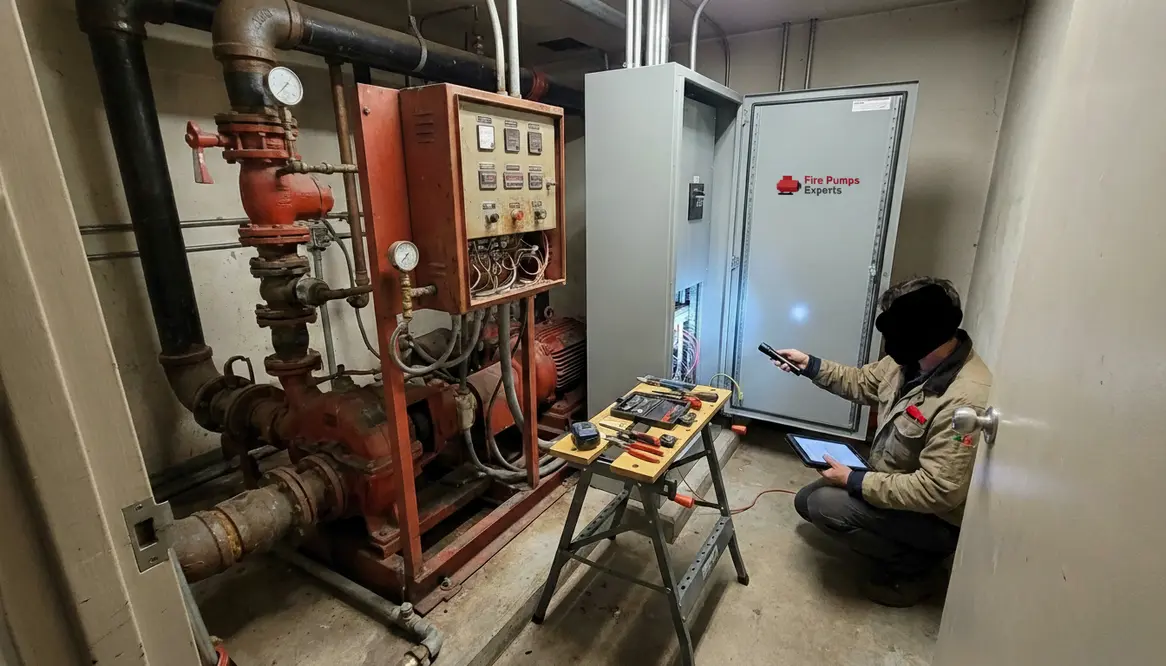
I also study the physical space. Many older mechanical rooms were never built for modern pump gear, so I check clearances, access paths, ventilation, drainage, and service room around the skid. If the equipment cannot breathe, cool down, or get repaired, it will not serve well. Moreover, I review suction conditions, discharge pressure, and pipe size so the system can move water when the alarm starts the real show.
Quick comparison for retrofit choices
| Need | What I check | Common retrofit choice |
|---|---|---|
| Low water pressure | Source flow and head loss | Higher capacity pump |
| Old control panel | Power, signals, compliance | New controller and monitoring |
| Tight pump room | Space, airflow, access | Compact layout changes |
| Unstable utility power | Grid quality and backup needs | Diesel or dual power strategy |
What I inspect before replacing equipment
Before I replace anything, I inspect the entire fire protection path. That means I test the water supply, check the suction line, review valves, verify alarms, and confirm that the pump starts and runs as it should. I also examine the piping for rust, scaling, leaks, and poor supports. In older buildings, I often find hidden wear that looks small until pressure drops during a real emergency. And that, frankly, is not the time for a surprise cameo.
Environmental and international twists
Because international buildings often face mixed climate and utility issues, I also review freeze risk, humidity, and corrosion protection. In coastal sites, salt air can shorten equipment life. In hot regions, motor heat can rise fast. Therefore, I choose materials and finishes that fit the site, not just the brochure. I also confirm that spare parts can reach the site without a long wait, because no one wants a six week delay when a critical site needs a fix now.
How I handle installation without shutting down the building
Phasing work so the lights (and tenants) stay on
I aim to keep the building open whenever possible. In major properties, downtime costs real money, so I phase the work carefully. First, I set a cutover plan. Then I schedule short outages during low risk hours. After that, I install the new pump, controller, sensors, and any pipe changes in stages. This way, the building keeps moving while I improve its fire protection backbone.
Never rushing the moment of truth
However, I never rush the final tie in. I test the power feed, verify signal response, and confirm the pump starts under demand. I also check the automatic transfer behavior if the site uses a backup source. If the system does not respond cleanly, I stop and fix it. Fire protection does not reward wishful thinking, and it certainly does not care about my calendar.
How I test and document the final system
Proving performance instead of just hoping
Once installation ends, the real proof begins. I run performance tests to confirm flow, pressure, start time, and alarm function. I also document the results for the owner, engineer, and authority having jurisdiction. That record matters because a clean paper trail helps with future inspections, insurance reviews, and maintenance work. In fact, the smartest fire pump retrofit is the one people can prove, not just admire.
Handing over knowledge, not just hardware
I also train the site team. They need to know normal readings, warning signs, and basic response steps. Then I leave clear service notes so the next technician does not need to play detective in the dark. For deeper planning and technical support, I also recommend reviewing the commercial fire pump retrofit resources at https://firepumps.org, since their focus stays on commercial and industrial facilities and major properties.
When a fire pump retrofit becomes non‑negotiable
If you manage a commercial tower, industrial plant, or major property, you eventually face the decision to upgrade or hope for the best. A fire pump retrofit becomes hard to avoid when inspections keep flagging marginal performance, when new tenants add higher risk uses, or when your electrical and water infrastructure no longer matches the original design assumptions.
Treating a fire pump retrofit as a strategic upgrade, rather than a last minute patch, is what separates calm incident reports from dramatic headlines. The goal is simple: a system that starts every time, moves the right amount of water, and plays nicely with whatever local code officials and insurers decide to do next year.
Conclusion: treating your fire pump retrofit as an investment
If you manage a commercial tower, industrial plant, or major property, I suggest you treat a fire pump retrofit as a smart investment, not a repair you keep postponing like a gym membership in January. Start with a full review, match the system to the site, and test everything before you call it done. If you want a safer, cleaner, and more reliable result, now is the time to act. Reach out, plan the upgrade, and protect the building with confidence.