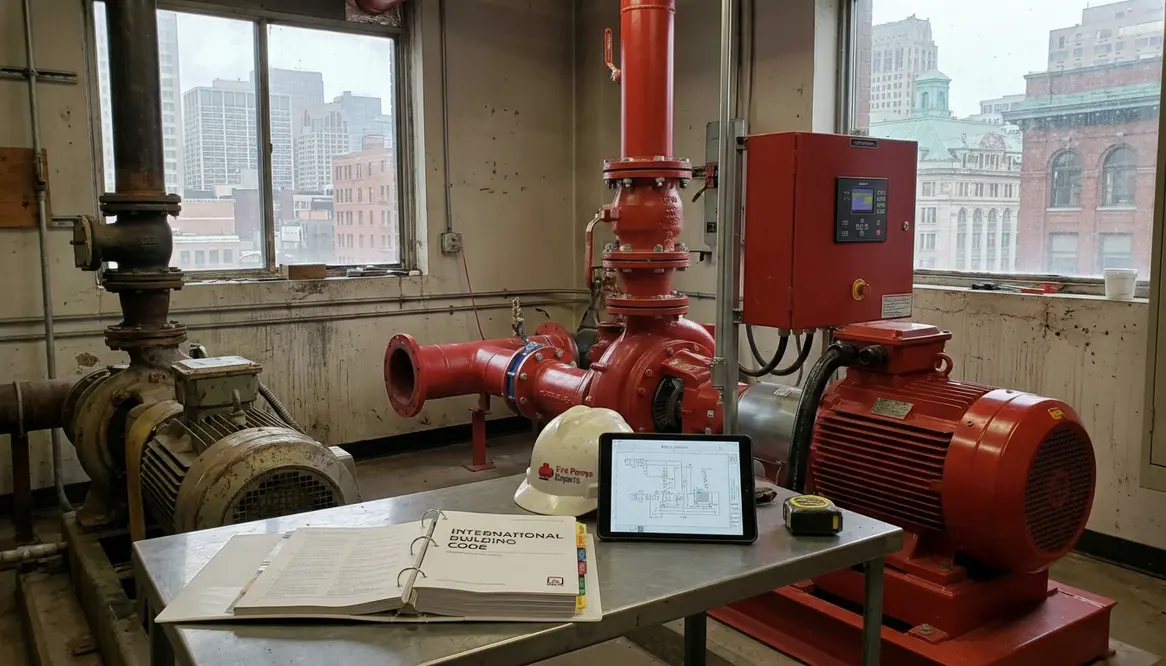
Fire Pump Upgrade Planning Across Global Codes
I have seen plenty of building teams treat a fire pump upgrade like a simple swap. It never is. In commercial and industrial facilities, and in major property buildings, a fire pump upgrade must align with local rules, global standards, and the real needs of the site. That means I look at fire pump codes, water supply, pressure demand, system age, and how the building actually operates. Otherwise, the plan can fail at the one moment it matters most. And yes, that is a terrible time for surprises, right up there with a fire alarm during a budget meeting.
In this article, I walk through how I plan upgrades across different regions, how I compare code rules, and how I keep the project practical. The goal is simple. I want the pump room to work hard, stay compliant, and avoid turning into a very expensive metal statue.
How I start a fire pump upgrade plan
I always begin with a site review. First, I check the current pump size, suction source, controller type, test history, and system age. Then I compare those details with the hazard level of the property. A data center, a warehouse, and a high rise office tower do not need the same setup, even if they all look equally serious in a tie.
Next, I verify the local fire pump codes and any owner rules that go beyond code. For global projects, I also review which standard controls the design. In one country, a project may follow NFPA based rules. In another, the local authority may ask for extra testing, backup power, or a different approval path. Because of that, I never assume one rulebook fits all. The fire pump may be the same machine, but the paperwork often lives in a different universe.
What global codes change in real projects
Global codes affect more than the pump size. They shape the whole upgrade plan. For example, some regions focus strongly on minimum flow and pressure at the farthest point of demand. Others want tighter rules on driver type, tank size, or inspection intervals. Therefore, I study both the letter of the code and the local review habit. That second part matters more than people admit.
Here is the practical split I use:
Code focus
Water supply
Pump selection
Controls
Testing
Power backup
What I check
Flow, pressure, seasonal changes, and source reliability
Capacity, driver type, duty point, and future margin
Controller listing, alarms, and start logic
Acceptance test, flow test, and ongoing inspection needs
Generator support, fuel duration, and transfer performance
Because global projects often span several stakeholders, I keep a single compliance matrix. It shows the code basis, the local authority comments, and the design choice for each item. That way, when someone asks why I selected one pump over another, I do not answer with vague hand waving. I answer with facts, which is a nice change for everyone.
How I match the pump to the building risk
I do not size a pump by guessing or by copying the last project. That path leads to pain. Instead, I match the system to the building risk profile. A large warehouse with tall storage needs stable pressure and enough margin for hose streams and sprinkler demand. A hospital or high rise may need a more layered approach, with backup power and stronger supervision.
I also think about future use. If the building may expand, change tenants, or add higher storage racks, I plan for that now. It costs less to design a little room for growth than to redo the whole pump room later. In my experience, “we might need more capacity later” is the polite cousin of “we should have done this last year.”
Why testing and commissioning decide the outcome
A fire pump upgrade is not done when the equipment arrives. It is done when the system proves itself under load. So I build the schedule around factory checks, site installation, acceptance testing, and final witness tests. I also make sure the test water path, drains, and instrumentation can handle the work without causing a flood or a loud complaint from the neighbor site.
During commissioning, I watch for three things. First, I want stable suction conditions. Second, I want the pump to start correctly and reach the target performance. Third, I want the controller and alarms to behave as expected. If one part slips, I chase the cause before closeout. After all, a fire pump should inspire confidence, not suspense.
How I keep the project smooth across regions
I keep the upgrade process simple on purpose. I use early code review, a clear scope, and a good local partner for approvals. I also build time into the plan for authority review, part lead times, and field changes. Because global codes vary, I expect small surprises. I do not enjoy them, of course, but I respect them the way one respects a storm cloud that has already made eye contact.
Across regions, I track how different fire pump codes interpret similar risks. Some markets lean heavily on international standards, while others follow national documents with local amendments. I do not argue with either path. I translate the intent into clear design notes, test plans, and acceptance criteria so that the upgraded pump room makes sense to everyone who has to live with it.
To keep communication sharp, I share one concise set of drawings, a narrative that explains the basis of design, and a log of authority comments. That log becomes the living record of how we satisfied the applicable fire pump codes for that specific project instead of pretending that one solution fits every country, climate, or building type.
Linking global standards with practical operations
On paper, fire pump upgrades are about numbers and clauses. In practice, they are about whether the operator on a night shift can understand the controller panel, whether the maintenance crew can perform weekly runs without disrupting production, and whether the local fire service trusts the installation. I try to bridge that gap on every job.
That means I read fire pump codes with a practical filter. If a section allows multiple compliance paths, I choose the one that gives reliable performance and clean operations instead of the one that just squeaks past the minimum. I also coordinate with facility teams to understand downtime windows, noise limits, and access for future replacements, because a beautifully compliant pump that nobody can reach for service is not much help.
When a portfolio includes sites on several continents, I sometimes build a template specification that covers a common core of requirements, then add regional annexes. The core aligns with leading references such as NFPA guidance and widely recognized testing practices, and the annexes capture regional twists. That way, the organization understands its baseline expectations, and each site still respects the unique fire pump codes enforced by its local authority.
Planning upgrades in existing facilities
Working inside a live building
Most upgrades happen in buildings that are very much alive. Tenants want quiet, production lines dislike shutdowns, and nobody volunteers to drain sprinkler risers during business hours. I map the upgrade in phases: temporary protection, demolition, installation, and final cutover. Each phase gets its own risk check so we do not trade one vulnerability for another.
Coordinating utilities and space
Utilities and space can make or break a plan. I confirm electrical capacity, generator rating, ventilation, drainage, and safe access routes before locking in a pump size. If the existing room cannot meet modern expectations, I decide early whether we are expanding, relocating, or accepting a carefully justified exception that still satisfies the governing fire pump codes and the authority having jurisdiction.
FAQ
Conclusion
When I plan a fire pump upgrade across global codes, I focus on the building, the risk, and the rules that govern both. I keep the process practical, clear, and tied to real performance. If you manage a commercial, industrial, or major property building and need a smart path forward, now is the time to review your system with a fresh eye. Start early, check the codes, and make the upgrade count when it matters most.
If you want a deeper look at technical guidance, a good starting point is resources such as https://firepumps.org, along with your local regulations. Just remember that the best upgrade is not only compliant on paper, it is also predictable, maintainable, and ready for the one emergency that will justify every hour spent getting it right.