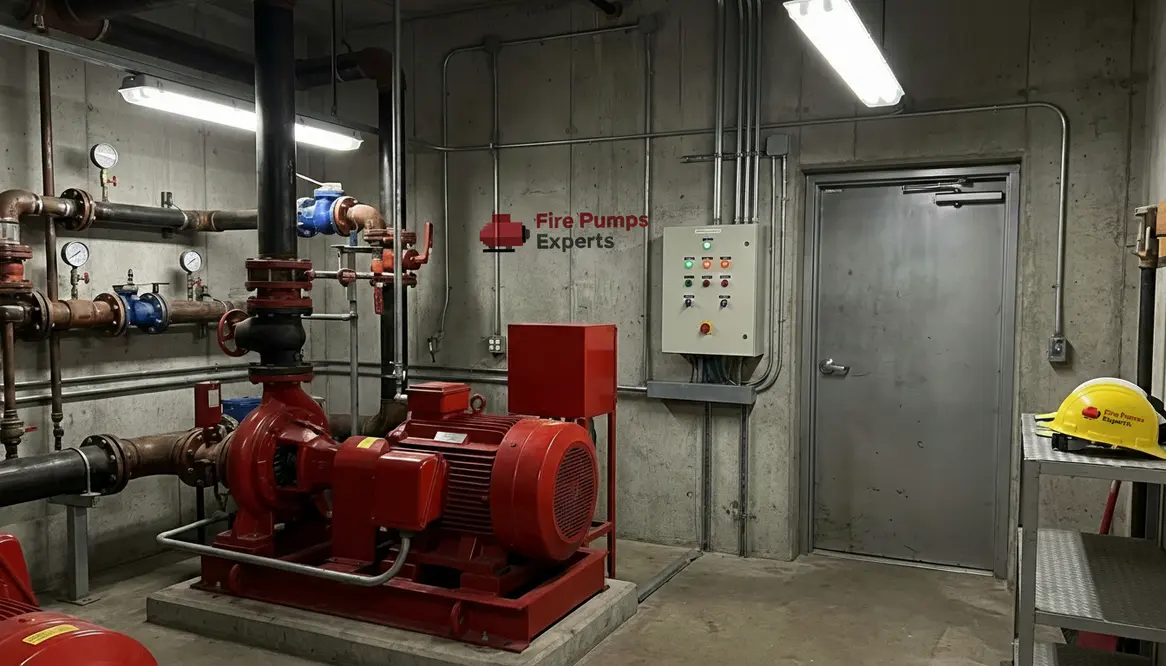
Fire Pump Room Design for Civic Buildings
I have walked through more municipal buildings than I can count, and I will tell you this right away. The quiet hero behind every safe civic space is not the marble floor or the grand staircase. It is the fire pump room design. Within the first few minutes of any project, I look at that space, because it tells me everything about how seriously a facility takes safety. And in civic and municipal buildings, where foot traffic is constant and responsibility is heavy, that design carries real weight. Think of it as the Batman of building systems. Not flashy, but absolutely essential when things go sideways.
Why Fire Pump Rooms Matter More Than The Lobby
Every time a new municipal project crosses my desk, I look for one thing first: the fire pump room layout. Not the council chamber, not the atrium, not the artwork budget. The pump room. If that space looks like an afterthought, I already know how the rest of the building’s priorities are stacked.
In civic buildings, the stakes are higher than in most commercial projects. You’re dealing with jurors, staff, elected officials, officers, visitors, and occasionally a few people who really do not want to be there. They all share one expectation: when a sprinkler head opens or a standpipe outlet is charged, water arrives with the pressure and flow the design promised. That expectation is built on one thing: a well executed fire pump room design.
The Hidden Backbone Of Civic Safety
Unlike the lobby, nobody tours the pump room with a ribbon and a photographer. But when alarms sound, the entire building relies on that space operating perfectly. Pumps, controllers, valves, sensing lines, test headers, and power feeds all live here, and they all need room to breathe, be maintained, and be understood in a hurry.
So yes, you can obsess over the terrazzo patterns. Just make sure someone is obsessing even more over the fire pump room design tucked behind that unmarked steel door in the back corridor.
What Makes Fire Pump Systems Critical in Civic Buildings?
Let me answer this plainly. Civic buildings serve people at scale. Courthouses, city halls, public safety complexes, and large administrative centers all carry high occupancy loads. Therefore, the fire protection system must respond instantly and reliably.
Because of that, a well planned pump room layout ensures water pressure remains consistent across large footprints. Moreover, municipal facilities often expand over time. So, I always consider future capacity when evaluating a fire pump setup. It is not just about today. It is about ten years from now when someone decides to add another wing.
And yes, redundancy matters. If one pump fails, another must step in without hesitation. Nobody wants a system that hesitates like a buffering video during a crisis.
Key Planning Factors That Shape Fire Pump Room Design
When I approach a fire pump room design, I focus on function first. However, I never ignore practicality. These rooms need to be serviceable, durable, and easy to navigate.
Core Design Priorities
- Clear access for maintenance crews
- Proper ventilation to prevent overheating
- Drainage systems to manage leaks or testing discharge
- Reliable power supply with backup options
Operational Considerations
- Noise control for nearby occupied spaces
- Lighting that supports inspections
- Logical equipment spacing
- Code compliant layout for inspections
Additionally, I always think about human behavior. If a technician has to squeeze past piping like they are in an action movie, something went wrong in the design phase.
How Do I Optimize Fire Pump Room Layout for Municipal Use?
I keep it simple. I design for clarity and movement. Every component should have a purpose and a clear path around it. First, I position pumps to allow straight line access. Then, I ensure control panels are visible and reachable without obstruction.
Next, I consider emergency scenarios. During an event, responders may not be familiar with the building. Therefore, the fire pump room layout must be intuitive. Labels, signage, and spacing all play a role here.
Also, I never underestimate the importance of testing. Regular inspections require space and accessibility. If testing becomes difficult, it will eventually be skipped. And that is where problems begin.
Code Compliance Is Not Optional, It Is the Foundation
Let me be clear. Codes are not suggestions. They are the baseline for safety. In municipal environments, inspections are frequent and scrutiny is high. So, every fire pump room design must align with national and local standards.
However, compliance alone is not enough. I aim to exceed minimum requirements whenever possible. Because while codes define the floor, real world performance defines the ceiling.
Furthermore, coordination with other systems is essential. Electrical, plumbing, and structural elements all intersect in this space. If coordination fails, you end up with conflicts that cost time and money to fix.
Smart coordination early in the project is one of the easiest ways to elevate a basic fire pump room design into a resilient, inspector friendly, operations friendly asset.
Balancing Durability and Efficiency in Fire Pump Spaces
Municipal buildings do not get a break. They operate daily, often around the clock. So, durability becomes a major factor in pump room construction.
I prefer materials that resist moisture and wear. Concrete finishes, corrosion resistant piping, and sealed electrical components all contribute to longevity. Meanwhile, energy efficiency also plays a role. Modern pump systems can reduce operational costs without sacrificing performance.
And yes, I have seen older systems that sound like they belong in a vintage submarine movie. While charming in a nostalgic way, they are not ideal for modern facilities.
Common Mistakes I See in Fire Pump Room Planning
Even experienced teams can overlook critical details. Here are a few issues I encounter more often than I would like.
- Undersized rooms that limit maintenance access
- Poor ventilation leading to overheating
- Inadequate drainage systems
- Lack of future expansion planning
However, the biggest mistake is treating the fire pump room as an afterthought. It should be part of the early design conversation, not something squeezed into leftover space.
FAQ: Fire Pump Considerations for Civic Buildings
Final Thoughts and Next Steps
If you are planning or upgrading a municipal facility, do not treat the fire pump room like a storage closet with ambitions. A thoughtful, well executed design protects people, property, and budgets. I always say this. You rarely notice a great system, but you will never forget a failed one.
If you want expert guidance on fire pump solutions for large scale buildings, now is the time to act. Whether you are in schematic design or renovating a decades old plant, bringing in someone who lives and breathes fire pump room design can turn that quiet back of house corner into the most reliable square footage in the entire building.
For deeper technical standards and reference material, resources like https://firepumps.org can support your team as you coordinate architects, engineers, contractors, and facility staff around a single goal: a pump room that works every time, under pressure, without drama.