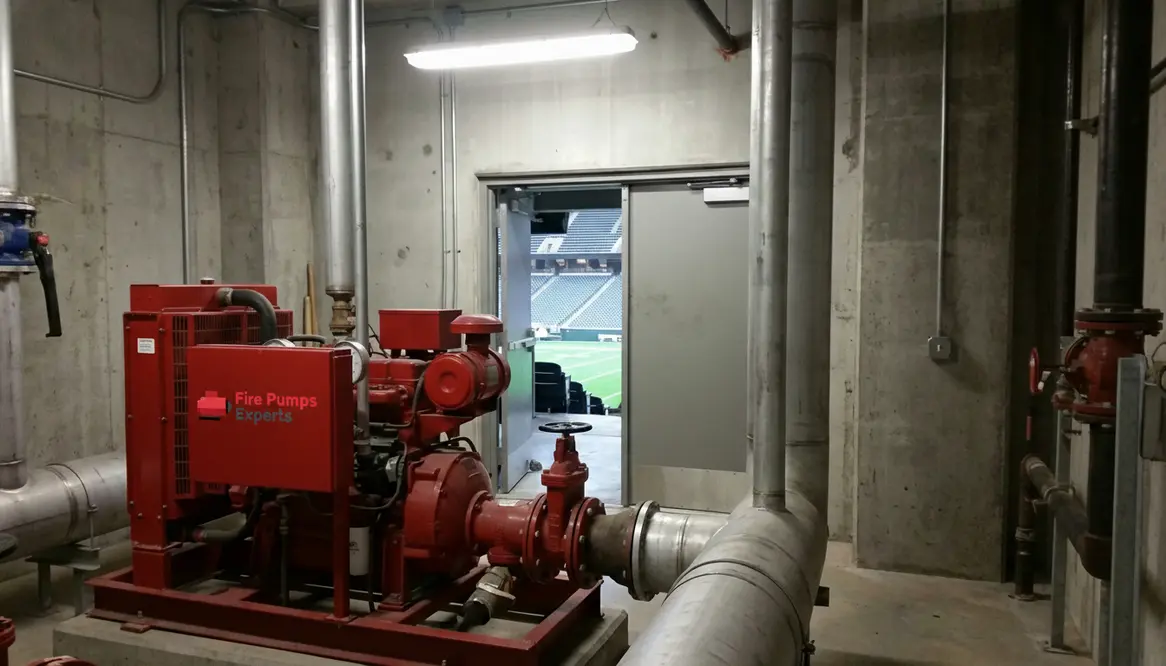
Fire Pump Systems for Stadiums and Large Venues
I have walked through more stadiums than I can count, from echoing concrete giants to polished arenas that hum with anticipation. And in every one of them, behind the lights and the roar of the crowd, there is a quiet force at work. Large-scale fire protection is not flashy. It does not get a halftime show. Yet, it stands ready when everything else stops. In massive venues where tens of thousands gather, fire pump systems are not just equipment. They are the backbone of safety, designed to respond faster than a referee spotting a foul.
How do fire pump systems protect stadiums and large venues?
I like to think of fire pump systems as the heartbeat of a building’s fire defense. When pressure drops in the sprinkler system, the pump kicks in instantly. No hesitation. No drama. Just action.
In large venues, distance is the real challenge. Water has to travel far, often vertically and across wide spans. Therefore, standard pressure simply will not cut it. Fire pumps step in to boost water flow, ensuring every sprinkler and hose line performs as intended.
Moreover, these systems are built with redundancy in mind. Backup pumps, reliable power sources, and smart controls all work together. Because in a stadium packed with fans, there is no room for “let’s try again.”
And yes, while fans may debate the greatest of all time, in fire safety, consistency always wins.
Designing systems for high occupancy and complex layouts
Designing fire pump systems for stadiums is not a copy and paste job. Each venue comes with its own quirks. Multiple levels, open concourses, VIP suites, underground parking, and sometimes even retractable roofs that feel like something out of a sci fi movie.
So, I approach design with precision. First, I assess water demand across zones. Then, I factor in peak occupancy and potential fire scenarios. After that, I align pump capacity with the most demanding conditions.
Large-scale fire protection in these environments must account for simultaneous use. For instance, sprinklers may activate in one section while standpipes serve firefighters in another. Therefore, the pump system must deliver without compromise.
Additionally, I ensure compliance with NFPA standards and local codes. Because cutting corners here is not bold. It is reckless.
Key Design Factors
- Water supply reliability
- System pressure requirements
- Backup power integration
- Zoning and sectional control
Operational Priorities
- Rapid response time
- System redundancy
- Ease of maintenance
- Clear monitoring and alerts
Choosing the right fire pump for performance and reliability
Not all pumps are created equal. And in a stadium, choosing the wrong one is like putting a scooter engine in a freight train. Technically possible. Practically disastrous.
I typically evaluate three main types. Electric pumps offer reliability and efficiency when power is stable. Diesel pumps provide independence from electrical systems, which is critical during outages. Meanwhile, jockey pumps maintain pressure and prevent unnecessary starts.
However, selection goes beyond type. I also consider flow rate, pressure curves, and system demand. Because a pump that performs well on paper but struggles in real conditions is about as useful as a screen door on a submarine.
In large venues, I often recommend a combination approach. This ensures continuous operation even if one component fails. After all, redundancy is not overkill. It is smart planning.
Installation challenges in large commercial environments
Installing fire pump systems in stadiums is not a walk in the park. It is more like a carefully choreographed dance, except everyone is carrying heavy equipment and working against tight timelines.
Space constraints often come into play. Pump rooms must be accessible, protected, and compliant with code. At the same time, they cannot interfere with the building’s primary functions.
Then there is coordination. Electrical, plumbing, structural, and fire protection teams must align perfectly. Because one misstep can delay the entire project.
Furthermore, I always emphasize proper commissioning. Testing the system under real conditions ensures it performs when it matters most. Skipping this step would be like hosting a concert without a sound check. Risky and likely embarrassing.
Maintenance strategies that keep systems ready at all times
A fire pump system is not something you install and forget. It requires regular attention. Think of it as a high performance engine that needs routine care to stay reliable.
I recommend scheduled inspections, weekly churn tests, and periodic full flow testing. These checks confirm that every component functions as expected.
Additionally, monitoring systems play a crucial role. Real time alerts allow facility managers to address issues before they escalate. Because in large scale fire protection, early detection is everything.
And let’s be honest. No one wants to discover a problem during an emergency. That is the worst kind of surprise.
Why large-scale fire protection in stadiums matters more than ever
Modern stadiums are no longer just fields and bleachers. They are multi-use entertainment hubs, packed with restaurants, retail spaces, premium lounges, broadcast studios, and event zones stacked like a high-tech layer cake. That complexity demands a level of planning and execution that only true large-scale fire protection can deliver.
From a design standpoint, every choice in the fire pump system has ripple effects. A poorly sized pump can starve upper decks of pressure. Inadequate redundancy can leave critical egress routes exposed if a single component fails. Smart large-scale fire protection weaves together hydraulics, layout, occupancy, and operations to protect every seat, suite, and concourse.
Done right, these systems stay invisible on game day. Operators see clear dashboards, maintenance teams see predictable routines, and guests never notice that massive volumes of water are ready to move at a moment’s notice. That invisible confidence is the real win.
FAQ: Fire Pump Systems for Stadiums
What is the purpose of a fire pump in a stadium?
It boosts water pressure so sprinklers and hoses work effectively across large areas.
How often should fire pumps be tested?
Weekly churn tests and annual full flow tests are standard for reliability.
Are backup pumps necessary?
Yes. Redundancy ensures the system works even if one pump fails.
Can one pump handle an entire stadium?
Typically no. Large venues require multiple pumps to meet demand.
What power sources are used?
Electric and diesel pumps are common, often used together for reliability.
Bringing it all together for safer venues
When I look at a packed stadium, I do not just see fans and bright lights. I see layers of planning, engineering, and protection working quietly in the background. Fire pump systems are a critical part of that story. They ensure that when the unexpected happens, the response is immediate and effective.
If you manage or develop a large commercial property or event venue, now is the time to evaluate your system. Partner with experts who understand the demands of large scale fire protection and can deliver solutions built for performance and reliability. Because safety should never be left to chance.