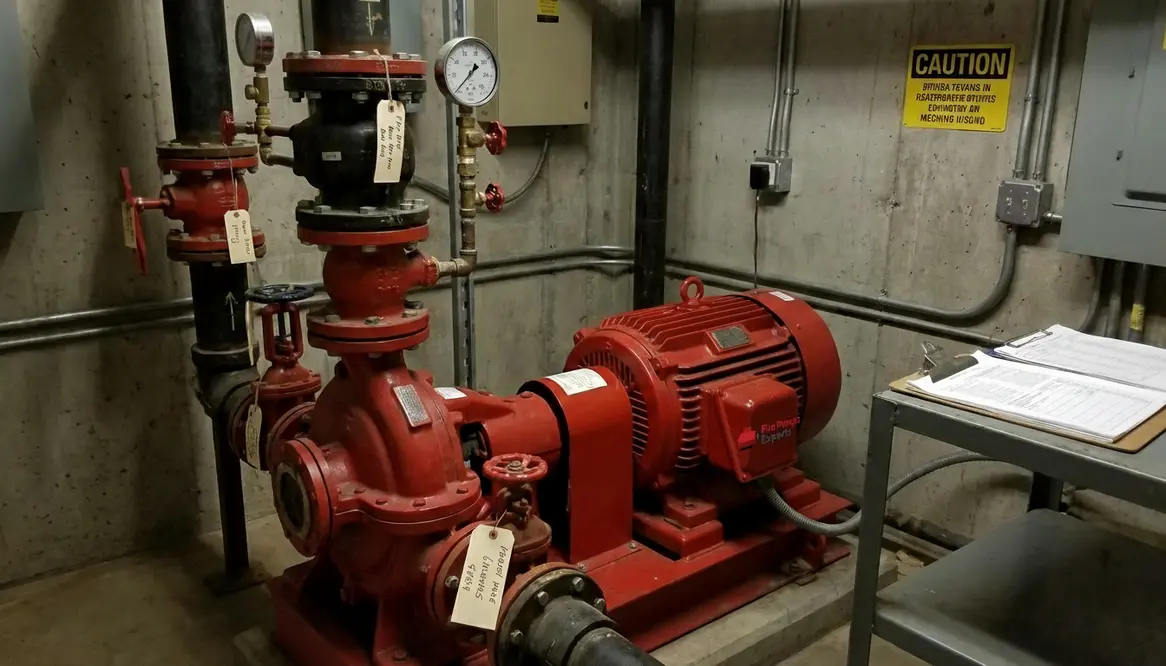
Light Industrial Fire Pumps for Healthcare Safety
I have spent years walking through mechanical rooms that hum like quiet engines of safety. In medical facilities, that hum matters more than ever. Lives depend on systems that work without hesitation. That is where light industrial fire pumps enter the conversation. They may not wear capes, but they are the quiet heroes behind every sprinkler head. And yes, like any good supporting actor, they do their best work when no one notices them at all.
So let me walk you through how I plan fire pump systems for healthcare environments, where precision meets pressure, and where mistakes are simply not on the menu.
Understanding Risk Profiles in Medical Facilities
First, I look at the building like a doctor reads a chart. Every hospital, clinic, or surgical center carries a unique risk profile. For instance, operating rooms demand uninterrupted protection, while storage areas may carry higher fuel loads. Therefore, I map out hazard classifications carefully.
Next, I consider patient mobility. Unlike an office tower where people can evacuate quickly, hospitals move at a slower pace. Consequently, fire suppression must act faster and more reliably. I always design with the assumption that evacuation will take time. Because it will.
And yes, I sometimes joke that planning for a hospital is like planning a movie where no one can leave the theater. Not ideal, but it keeps the stakes clear.
Risk tiers you cannot ignore
High-dependency units, intensive care, operating rooms, and emergency departments sit in a different universe than lobbies and admin offices. I treat them as high-priority zones where water delivery, pressure stability, and redundancy must be absolutely dependable.
That is where the choice and setup of light industrial fire pumps really shows. If the pump cannot sustain consistent pressure while multiple zones are demanding water at once, the design has already failed on paper.
How do I size fire pumps for hospitals?
I start with demand, not guesswork. Fire pump sizing depends on the required flow and pressure at the most demanding point in the system. So, I calculate sprinkler demand, standpipe requirements, and any special systems like foam or water mist.
Then, I factor in building height and friction loss. Water, much like a stubborn mule, resists being pushed uphill. Therefore, I ensure the pump delivers enough pressure to overcome both elevation and pipe resistance.
After that, I select a pump that operates efficiently near its rated capacity. Oversizing might sound safe, but it often leads to unstable performance. Think of it like using a rocket engine to light a candle. Impressive, but unnecessary.
Balancing performance and practicality
When I use light industrial fire pumps in healthcare projects, the sweet spot is pumps that are big enough for peak hydraulic demand but tame enough to behave during partial-load scenarios. Hospitals rarely experience a textbook design fire; what they do experience are messy, unpredictable events, and the pump should not overreact every time a valve opens.
That is why I pay attention to net pressure at critical points, pump curve stability, and how the system behaves when only a portion of the sprinklers activate. It is not about brute force. It is about controlled, predictable delivery.
Integrating light industrial fire pumps into complex systems
Now we get into the choreography. A fire pump does not work alone. It coordinates with controllers, backup power, and alarm systems. So I make sure everything communicates clearly.
For example, I always pair pumps with reliable power sources. In hospitals, that usually means emergency generators. Because when the power goes out, that is precisely when you need the system to perform like a seasoned professional, not a rookie under pressure.
Additionally, I design for redundancy. If one component fails, another steps in. This is not paranoia. It is planning. In healthcare environments, redundancy is less of a luxury and more of a requirement.
Key design focus
- System reliability from pump to last sprinkler
- Backup power integration with seamless transfer
- Hydraulic balance across multiple floors and wings
- Code compliance without design shortcuts
Common pitfalls
- Oversized pumps that cause wild pressure swings
- Poor pressure zoning between low and high levels
- Ignoring future expansion of clinical spaces
- Weak maintenance planning and hard-to-reach equipment
Where light industrial fire pumps shine
These pumps fit neatly into the middle ground between tiny commercial setups and massive industrial campuses. In hospitals and clinics, that balance is priceless. They offer reliable flow and pressure without demanding a dedicated power plant and an army of operators.
Code compliance and healthcare standards
I never treat codes as suggestions. NFPA standards, local regulations, and healthcare specific requirements guide every decision I make. Moreover, hospitals often face stricter inspections, so I plan with that scrutiny in mind.
Equally important, I coordinate with other disciplines. Mechanical, electrical, and architectural teams all influence the final system. Therefore, collaboration is not optional. It is essential.
And let me say this plainly. Ignoring code details is like skipping instructions on a complicated piece of furniture. You might get lucky, but odds are you will end up with extra screws and a system that does not stand straight.
Designing for inspectors, not arguments
Healthcare authorities and fire marshals have seen every shortcut in the book. I assume they will open every panel, read every tag, and ask why every valve is where it is. That assumption keeps the design honest and keeps the installation team from having stressful conversations during final checks.
Solid documentation, clear labeling, and clean hydraulic calculations turn those inspections from battles into short, boring meetings. Frankly, boring is the goal.
Planning for maintenance and long term performance
A fire pump system is not a set it and forget it deal. I design with maintenance in mind from day one. That means accessible layouts, clear testing connections, and room for technicians to do their work without performing gymnastics.
Furthermore, I think about the next ten to twenty years. Hospitals evolve. They expand, upgrade, and reconfigure spaces. So I leave room for future capacity whenever possible.
Because nothing says regret like a system that cannot grow with the building it protects.
Making testing less painful
Weekly runs and annual full-flow tests are not optional, so I lay out test headers, flow meters, and valves with the same care as the main risers. The goal is simple: keep the team from dreading pump tests. When maintenance is easy, it is more likely to be done properly and on time.
Reliable long-term performance has less to do with dramatic specs on day one and more to do with routine testing, quick repairs, and a layout that respects the people who keep the system alive.
Why light industrial fire pumps matter in critical care settings
At the end of the day, these systems provide consistency. light industrial fire pumps offer a balance of performance and efficiency that suits large commercial and healthcare facilities. They are built to handle demanding conditions without unnecessary complexity.
And in environments where seconds matter, consistency is everything. I trust systems that perform the same way every time. No surprises. No drama. Just reliable protection doing its job quietly in the background.
Choosing the right partners
The best results come from pairing strong design with equipment from manufacturers who actually understand healthcare realities. Good light industrial fire pumps are only as valuable as the support behind them: spare parts, clear documentation, and responsive technical help.
I also look at how well pump controllers and monitoring tie into existing building systems. When the fire alarm, SCADA, and generator controls all tell the same story, staff can focus on decisions instead of diagnostics.
FAQ
Conclusion
Planning fire pump systems for medical facilities is not just engineering. It is responsibility in motion. I design each system to perform under pressure, adapt over time, and protect without fail. If you are managing a commercial or healthcare property and need a solution that delivers both strength and reliability, now is the time to act. The right system does more than meet code. It protects what matters most. Let us build that protection together, starting with the right light industrial fire pumps and a layout that respects how your facility actually operates.