Fire Pump Requirements for Assisted Living Facilities
Practical guidance on keeping residents safe, systems compliant, and water moving with purpose in commercial assisted living environments.
I have spent enough time around commercial properties to know one thing for sure. When it comes to protecting people, especially in assisted living communities, there is no room for guesswork. That is where telecommunications fire protection quietly does its job in the background, supporting alarms, monitoring systems, and coordination during emergencies. But today, I want to guide you through something even more grounded. Fire pump requirements. Because when water needs to move, it had better move with purpose.
These systems protect some of the most vulnerable occupants in any commercial occupancy. Understanding how the pumps, power, and telecommunications fire protection infrastructure all work together is what separates a compliant building from a resilient one.
Why Fire Pumps Matter in Assisted Living Facilities
Assisted living communities are not typical buildings. Residents often have limited mobility, and that changes everything. A small delay in fire suppression can quickly become a major risk. Therefore, fire pumps are not just mechanical equipment. They are the heartbeat of the entire suppression system.
In many commercial facilities, city water pressure may fall short during peak demand or emergencies. That is where fire pumps step in. They boost pressure and ensure sprinklers and standpipes perform exactly as designed. Without that support, even the best sprinkler layout becomes a well intentioned suggestion rather than a reliable defense.
And yes, if you are picturing a dramatic movie scene where water suddenly bursts through at the perfect moment, you are not far off. Except in real life, we prefer everything to work quietly and predictably, no heroic music required.
What Are the Core Fire Pump Requirements?
I like to keep things simple, even when the codes are anything but. Fire pump requirements for assisted living communities revolve around performance, reliability, and compliance.
Key requirements include:
- Adequate water flow and pressure to meet sprinkler and standpipe demand
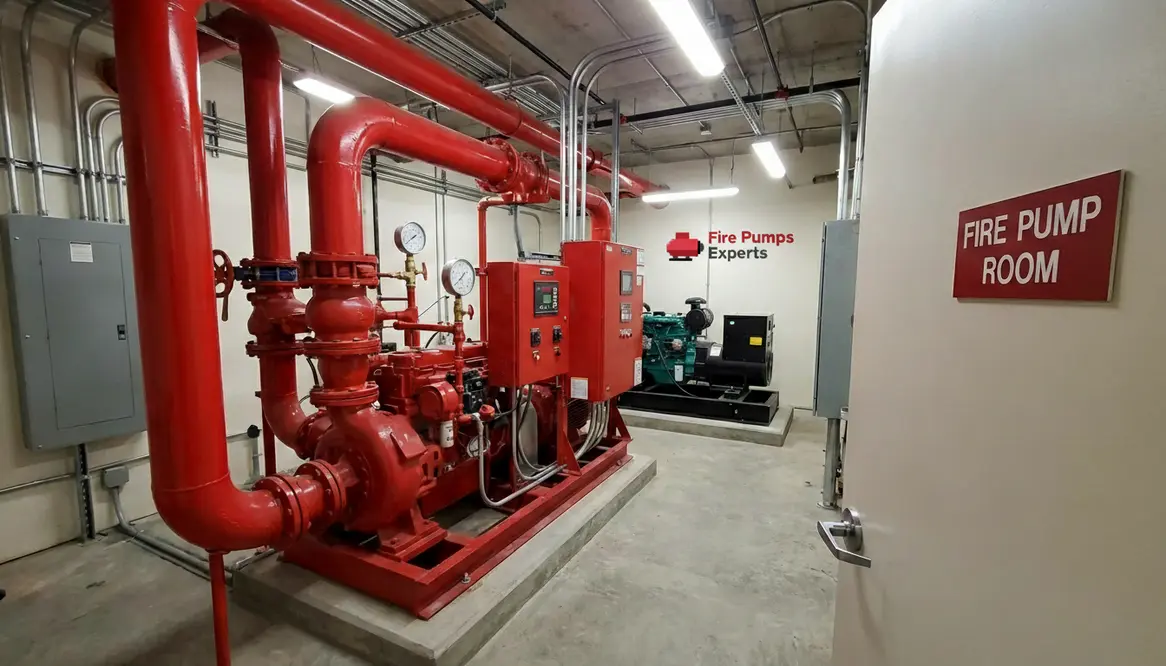
- Backup power sources such as generators for uninterrupted operation
- Automatic start capability when pressure drops
- Regular testing and maintenance aligned with NFPA standards
- Proper placement in protected, accessible pump rooms
Additionally, inspectors do not just glance at the system and nod approvingly. They test it under real conditions. If the pump hesitates, the system fails. It is that straightforward.
How Do Fire Pumps Integrate With Building Systems?
Here is where things get interesting. Fire pumps do not operate in isolation. They work alongside alarms, control panels, and monitoring networks. This is where telecommunications fire protection plays a subtle but essential role, ensuring signals move quickly between systems and emergency responders.
Signal flow in an event
- A sprinkler activates due to heat.
- The fire alarm panel receives the signal.
- Telecommunications fire protection infrastructure relays alarms to monitoring centers and responders.
- Staff receive notifications and follow response procedures.
- The fire pump maintains water pressure to support suppression throughout the building.
Think of it like an orchestra
The pump is the percussion section, steady and powerful. The communication systems are the strings, carrying signals with precision. And if one section misses a beat, the whole performance suffers. When telecommunications fire protection and hydraulic performance are both tuned correctly, the building responds as a unified system.
Common Design Considerations for Large Properties
Designing fire pump systems for assisted living communities requires careful planning. These are often large commercial buildings with multiple floors, wings, and occupancy types. As a result, engineers must consider more than just basic flow rates.
Hydraulic needs
- Building height and layout
- Required sprinkler density
- Standpipe demand for fire department use
Operational needs
- Redundant power systems
- Ease of maintenance access
- Long term durability under frequent testing
Moreover, assisted living environments demand quiet reliability. No one wants a system that sounds like a jet engine during routine tests. Engineers often balance performance with acoustic considerations to maintain a calm living environment, while coordinating controls and telecommunications fire protection to keep everything in sync.
Maintenance and Testing Keep Everything Honest
Let me be blunt. Installing a fire pump is only half the job. Keeping it ready is where the real work begins.
Routine testing ensures the pump performs under pressure, literally. Weekly churn tests, annual flow tests, and detailed inspections are standard practice. These are not optional checkboxes. They are critical steps that confirm the system will respond when needed.
And here is a little truth that rarely makes brochures. Most system failures happen not because of design flaws, but because of neglected maintenance. Even the best equipment becomes unreliable if ignored long enough. Kind of like that gym membership we all promised to use more often.
Can One Fire Pump Handle Everything?
Short answer. Sometimes, but not always.
In larger assisted living facilities, multiple fire pumps or zoned systems may be required. This ensures consistent pressure across different sections of the building. It also adds redundancy, which is a fancy way of saying there is a backup plan when something goes wrong.
For commercial and industrial scale properties, relying on a single pump can create vulnerabilities. Engineers often design systems that distribute demand, reduce strain, and maintain performance even during partial system failures.
Because in fire protection, hope is not a strategy. Redundancy is.
FAQ: Fire Pump Requirements for Assisted Living Communities
Below are some of the most common questions that come up when designing or operating fire pump systems in assisted living facilities.
Final Thoughts and Next Steps
Fire pump systems are not just another line item in a construction plan. They are a critical layer of protection for people who rely on safe, responsive environments. If you manage or design a commercial assisted living facility, now is the time to ensure your system meets every requirement and performs without hesitation.
Work with professionals who understand large scale properties, occupant risk profiles, and how hydraulics intertwine with telecommunications fire protection and life safety systems. A well designed, well maintained fire pump will never be the star of the show, and that is exactly the point. Quiet, predictable performance is what keeps residents, staff, and first responders safer every day.
For more technical resources on fire pumps and related equipment, you can review material at https://firepumps.org and then align those insights with your local code and on site conditions.