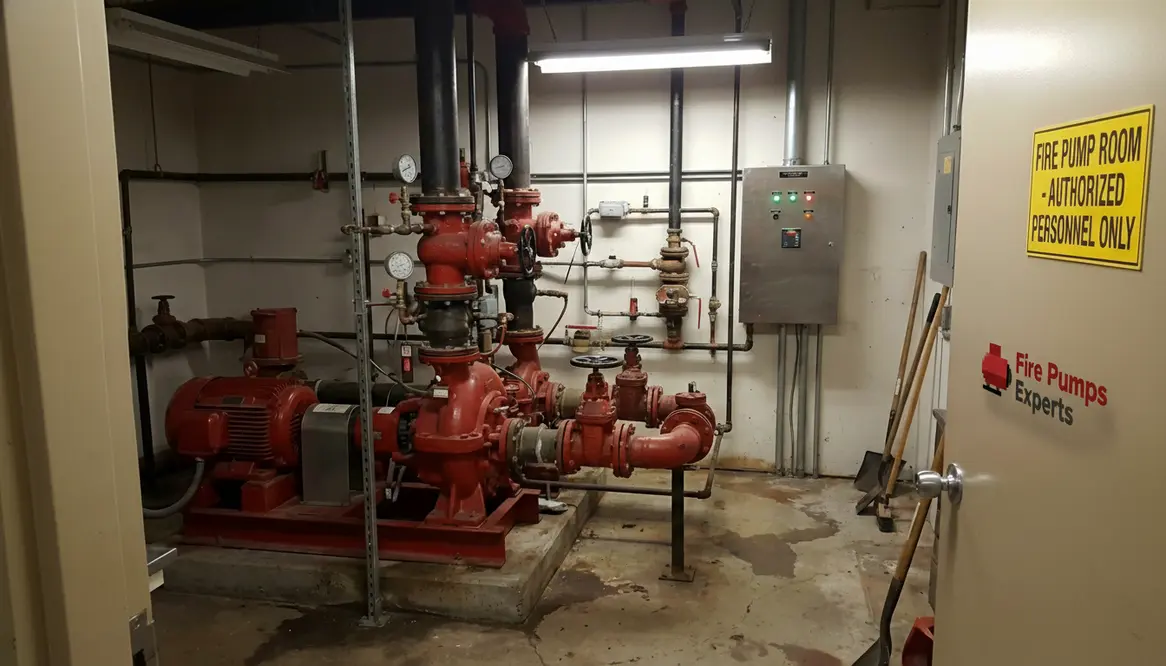
New Building Fire Pump Determination for Kitchens
I have spent enough time around commercial kitchens to know one truth: when heat, grease, and pressure come together, things can go from “dinner rush” to “call the fire department” faster than you can say medium rare. That is exactly where new building fire pump determination enters the picture. It is not just a box to check during construction. It is the quiet decision that shapes how well a facility stands its ground when fire pushes back. And in a world where a single spark can rewrite a business’s future, that decision carries real weight.
What Makes Fire Pumps Essential in Commercial Kitchen Facilities
Commercial kitchens operate like controlled chaos. High temperatures, open flames, pressurized gas lines, and oils that would rather ignite than cooperate all live in the same space. Because of this, I see fire pumps not as optional equipment, but as the backbone of a fire protection system.
Without a reliable pump, sprinkler systems can lose pressure at the exact moment they are needed most. That is not dramatic. That is physics. And unfortunately, physics does not take breaks during dinner service.
Fire pumps ensure water moves with enough force to suppress flames quickly. In large facilities like hotels, hospitals, and industrial kitchens, municipal water supply alone often falls short. So, the pump steps in, boosts pressure, and turns a passive system into an active defender.
And yes, while chefs may enjoy a bit of “flame” in presentation, the building itself does not share that enthusiasm.
How New Building Fire Pump Determination Impacts Kitchen Safety
When I approach a project, new building fire pump determination is not just a technical calculation. It is a strategic decision. I look at building size, water supply, hazard level, and system demand. Commercial kitchens rank high on that hazard scale.
Because of this, proper sizing and configuration matter. Too small, and the system underperforms. Too large, and you waste energy and increase wear. It is a balancing act, but one with clear consequences.
Moreover, modern fire codes expect precision. Authorities do not accept guesswork, and neither should building owners. A well planned pump setup ensures compliance while protecting operations from costly downtime.
And let’s be honest, no one wants to explain to stakeholders that the fire system failed because someone eyeballed the numbers.
Designing Fire Pump Systems for High Demand Environments
Designing for a commercial kitchen is not the same as designing for a quiet office building. The demand curve is sharper, the risks are higher, and the margin for error shrinks.
So, I focus on a few critical elements:
Water Supply Reliability
I evaluate whether the municipal source can sustain pressure during peak demand. If not, the pump becomes essential, not optional.
System Integration
The pump must work seamlessly with sprinklers, standpipes, and suppression systems. Disconnected systems create dangerous gaps.
Redundancy Planning
In major facilities, backup pumps or alternate power sources add resilience. Because outages do not schedule themselves politely.
Performance Testing
Regular testing ensures the system performs as designed. A pump that only works on paper is about as useful as a smoke detector with dead batteries.
Each of these factors ties back to making the initial determination correctly. If that foundation is solid, everything built on top performs better.
Why Commercial Facilities Cannot Afford Fire Pump Missteps
I have seen what happens when fire protection is treated as an afterthought. It usually starts with small compromises. A slightly undersized pump. A delayed inspection. A skipped upgrade.
Then one day, those compromises collect their debt.
Commercial kitchens serve hundreds, sometimes thousands, of people daily. A fire incident does not just threaten property. It disrupts operations, damages reputation, and can lead to long closures. In large scale facilities, that translates into serious financial loss.
However, a properly determined and installed fire pump system reduces that risk dramatically. It acts fast, contains damage, and gives occupants time to respond safely.
Think of it like having a seasoned security team. Quiet most days, but absolutely essential when things go sideways.
Is a Fire Pump Always Required in Large Kitchen Projects
Not always. But often enough that I never assume otherwise.
The need depends on building height, size, water supply conditions, and fire protection demand. During new building fire pump determination, I analyze these variables carefully.
If municipal pressure meets system requirements, a pump may not be necessary. However, in many commercial and industrial facilities, especially those with extensive kitchen operations, demand exceeds supply.
That is when the pump becomes non negotiable.
And if you are wondering whether skipping it saves money, the short answer is no. It simply shifts the cost to a later, far more inconvenient moment.
Maintaining Fire Pump Performance Over Time
Installation is only the beginning. A fire pump is a mechanical system, and like any machine, it needs attention.
I recommend routine testing, inspections, and performance checks. These ensure the pump starts when needed and delivers the required pressure.
Additionally, facility managers should treat maintenance as part of operations, not an occasional task. Because when an emergency hits, there is no time for troubleshooting.
Consistency here builds confidence. And confidence, in this context, means knowing the system will respond without hesitation.
FAQ: Fire Pumps in Commercial Kitchen Facilities
Conclusion
When I look at commercial kitchens, I do not just see equipment and workflow. I see risk that demands respect and preparation. A well executed fire pump strategy transforms that risk into something manageable. If you are planning or upgrading a facility, now is the time to get it right. Work with experts who understand large scale systems, and make fire protection a priority before it becomes a problem.