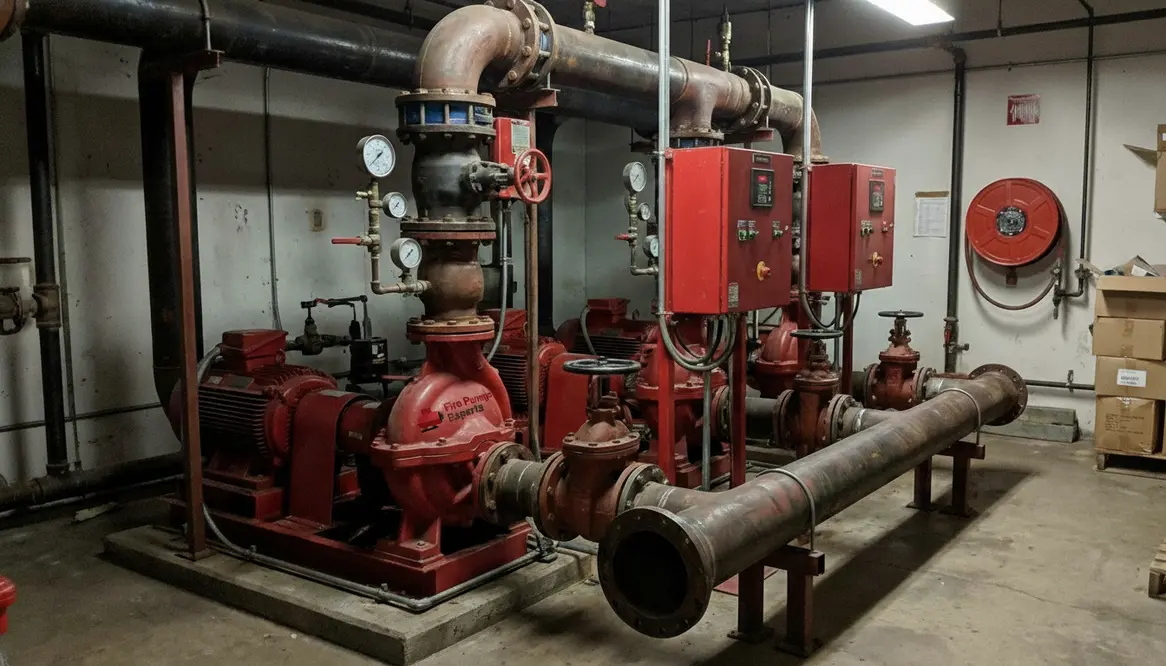
Fire Pump Systems for Residential High Rise Buildings
Fire safety in high rise homes starts far below the penthouses, in rooms most residents will never see.
I have spent years around tall buildings, the kind that scrape the sky and quietly depend on systems most people never think about. Somewhere deep inside those structures, far from penthouse views and lobby marble, sits a lifeline. Fire pump systems. And yes, even our multi-use industrial park fire pumps often inspire how we design solutions for multi story residential buildings. Different environments, same mission. Move water fast. Move it reliably. Save lives without hesitation. Because when fire shows up uninvited, there is no time for guesswork, only performance.
What makes fire pump systems critical in multi story residential buildings?
I will say it plainly. Gravity is not your friend when water needs to climb twenty, thirty, or fifty floors. While city pressure might handle a small building, it simply cannot keep up with the vertical demand of larger residential towers. That is where fire pump systems step in.
These systems boost water pressure so sprinklers and standpipes perform exactly as designed. Moreover, they ensure that even the top floor receives the same level of protection as the ground floor. Without them, firefighting becomes slower, riskier, and far less predictable.
And let us be honest. Fire does not care if you live on the third floor or the thirty third. It spreads with equal enthusiasm.
The vertical challenge
The taller the building, the more pressure is lost as water fights gravity and friction inside the piping. Fire pumps step in to overcome that loss, turning a weak trickle into a decisive, high-pressure stream ready for sprinklers and hose outlets on the highest floors.
How I design systems that perform under pressure
When I approach a project, I focus on more than just meeting code. I focus on consistency. Because while codes set the baseline, real life rarely behaves like a textbook.
Step 1: Understand the building
First, I evaluate building height, occupancy load, and water supply. Then, I determine the correct pump type. Electric, diesel, or sometimes a combination. Each has its place depending on reliability needs and backup requirements.
Step 2: Build in redundancy
Next, I look at system redundancy. Because if one component fails, another must take over instantly. In many ways, it is like casting a great heist movie. Everyone has a role, and no one can afford to miss their cue.
Step 3: Make the system smart
Finally, I integrate monitoring systems. Modern fire pumps are not just mechanical workhorses. They communicate. They alert. They give operators real time insights so problems get solved before they become emergencies.
Key components that keep everything running smoothly
A fire pump system is not just one machine. It is a coordinated team. Each part matters, and together they create a seamless response.
Driver and Pump Unit
This is the heart of the system. It delivers the pressure needed to move water upward.
Controller
The brain of the operation. It starts the pump automatically when pressure drops.
Jockey Pump
A smaller pump that maintains pressure and prevents unnecessary starts.
Water Supply
Reliable and sufficient supply is essential. Without it, even the best pump is useless.
Valves and Piping
They direct and control flow, ensuring water reaches the right place at the right time.
Backup Power
Because power outages love bad timing. And fires rarely wait for electricity to come back.
Lessons borrowed from multi use industrial park fire pumps
I often pull insights from multi-use industrial park fire pumps because those systems are built for complexity. Industrial environments demand durability, adaptability, and continuous performance. Sound familiar? It should.
Industrial thinking in a residential tower
Multi story residential buildings face similar challenges, just packaged differently. High occupancy, varying water demand, and strict safety expectations. By applying industrial grade thinking, I ensure residential systems are not just compliant, but resilient.
Additionally, industrial systems teach us the value of scalability. As buildings expand or retrofit, the fire pump system must adapt without losing efficiency. Flexibility is not a luxury. It is a requirement.
That is why I look at how multi-use industrial park fire pumps handle changing production lines, new processes, and extended footprints. The same mindset helps keep residential systems future-ready instead of frozen in the year they were installed.
Common mistakes I see and how I avoid them
Now here is where things get interesting. Because even well intentioned designs can miss the mark.
Mistake 1: Ignoring pressure loss
One common mistake is underestimating pressure loss. Pipes, fittings, and elevation all reduce pressure. Ignore that, and your system underperforms when it matters most.
Mistake 2: Treating maintenance as an afterthought
Another issue is poor maintenance planning. A system that works perfectly on day one can fail years later if no one checks it. I always design with accessibility in mind, making inspections and testing straightforward.
Mistake 3: Overcomplicating the system
Then there is overcomplication. Yes, advanced systems are impressive. But if operators cannot manage them easily, complexity becomes a liability. I aim for systems that are both powerful and intuitive.
How do I ensure compliance while keeping systems practical?
I follow codes closely, but I do not stop there. I interpret them in the context of real building operations. Because while regulations set the framework, practicality ensures long term success.
Turning rules into real protection
I also collaborate with engineers, property managers, and safety teams. Each perspective adds value. Together, we create systems that meet standards while remaining efficient and manageable.
And yes, I document everything clearly. Because nothing says chaos like missing records during an inspection.
When needed, I point people toward resources like https://firepumps.org so that training, standards, and tools stay aligned with how these systems are actually used day to day.
FAQ: Fire pump systems for multi story residential buildings
Questions about high rise protection come up constantly, whether we are talking about condos, apartments, or the multi-use industrial park fire pumps that shape much of the design philosophy. Here are a few of the most common ones.
Conclusion: building safety that stands tall
When I design fire pump systems, I think beyond pipes and pressure. I think about people. Families. Entire communities living dozens of floors above ground, trusting that safety systems will work without question. If you manage or develop large residential properties, now is the time to invest in systems that deliver certainty. Let us build something that performs when it matters most. Because in this line of work, reliability is not optional. It is everything.
Whether I am working on a sleek new tower or reviewing the rugged layout of multi-use industrial park fire pumps, the goal stays the same: move water fast, move it reliably, and make sure that when alarms sound, the system responds with absolute clarity.