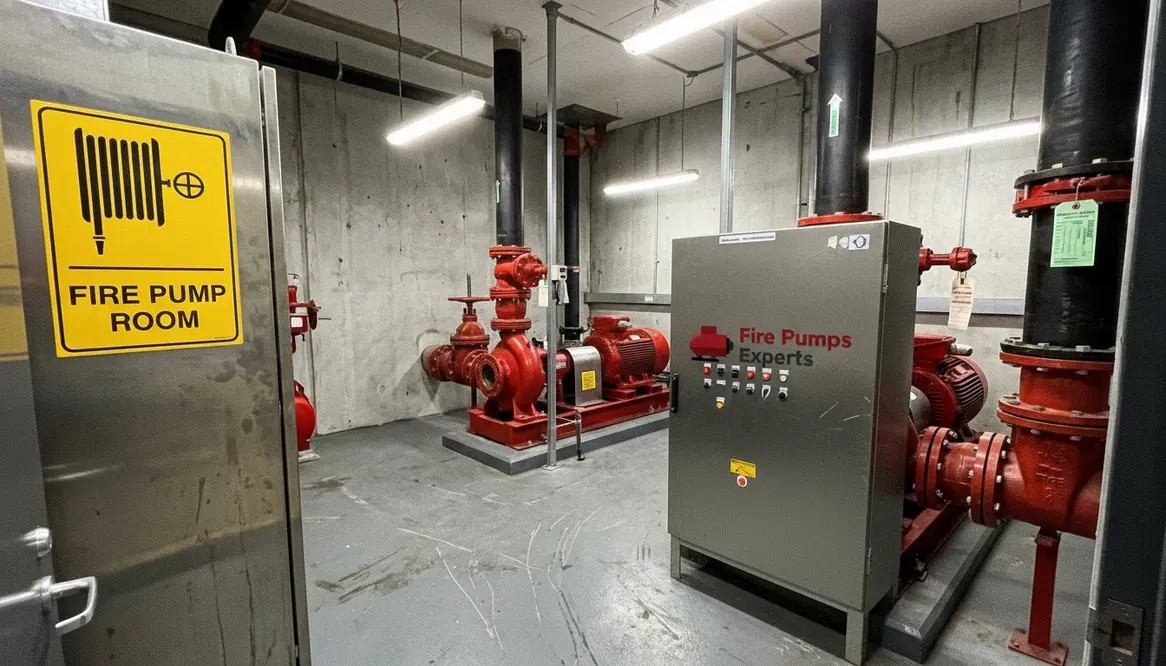
Fire Pump Room Requirements Australia Guide
A practical walkthrough of how Australian rules, layout choices, and on-the-ground checks shape reliable fire pump rooms in commercial and industrial buildings.
Fire pump rooms in the real world
When I talk about fire pump room requirements in Australia, I am talking about the quiet little powerhouse that helps protect commercial and industrial buildings when things go sideways. These rooms do not ask for attention, yet they demand precision. If the pump room fails, the whole fire system can stumble, and nobody wants a dramatic scene straight out of a disaster film. So, in this guide, I will walk through the key rules, layout points, and practical checks that keep a pump room fit for purpose in major properties.
What a fire pump room must do
First, I like to think of the pump room as the backbone of the fire system. It houses the pumps, valves, controls, and often the backup gear that keeps water moving when the building needs it most. Because of that, the room must stay accessible, protected, and ready to perform without fuss. In Australia, the design usually aligns with the building’s fire strategy, the relevant standards, and the project risk level. That sounds formal, and it is, but the idea is simple: the room must support reliable operation during an emergency.
In practice, the room needs enough space for maintenance staff to move around the equipment. It also needs clear access for repair work and routine checks. If a technician has to twist like a Marvel hero just to reach a valve, the layout needs a rethink.
Fire pump room requirements for layout and access
Good access sits at the heart of fire pump room design. I always look at how people will enter, service, test, and replace equipment over time. The room should not feel like a storage closet with a pump shoved inside like an afterthought. Instead, it should allow safe movement around all major parts.
Key layout points to check
- Clear and direct access from a service route
- Enough working space around pumps and control panels
- Doors sized for equipment removal and replacement
- Safe flooring with good drainage where needed
- Protection from heat, impact, and unwanted use
Also, I always check that the room does not double as a general storage area. That may sound obvious, yet I have seen pump rooms turn into accidental junk drawers for buildings. It is not ideal. It is not even close.
Fire pump room requirements for power, water, and safety
A pump room is only useful if the supply lines are dependable. Therefore, the room must support the right water source, power setup, and control arrangement for the building type. For commercial and industrial sites, this often means planning for high demand and reliable backup.
Here is where the details matter:
Water supply must match the system design and site risk. Power supply must stay stable, and where required, backup power must step in without delay. Controls must remain visible, protected, and easy to test. In addition, alarms and monitoring should give clear signals when something changes. If the room cannot support these functions, the fire system loses its edge very quickly.
For larger facilities, I also look at the relationship between the pump room and the rest of the fire infrastructure. The room should fit neatly into the overall fire strategy, not fight against it like a stubborn side character in a sitcom.
How Australian standards shape the design
Australian standards guide much of the practical design work, and that is a good thing. They help keep projects consistent and reduce guesswork. In many cases, AS 2118 plays a major role, especially where sprinkler systems and pump sets support fire protection in warehouses and other large buildings. For a useful external reference, I recommend this guide to AS 2118 fire pump requirements for warehouses in Australia.
Standards influence room size, access, pump arrangement, mechanical support, and serviceability. However, the final design still depends on the building use, the fire load, and the risk profile. So, I never treat standards like a one size fits all playlist. The building always gets the final say, and the pump room must keep up.
How I check compliance on a commercial site
When I review a site, I focus on whether the room supports real world use, not just paper compliance. That means I inspect the room condition, the access path, the control visibility, and the level of protection around the equipment. I also check if maintenance teams can test the system without obstacles or delays.
What I look for in higher risk properties
- Room size versus equipment footprint
- Access for maintenance and emergency response
- Labeling and control clarity
- Environmental protection and ventilation
- Safe separation from incompatible uses
Because these buildings often carry higher risk and larger occupant loads, the pump room has to work harder. It also has to keep working after years of use, dust, heat, and the occasional human decision that makes everyone else sigh quietly.
Quick answers about fire pump rooms
At-a-glance basics
What is a fire pump room used for?
It houses the pumps and controls that keep fire water supply ready.
Why do fire pump room requirements matter?
They help keep the fire system reliable, serviceable, and safe.
Can a fire pump room be used for storage?
No. Storage can block access and harm safety.
Do Australian standards control fire pump room design?
Yes. They guide layout, access, and performance needs.
Are fire pump rooms only for large buildings?
They mainly serve commercial, industrial, and major property sites.
Conclusion
When I look at fire pump room requirements in Australia, I see more than a technical box with machinery inside. I see a critical part of a building’s life safety system. If you manage a commercial or industrial property, I recommend treating the pump room as a priority, not a background detail. Review the layout, check the standards, and make sure the room supports the system it protects. If you need expert help, now is the right time to act.