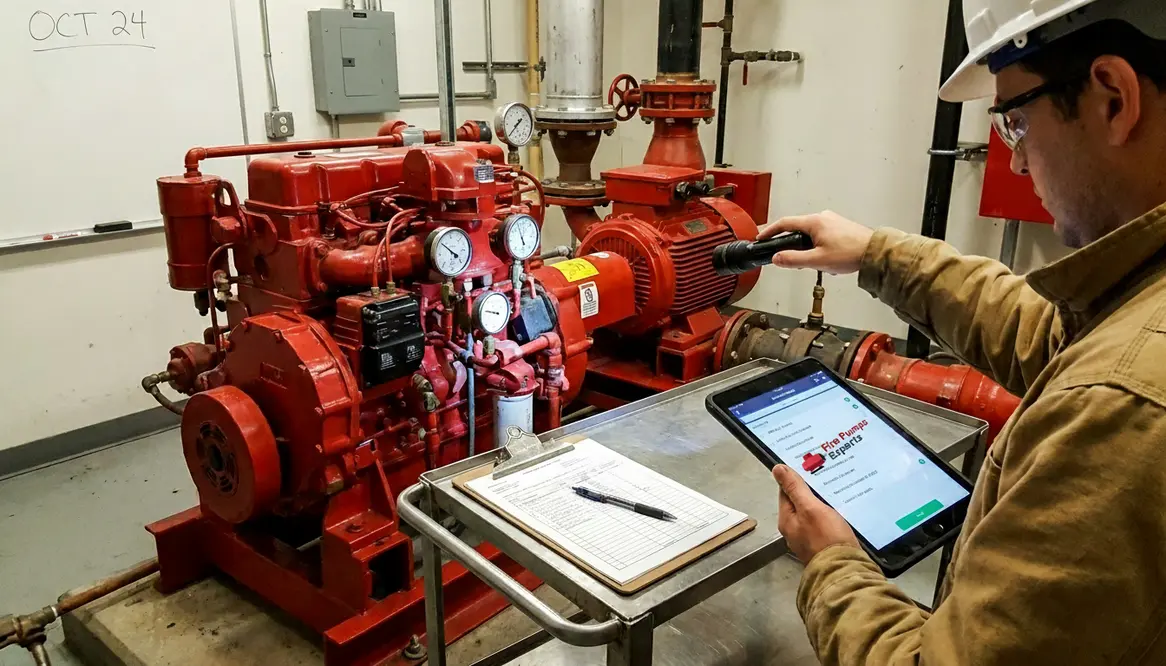
Fire Pump System Inspection Checklist Essentials
I have walked through enough mechanical rooms to know this truth. When a fire pump fails, it never picks a convenient time. That is why I lean heavily on a fire pump system inspection checklist right from the start. Within the first few minutes of any site visit, I use it to ground the process, set priorities, and make sure nothing slips through the cracks. It is not just paperwork. It is a living guide that keeps commercial and industrial facilities ready when it matters most. And yes, it is far more exciting than it sounds. Think of it as the backstage pass to your building’s life safety performance.
What should I check first during a fire pump system inspection checklist?
I always begin with the basics, because the basics are where most failures hide. First, I look at the pump controller. If the controller is not powered, everything else is just expensive decoration. Then I check for visible damage, leaks, or corrosion. It sounds simple, yet these issues often go unnoticed in large facilities where attention is split across dozens of systems.
Next, I confirm the pump room conditions. Temperature matters. Ventilation matters. Even lighting matters, because no one wants to troubleshoot a critical system in what feels like a scene from a horror movie. After that, I verify that valves are in the correct position and properly locked or supervised.
Finally, I review recent logs. If something has been acting strange, it usually leaves a trail. And trust me, pumps have a way of whispering before they start screaming.
Core components I never ignore
Once the initial sweep is done, I move deeper into the system. Every component plays a role, and skipping one is like ignoring a loose bolt on an airplane wing. Not ideal.
Mechanical elements
- Pump casing and impeller condition
- Couplings and alignment
- Bearings and lubrication levels
- Relief valves and circulation lines
Electrical elements
- Controller wiring integrity
- Power supply stability
- Alarm signals and indicators
- Battery backups if present
Meanwhile, I test the system under real conditions. A fire pump that looks good on paper but fails during operation is like a superhero who forgets their powers mid battle. It might look impressive, but it does not help when things heat up.
Fire pump system inspection checklist for ongoing compliance
Staying compliant is not about passing one inspection. It is about building a routine that keeps your system reliable year round. I use a structured fire pump system inspection checklist to align with NFPA standards while also adapting to the specific demands of large commercial properties.
For example, weekly churn tests help confirm that the pump starts automatically and maintains pressure. Monthly inspections go further by checking fuel levels for diesel pumps or verifying electrical performance for electric units. Annually, I push the system through full flow testing to measure real output.
Additionally, documentation matters just as much as the inspection itself. Clear records protect facility managers and provide proof of due diligence. If you ever need a benchmark, I recommend reviewing resources from fire pump inspection standards for commercial systems to stay aligned with industry expectations.
Common issues I see in commercial and industrial buildings
I have seen patterns across high rise buildings, warehouses, and manufacturing plants. Some problems show up so often they feel like reruns of a sitcom.
One major issue is neglected testing. Pumps sit idle for months, and when they finally run, they struggle. Another frequent problem is improper valve positioning. A single closed valve can render the entire system ineffective.
Then there is power reliability. In large facilities, electrical complexity increases the risk of failure. Backup systems are often installed but not properly maintained. It is like owning a backup generator and forgetting to put fuel in it. Not exactly reassuring.
Lastly, I often find outdated components. Technology evolves, and older systems may not meet current demands. Upgrading is not always glamorous, but it is necessary.
How I make inspections efficient without cutting corners
Efficiency is not about rushing. It is about knowing where to focus. I prioritize high risk areas first, then work outward. This approach keeps inspections thorough while respecting operational schedules in busy facilities.
I also rely on consistency. Using the same checklist format every time reduces errors and improves accuracy. Over time, patterns emerge, and small issues become easier to spot.
Communication plays a big role too. I make sure facility teams understand what I find and why it matters. After all, a checklist is only useful if people act on it.
Building your own fire pump system inspection checklist
A practical way to keep things consistent is to build a fire pump system inspection checklist that mirrors how the system behaves in real life. Start with the environment: room access, lighting, ventilation, and housekeeping. Then move to the mechanical hardware, electrical supply, and finally the performance testing steps you complete weekly, monthly, and annually.
Keep the checklist simple enough to use under pressure but detailed enough that nothing important gets skipped. Include fields for date, technician name, findings, corrective actions, and follow up. Over time, this record becomes a map of your system’s health and a powerful tool when explaining budgets, upgrades, or downtime to leadership.
The goal is not to create more paperwork. The goal is to create a repeatable process that turns inspections from a box-checking exercise into a real reliability strategy for your facility.
FAQ
Below are answers to some of the most common questions I hear when facility teams start working with a structured fire pump system inspection checklist for the first time.
Conclusion
If you manage a commercial or industrial facility, do not leave your fire protection to chance. A consistent, well executed inspection process keeps your system ready and your people protected. I encourage you to adopt a proven approach, use a reliable checklist, and partner with experts who understand complex properties. When everything is on the line, preparation is not optional. It is your strongest defense. Take action now and make reliability your standard.