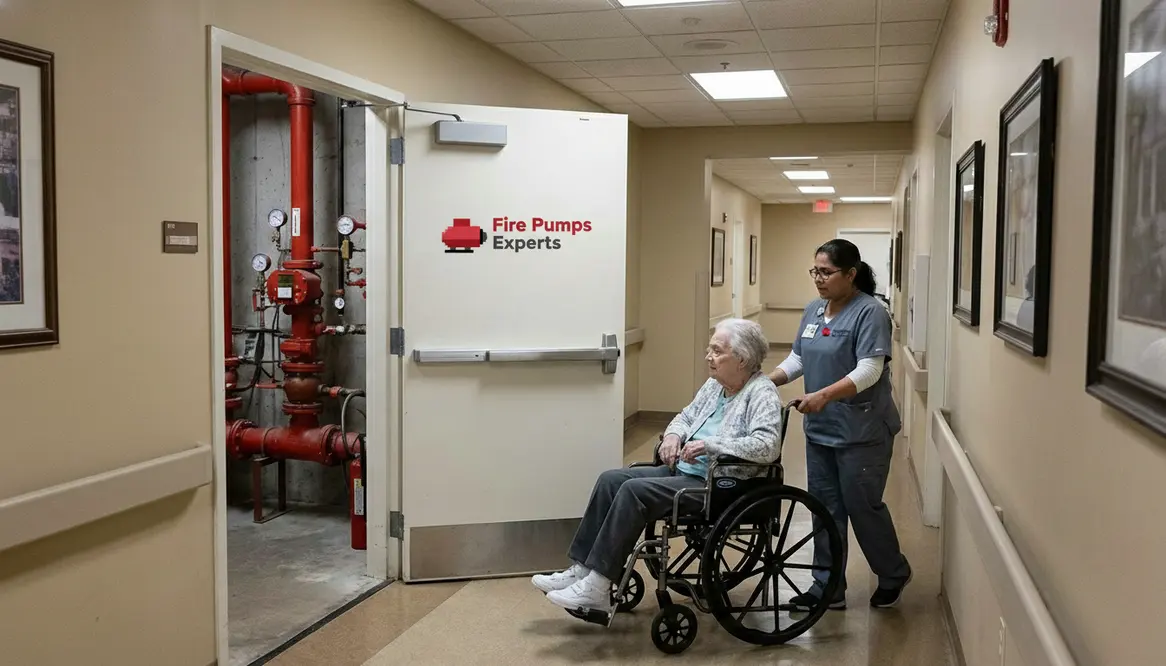
Fire Pump Systems for Nursing Homes Safety Guide
I have spent enough time around long term care environments to know one truth that settles in quietly but firmly. Safety is not a feature. It is the foundation. And when we talk about fire protection, that foundation often rests on reliable Fire Pump Systems for Nursing Homes. These systems do not make headlines, but they stand ready in the background like a seasoned bodyguard who never blinks. In facilities where residents depend on assistance to move, react, or even understand danger, every second matters. So today, I will walk you through what really keeps these buildings safe, with a steady voice and maybe a small smile along the way.
Why fire safety in long term care feels different
Fire safety in a typical office building is about quick exits and clear alarms. However, in a long term care setting, the story changes. Residents may have limited mobility, cognitive challenges, or medical equipment that cannot simply be unplugged and rushed out the door.
Because of that, evacuation becomes a carefully staged process rather than a sprint. Staff must move people in phases, often horizontally before vertically. Meanwhile, fire containment systems must hold the line. It is less action movie, more chess match. And nobody wants to lose that game.
Therefore, every system in the building must work together. Detection, suppression, communication, and staff training all play a role. If one piece fails, the margin for error shrinks fast.
How do Fire Pump Systems for Nursing Homes support fire protection?
At the heart of many suppression systems sits a simple but powerful idea. Water needs pressure. And when municipal supply cannot deliver enough, fire pumps step in.
Fire Pump Systems for Nursing Homes ensure that sprinkler systems and standpipes receive consistent, strong water flow during an emergency. Without that pressure, sprinklers might behave more like a leaky faucet than a life saving tool. That is not the kind of surprise anyone wants.
Additionally, these systems activate automatically when pressure drops. There is no dramatic button press or heroic slow motion run down a hallway. It just works. Quietly. Reliably.
In facilities where evacuation takes time, that reliability buys precious minutes. And in fire safety, minutes are everything.
Designing systems that match real world conditions
I have seen buildings that look perfect on paper but struggle in reality. That is why design must reflect how a facility actually operates.
For example, long corridors, compartmentalized wings, and medical equipment loads all influence system requirements. Engineers must calculate demand carefully. Not just average demand, but worst case scenarios.
Key design considerations
- Building size and layout
- Resident mobility levels
- Sprinkler system demand
- Backup power availability
Operational realities
- Staff response time
- Evacuation staging areas
- Medical equipment dependency
- Maintenance access
When these factors align, the system does more than meet code. It supports real people in real situations. And that is the difference between compliance and true safety.
Maintenance is where promises get tested
Let me be blunt. A fire protection system that is not maintained is just expensive decoration.
Routine inspection and testing ensure that pumps, valves, and alarms perform under pressure. Literally. Over time, components wear down. Corrosion sneaks in. Sensors drift out of calibration.
However, consistent maintenance keeps everything sharp. Weekly checks, monthly tests, and annual inspections are not busywork. They are rehearsals for a moment we hope never comes.
And yes, it can feel repetitive. Like watching the same rerun of a show you have already memorized. But when the real episode airs, you will be glad the script was practiced.
Training staff to act with clarity and calm
Even the best system needs people who know how to respond. Staff training turns confusion into coordination.
Care teams must understand alarm signals, evacuation procedures, and how suppression systems behave. Moreover, they must stay calm under pressure. Residents often take emotional cues from caregivers, so composure becomes part of the safety system.
Regular drills reinforce these behaviors. Not once a year, but often enough that actions feel natural. Think of it as muscle memory for safety. No gym membership required.
Integrating fire pump systems into a larger safety strategy
While pumps are essential, they are only one part of the picture. Detection systems identify threats early. Sprinklers control fire spread. Fire rated construction slows progression. Communication systems guide response.
When Fire Pump Systems for Nursing Homes integrate smoothly with these elements, the entire building becomes a coordinated defense network. Each component supports the others, creating layers of protection.
It is a bit like an orchestra. One instrument alone cannot carry the performance. But together, they create something powerful and precise. And ideally, nobody in the audience ever notices because nothing goes wrong.
FAQ about fire safety in long term care environments
Questions about Fire Pump Systems for Nursing Homes usually appear right after someone looks at an evacuation plan and realizes how much depends on timing, infrastructure, and calm decision making. The following answers settle the biggest worries that safety teams and administrators tend to carry around.
Conclusion
Fire safety in long term care is not about checking boxes. It is about protecting lives with systems that perform when it counts. If you manage or design a facility, now is the time to evaluate your infrastructure. Invest in reliable fire pump solutions, maintain them with care, and train your team with intention. Because when safety works as it should, it does not just protect buildings. It preserves dignity, trust, and peace of mind.