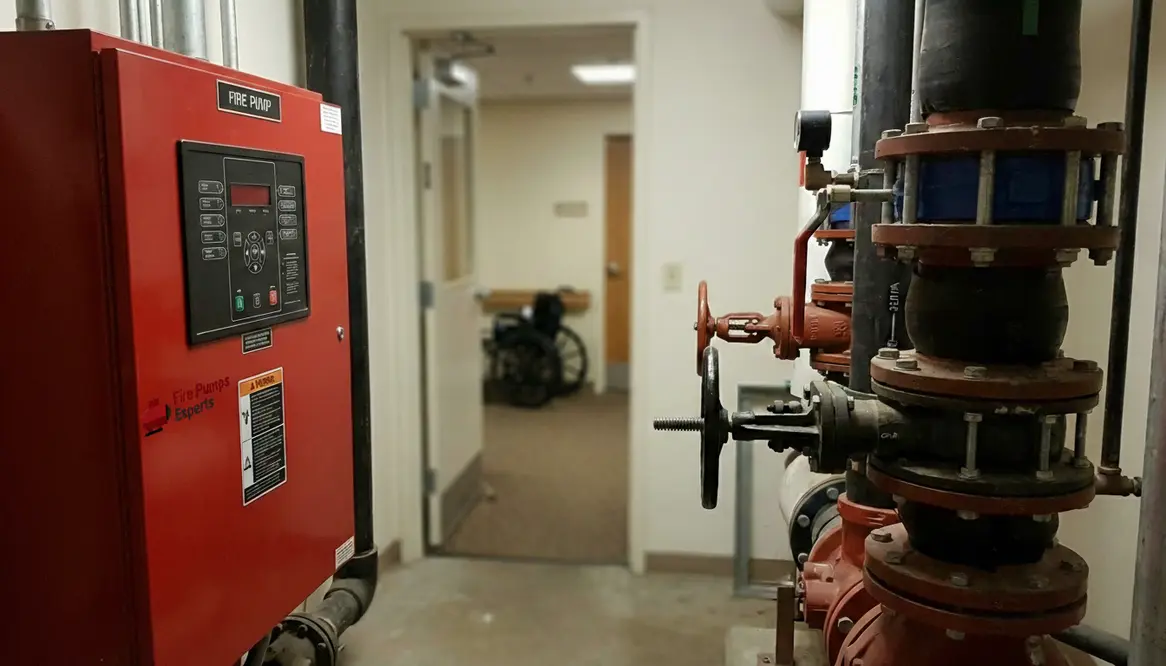
Fire Pump Systems for Senior Living and Safety
How quiet, reliable fire pump systems protect residents, staff, and operations in modern senior living environments.
I have spent years around complex buildings where safety is not optional and silence is often a sign that everything is working exactly as it should. In senior living facilities, that silence depends heavily on reliable industrial fire protection systems working behind the scenes. One of the most important pieces in that quiet orchestra is the fire pump. It does not ask for attention, but when it is needed, it performs like the lead actor in an action film, minus the dramatic slow motion. Today, I want to walk you through how fire pump systems support safety, comfort, and continuity in these environments where every second matters.
Why fire pump systems matter in senior living environments
Senior living facilities are not typical buildings. Residents often have limited mobility, which means evacuation takes longer and requires coordination. Because of this, I always emphasize that fire suppression must do more of the heavy lifting upfront.
Fire pumps ensure that sprinkler systems deliver consistent pressure, even in large or multi story properties. Without that boost, water may not reach critical areas fast enough. As a result, the entire fire protection strategy weakens.
Additionally, these systems support compliance with strict codes designed for healthcare and assisted living. And yes, codes can feel like that one overly strict teacher from school, but in this case, they are saving lives.
How does a fire pump system actually work?
At its core, a fire pump pulls water from a reliable source and pushes it through the sprinkler system at the pressure needed to control or suppress a fire. Simple idea, serious execution.
Most systems include an electric or diesel driven pump, a controller, and a steady water supply. When pressure drops, usually triggered by sprinkler activation, the pump kicks in automatically. No hesitation. No debate. Just action.
Moreover, modern systems often include monitoring technology. This allows facility managers to track performance in real time. Think of it like a fitness tracker, except instead of counting steps, it is making sure your building can handle a worst case scenario.
Design considerations for large scale residential care facilities
Designing fire pump systems for senior living spaces requires a thoughtful approach. I never treat these projects as one size fits all, because they are not.
Key design factors I prioritize
- Building height and layout complexity
- Water supply reliability and redundancy
- Local fire codes and healthcare regulations
- Emergency power integration
- Future expansion capabilities
Common challenges I solve
- Maintaining pressure across long pipe runs
- Ensuring backup systems during outages
- Reducing noise and vibration near residents
- Balancing efficiency with compliance
- Coordinating with other building systems
Furthermore, I always account for redundancy. Because when it comes to fire safety, having a backup is not paranoia. It is professionalism.
Industrial fire protection strategies for compliance and reliability
When I approach these systems from an industrial fire protection perspective, I focus on durability, scalability, and long term performance. Senior living facilities may feel residential, but the infrastructure must perform like a commercial powerhouse.
Regular testing and maintenance are essential. Fire pumps must run under real conditions during inspections, not just sit there looking impressive. In fact, I have seen systems fail simply because they were never properly exercised. It is like owning a sports car and never taking it out of the garage. Looks great, but useless when it counts.
In addition, integrating alarms and monitoring systems ensures immediate response when something goes wrong. This creates a layered defense that does not rely on a single point of failure.
Smart upgrades and future ready fire pump systems
Technology continues to evolve, and I make it a point to incorporate smart features wherever possible. Modern fire pump systems now include remote monitoring, predictive maintenance alerts, and energy efficient components.
Consequently, facility managers gain better control and visibility. They can address issues before they escalate, which saves both time and money.
And while we are being honest, anything that reduces emergency surprises is a win. Nobody enjoys a 3 a.m. phone call about system failure. Not even people who claim they are morning people.
What facility managers often ask me about fire pumps
Common fire pump questions
What type of fire pump is best for senior living facilities?
Electric pumps are common due to reliability, but diesel backups are often required for redundancy.
How often should fire pumps be tested?
Weekly visual checks and monthly operational tests are typical, with annual full performance testing.
Performance and continuity
Can fire pumps operate during power outages?
Yes, if connected to backup generators or if diesel driven systems are installed.
What happens if the water supply is interrupted?
Facilities usually include stored water or secondary supply sources to maintain system performance.
Are fire pumps noisy?
They can be, but proper installation and insulation reduce noise significantly.
How industrial fire protection shapes senior living safety
Behind every calm hallway and quiet resident room sits a web of infrastructure designed around industrial fire protection principles. In senior living, that means pumps sized for the worst day the building might ever see, not just the average Tuesday. It means water supplies that do not quit when municipal pressure dips, and control panels that make sense when adrenaline is spiking.
Done right, industrial fire protection is not just about code books and calculations. It supports resident dignity by reducing unnecessary alarms and false trips. It supports staff by giving them systems that respond quickly and predictably. And it supports owners by keeping the building operational after an incident instead of facing extended shutdowns and costly reconstruction.
Bringing it all together in real projects
On real senior living projects, the most successful outcomes come from treating fire pumps as part of a broader ecosystem, not a stand alone box in a mechanical room. Early coordination with electrical, plumbing, and low voltage teams keeps surprises to a minimum. Clear owner goals keep the design focused: protect life, protect continuity, and meet industrial fire protection standards without turning the building into a maze of confusing equipment.
Whether the facility is a single mid rise building or a multi building campus, the same rule holds: the pump, pipework, and controls should feel invisible during daily life and absolutely unmistakable when there is a problem. That balance is what separates a basic system from one that genuinely supports residents, staff, and families who trust the building with more than just their belongings.
Conclusion and next steps
Fire pump systems are not just equipment. They are a promise of safety in environments where people depend on it most. If you manage or develop a senior living facility, now is the time to evaluate your system, strengthen weak points, and plan for future demands. Connect with experienced professionals who understand large scale fire protection and can tailor solutions that truly perform when it matters most.
If you are looking for deeper technical resources on pumps, performance curves, and standards relevant to industrial fire protection, start building your reference library now and keep it close to your design and maintenance teams. Your future self, your staff, and your residents will all appreciate the preparation when the sprinklers ever have to do their job for real.