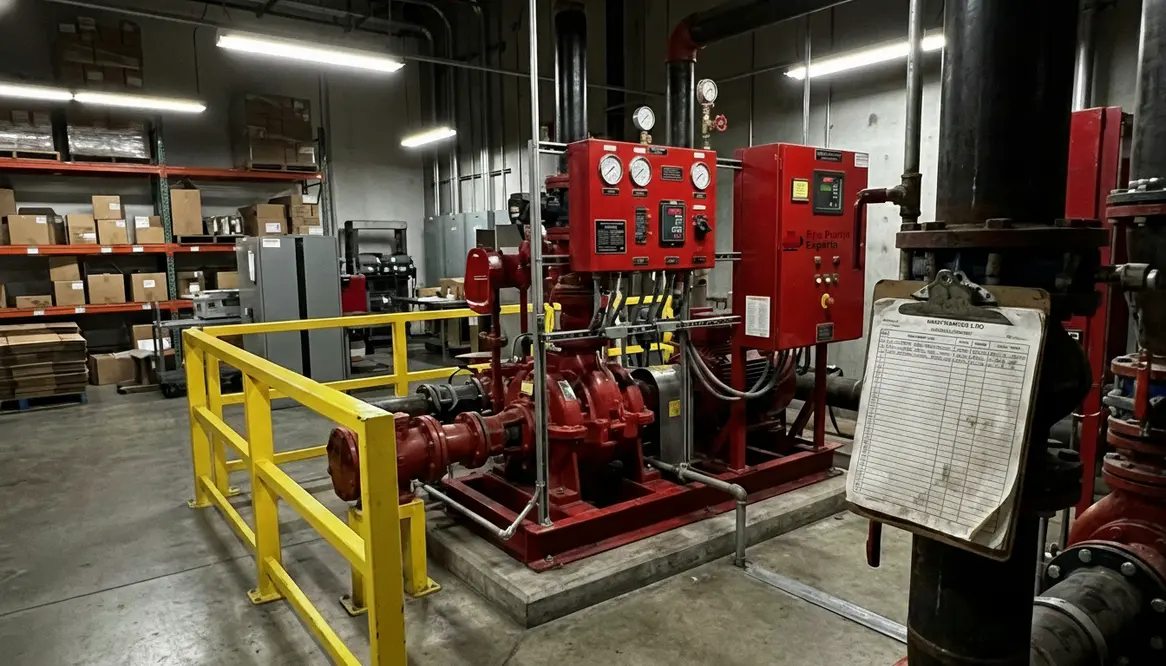
Fulfillment Center Fire Pumps Maintenance Guide
When I walk into a large facility, I don’t just see walls, wires, and workflows. I see risk. I see responsibility. And somewhere, often tucked away in a mechanical room that smells faintly like oil and determination, I see the heartbeat of fire protection: the pump. In the world of fulfillment center fire pumps, there’s no room for guesswork. These systems don’t get a second take. They either perform, or they don’t. And trust me, this is one audition you don’t want to fail.
What property managers should know about fire pump maintenance
Let me say it plainly. Fire pump maintenance is not optional. It is not something you circle back to after budget meetings or vendor calls. It is essential. Because when a fire breaks out, nobody claps for a well organized spreadsheet. They depend on water moving fast and with pressure.
First, I always look at consistency. Weekly churn tests, monthly inspections, and annual flow testing are not just industry buzzwords. They are your early warning system. Without them, small issues quietly grow into expensive failures.
Moreover, documentation matters. Inspectors do not take your word for it. They want logs. Clean, clear, and complete. If your records look like a mystery novel, you are already in trouble.
And yes, even the best systems wear down. Seals age. Controllers fail. Power sources hiccup. So while the pump may look like a tank, it still needs attention like a classic car. Ignore it, and one day it simply refuses to start. No dramatic music. Just silence.
How often should I inspect fulfillment center fire pumps?
I get this question a lot, usually right after someone realizes their last inspection date is… let’s just say “historical.”
The answer is simple, but the execution takes discipline. Weekly visual checks keep you aware of leaks, vibrations, or unusual noises. Monthly testing ensures the system actually runs under controlled conditions. Annually, you bring in full performance testing to confirm the pump delivers the pressure and flow your building demands.
However, frequency alone is not enough. Quality matters. A rushed inspection is like fast forwarding through a movie and claiming you understand the plot. You miss the details that matter.
In large scale facilities, especially distribution hubs, these schedules protect more than equipment. They protect operations, inventory, and ultimately people. In that context, disciplined care for fulfillment center fire pumps is one of the most practical risk controls you have.
Key components I never ignore during maintenance
When I evaluate a system, I focus on the parts that tend to fail quietly before they fail loudly.
Column 1
- Pump casing and impeller condition
- Driver performance whether electric or diesel
- Controller functionality and alarms
- Pressure relief valves
Column 2
- Fuel systems for diesel units
- Power supply reliability
- Suction and discharge gauges
- Backflow prevention devices
Each piece plays a role. Ignore one, and the system becomes unpredictable. And unpredictability is not something you want during an emergency.
Also, I always listen. Literally. A healthy pump has a rhythm. When that rhythm changes, it is telling you something. Kind of like when your car starts making that noise you pretend not to hear. Except this time, pretending is not an option.
Common mistakes property managers make with fire pumps
Now, let’s talk about the greatest hits of what not to do.
First, delaying maintenance to cut costs. I understand budgets. I really do. But skipping service today often leads to major repairs tomorrow. It is the financial equivalent of ignoring a small leak until you need a new roof.
Second, relying on unqualified technicians. Not all service providers understand commercial fire pump systems, especially in large scale operations. You need specialists who live and breathe this equipment.
Third, overlooking system integration. Fire pumps do not operate alone. They work with alarms, sprinklers, and backup power. If one piece fails, the entire system suffers.
And finally, assuming newer means better. Even newer fulfillment center fire pumps need regular care. Technology helps, but it does not replace maintenance. If anything, it demands more attention.
Why proactive maintenance protects your entire operation
Let’s zoom out for a moment. This is not just about compliance. It is about continuity.
When a fire pump fails, the consequences ripple across the entire facility. Operations stop. Inventory gets damaged. Insurance claims get complicated. And reputations take a hit.
On the other hand, a well maintained system works quietly in the background, like a good stagehand. You never notice it, but the show cannot go on without it.
Proactive maintenance gives you control. It turns emergencies into manageable situations. And in a world where downtime costs real money, that control is priceless.
Besides, sleeping better at night knowing your system is ready? That is a perk no spreadsheet can calculate. For facilities leaning heavily on automation and tight shipping windows, reliable fulfillment center fire pumps are one of the quiet foundations that keep everything else moving.
FAQ: Fire Pump Maintenance for Commercial Properties
These are the questions that come up most often when we talk about fulfillment center fire pumps and long term reliability.
Final thoughts and your next move
At the end of the day, fire pump maintenance is about readiness. It is about knowing that when something goes wrong, your system does exactly what it was built to do. If you manage a large facility, now is the time to review your maintenance plan, partner with experienced professionals, and close any gaps. Because when it comes to fire protection, “good enough” is never good enough. Let’s make sure your system is ready before it ever gets tested.
If you are looking for deeper technical standards, real world examples, or sourcing guidance for fulfillment center fire pumps, resources like https://firepumps.org can help you benchmark your current setup against industry best practices.