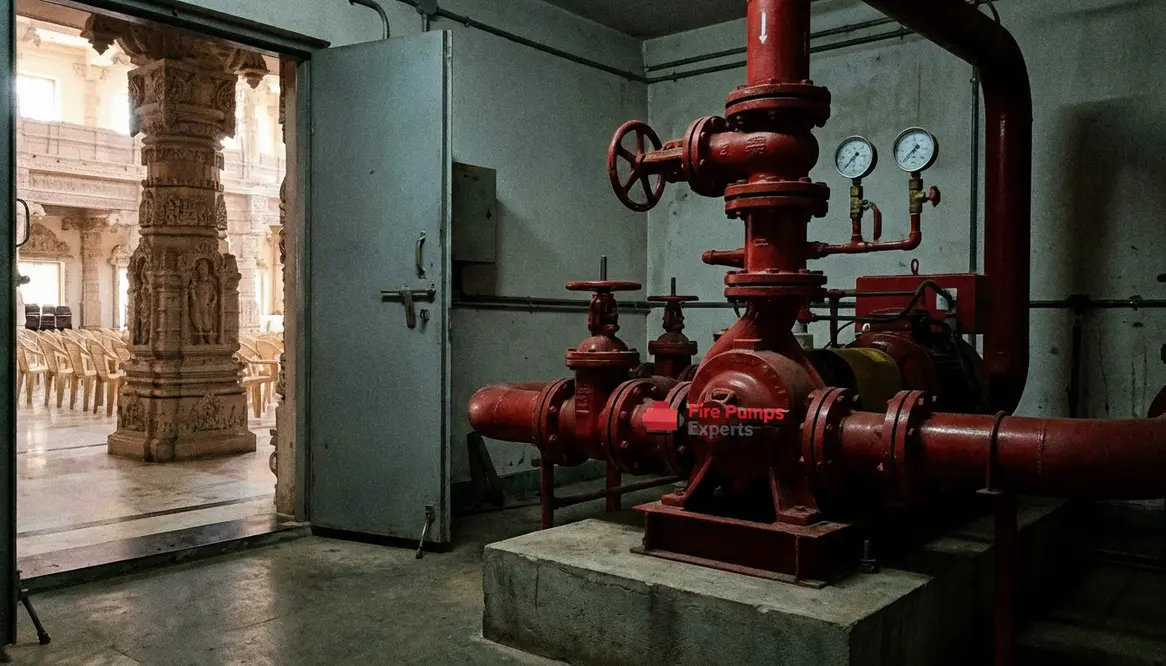
Fire Pump Systems for Temples in Worship Complexes
I have walked through vast worship complexes where the quiet hum of devotion fills the air, and I have also seen how quickly that calm can be disrupted when safety is not taken seriously. Fire safety is not just a checklist item. It is a responsibility. Early in any serious plan, I always bring up Fire Pump Systems for Temples. They are the silent guardians, waiting patiently for the one moment they must perform flawlessly. And trust me, when that moment comes, you want them ready, not thinking about it like a procrastinating college student at 2 a.m.
Why fire safety matters more in large worship complexes
Large worship facilities are unique. They host thousands of people at once, often with limited exits, intricate architecture, and a mix of old and new construction. Because of this, I approach them differently than standard commercial spaces.
First, occupancy levels fluctuate. One hour you have a quiet hall, and the next, it is standing room only. Therefore, fire systems must scale instantly. Second, many complexes include kitchens, auditoriums, and residential quarters. Each adds its own risk layer. And finally, people often feel safe in these spaces. Ironically, that comfort can lead to complacency.
I always remind clients that fire does not care about purpose. Whether it is a warehouse or a sanctuary, it behaves the same way. The difference lies in how prepared you are.
What fire protection systems should a temple complex have?
If you are asking this question, you are already ahead of the curve. I like to break it down into essentials that work together, not as isolated pieces.
Core systems I prioritize:
- Detection systems that identify smoke or heat early and trigger alerts.
- Sprinkler systems that respond automatically to contain fire spread.
- Emergency lighting that guides people when visibility drops.
- Clear evacuation routes that prevent bottlenecks.
However, none of these systems perform at their best without proper water pressure. That is where temple fire pump solutions come into play. They ensure that when sprinklers activate, they do not just politely drizzle. They act with authority.
Fire Pump Systems for Temples and why they are critical
I have seen facilities invest heavily in architecture but hesitate on infrastructure. That is like buying a luxury car and skipping the brakes. It looks great, right up until it does not.
Fire Pump Systems for Temples provide the pressure needed to move water through large, complex piping networks. In massive worship spaces, distance and elevation can weaken water flow. Pumps correct that instantly.
Moreover, these systems are designed for reliability. They activate automatically, often without human intervention. In high occupancy buildings, seconds matter. A delay can turn a small incident into a major emergency.
And yes, they require maintenance. But skipping maintenance is like ignoring a check engine light. It does not go away. It just waits.
For large worship campuses, Fire Pump Systems for Temples also support future growth. As buildings expand, higher loads and longer pipe runs appear. Properly sized pumps and controllers keep that growth safe instead of risky.
How I design layered protection for large religious facilities
I never rely on a single solution. Instead, I build layers that support each other. Think of it like a good heist movie, except we are stopping the chaos instead of causing it.
Prevention Layer
I start with materials, wiring inspections, and safe storage practices. This reduces the chance of ignition.
Response Layer
Then I integrate suppression systems, including pumps and sprinklers, to act immediately when needed.
Evacuation Layer
I ensure clear signage, trained staff, and crowd management strategies.
Recovery Layer
Finally, I plan for system resets and minimal downtime after an incident.
Because each layer supports the next, the entire system becomes resilient. And resilience is the goal.
Common fire safety gaps I see in large worship buildings
Even well funded facilities can miss key details. I have seen it more times than I can count.
First, outdated systems remain in place long after capacity has increased. Second, maintenance schedules are treated like optional reading. And third, expansions are added without upgrading core infrastructure.
Also, some facilities underestimate how quickly fire spreads in open spaces with high ceilings. It looks majestic, sure. But it also creates airflow patterns that can accelerate danger.
Then there is human behavior. People panic. They forget exits they walked past five minutes ago. That is why design must account for real reactions, not ideal ones.
How often should fire systems be inspected in temple complexes?
I get this question often, and the answer is simple. More often than you think.
Routine inspections should occur monthly for visual checks, quarterly for functional testing, and annually for full system evaluations. Fire pump units require consistent testing to ensure they start and run properly.
Additionally, after any major event or renovation, I recommend a full review. Systems can shift, loads can change, and assumptions can become outdated.
If your system has not been checked in a year, it is not resting. It is aging.
Designing Fire Pump Systems for Temples in complex campuses
When I work on large campuses, I do not treat Fire Pump Systems for Temples as a single piece of hardware. I treat them as the heart of the suppression network. That means confirming water supply reliability, sizing pumps to match worst case demand, and ensuring controllers, power sources, and jockey pumps are all aligned.
I also pay particular attention to cultural artifacts, archives, and sacred halls that would be impossible to replace. Where necessary, I coordinate with clean agent systems or pre action sprinklers so that water is delivered with control, not chaos. The goal is always the same: people first, irreplaceable spaces protected, and downtime minimized.
Well designed Fire Pump Systems for Temples anchor this strategy. Without them, even the best layout of sprinklers and hydrants becomes a beautifully drawn plan that cannot deliver when pressure drops.
FAQ
Conclusion
When I look at a large worship complex, I do not just see architecture. I see responsibility. The right systems, including well designed fire pump solutions, protect lives and preserve spaces that matter deeply to communities. If you manage or develop a major facility, now is the time to act. Evaluate your systems, upgrade where needed, and partner with experts who understand large scale protection. Because in fire safety, preparation is not optional. It is everything.
If you are considering a full review of Fire Pump Systems for Temples, start with a clear assessment: current capacity, real occupancy, water supply reliability, and how fast your suppression systems can realistically respond. From there, work with a qualified fire protection team and refer to resources such as https://firepumps.org for technical standards and guidance. That combination of insight, planning, and action is what turns quiet confidence into real safety.