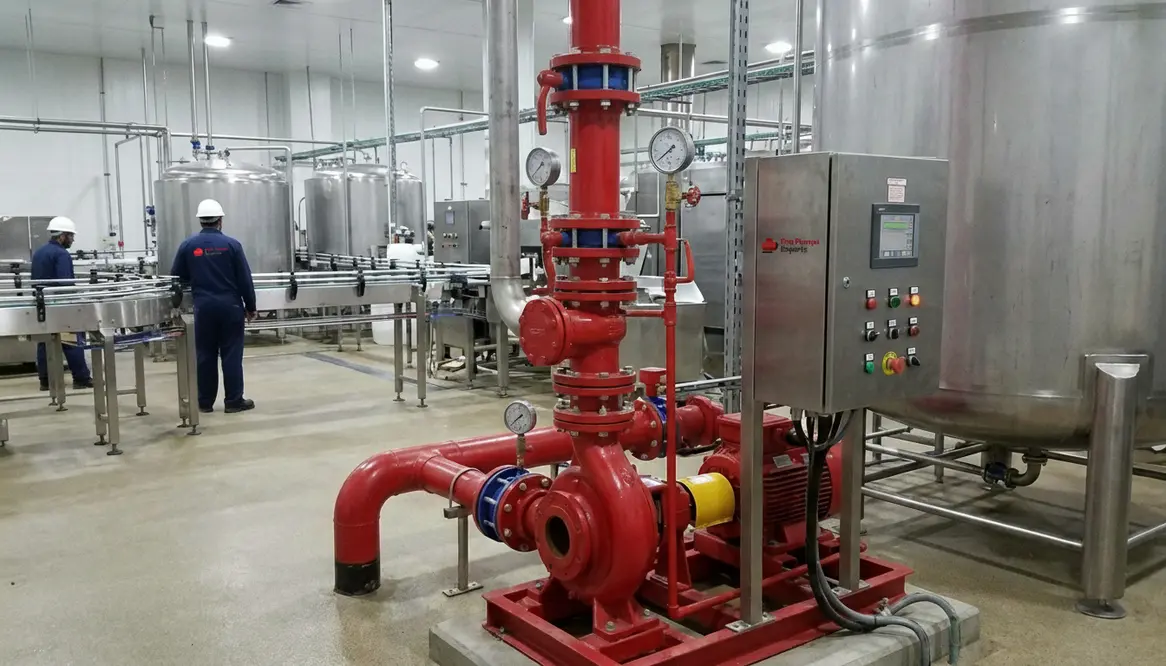
Fire Pump Systems in Food Processing Fire Safety
I have spent years around industrial systems that most people never think about until something goes wrong. And in food processing facilities, where heat, oils, and continuous operations collide, risk is not just a possibility, it is part of the environment. That is where commercial kitchen fire safety quietly sets the tone. It may sound like something reserved for restaurants, but the same principles scale up in ways that protect entire production lines. Fire pump systems step into that story not as background equipment, but as the steady heartbeat that keeps danger in check.
What does a fire pump system actually do in a food processing facility?
Let me answer this plainly. A fire pump system ensures water moves with enough pressure and speed to control or extinguish a fire when every second matters. Without it, even the best sprinkler system becomes little more than a polite suggestion.
In large food production environments, water demand can spike fast. High ceilings, wide floor plans, and specialized machinery create complex fire risks. Therefore, fire pumps act like a force multiplier. They boost water flow so suppression systems perform exactly as designed.
And yes, much like a superhero showing up right on cue, the pump does not need applause. It just needs to work.
Why food processing plants face unique fire risks
Food facilities are not your average buildings. They combine heat sources, electrical equipment, and often flammable residues like oils or dust. As a result, fire behavior can escalate quickly and unpredictably.
For example, fine particles from grains or spices can ignite faster than you might expect. Meanwhile, cooking lines and industrial ovens run at high temperatures for long periods. Add packaging materials into the mix, and you have a layered risk profile.
Because of this, relying on basic fire protection is not enough. Instead, facilities need systems designed for scale, consistency, and immediate response. Fire pumps provide that backbone, ensuring suppression systems do not fall short under pressure.
Within a broader approach to commercial kitchen fire safety, these industrial adaptations become the difference between a contained incident and a shutdown that ripples through the entire supply chain.
How fire pump systems integrate with suppression strategies
Now, this is where things get interesting. Fire pumps do not operate in isolation. They work alongside sprinklers, hydrants, and sometimes foam systems to create a coordinated response.
When a fire starts, sensors trigger sprinklers. At that moment, the system demands water at a specific pressure. If the municipal supply cannot keep up, the fire pump automatically kicks in. No hesitation. No drama. Just action.
Consequently, facilities can maintain consistent coverage across large zones. This matters because uneven pressure can leave critical areas exposed. And in a production facility, even a small gap in protection can lead to significant loss.
Core Components
Driver unit
Powers the pump using electric or diesel energy
Pump assembly
Moves water at required pressure levels
Controller
Automatically starts and monitors performance
Operational Benefits
Reliable pressure
Maintains flow across large systems
Rapid response
Activates immediately when needed
System stability
Prevents pressure drops during peak demand
Designing fire pump systems for large scale food operations
Design is where expertise really shows. Not all fire pump systems are created equal, and in industrial facilities, customization is everything.
Engineers consider building size, hazard classification, and water supply conditions. They also account for future expansion, because facilities rarely stay the same. Therefore, the system must handle both current and future demands.
Additionally, redundancy often plays a role. Backup pumps ensure that even if one unit fails, protection remains intact. Think of it as having a second pilot ready to take control mid flight. Not something you want to test, but reassuring all the same.
In well-run facilities, this thinking sits alongside broader commercial kitchen fire safety planning, ensuring that suppression, detection, and water supply form a single, reliable framework.
Maintenance keeps protection from becoming a false promise
A fire pump system is only as reliable as its maintenance routine. That may not sound exciting, but neglect here turns a powerful system into an expensive decoration.
Regular testing verifies that pumps start correctly, maintain pressure, and respond to system triggers. Inspections also catch wear before it becomes failure. And in facilities that operate around the clock, scheduling these checks requires precision.
Because downtime is costly, some operators delay maintenance. That is a risky gamble. Fire does not wait for a convenient moment, and systems must perform under real conditions, not just on paper.
Smart teams document tests, track trends, and treat the fire pump as a mission-critical asset, not a dusty afterthought sitting in a mechanical room.
How commercial kitchen fire safety principles scale up to industrial protection
I find it fascinating how principles from smaller environments scale into massive operations. The same focus on prevention, rapid suppression, and system reliability carries over.
However, the difference lies in complexity. In a commercial kitchen, you protect a defined space. In a food processing plant, you protect an ecosystem of interconnected zones. Therefore, fire pump systems become central to maintaining balance across that system.
And yes, while no one is flipping pancakes in a packaging line, the underlying risks of heat and fuel sources remain surprisingly similar.
Viewed through the same lens as commercial kitchen fire safety, food processing facilities benefit from layered protection: trained people, clear procedures, engineered suppression, and fire pumps that ensure water actually reaches the flames with the force it needs.
FAQ
Final thoughts and next steps
Fire pump systems are not just equipment, they are insurance in motion. When properly designed and maintained, they protect people, products, and entire operations without hesitation. If you manage a food processing facility or a large industrial property, now is the time to evaluate your system. Make sure it performs when it matters most. Because when fire shows up uninvited, your response should already be in place, calm, steady, and ready to act.
If you are reviewing your current setup, start by confirming that your fire pump sizing, testing schedule, and suppression coverage align with both code and your actual operational risks. When in doubt, work with specialists who live and breathe these systems, or tap resources such as https://firepumps.org to deepen your understanding and benchmark best practices.
In the end, commercial kitchen fire safety thinking scales beautifully into food processing: expect hazards, respect them, and build systems that are ready long before anything starts to burn.