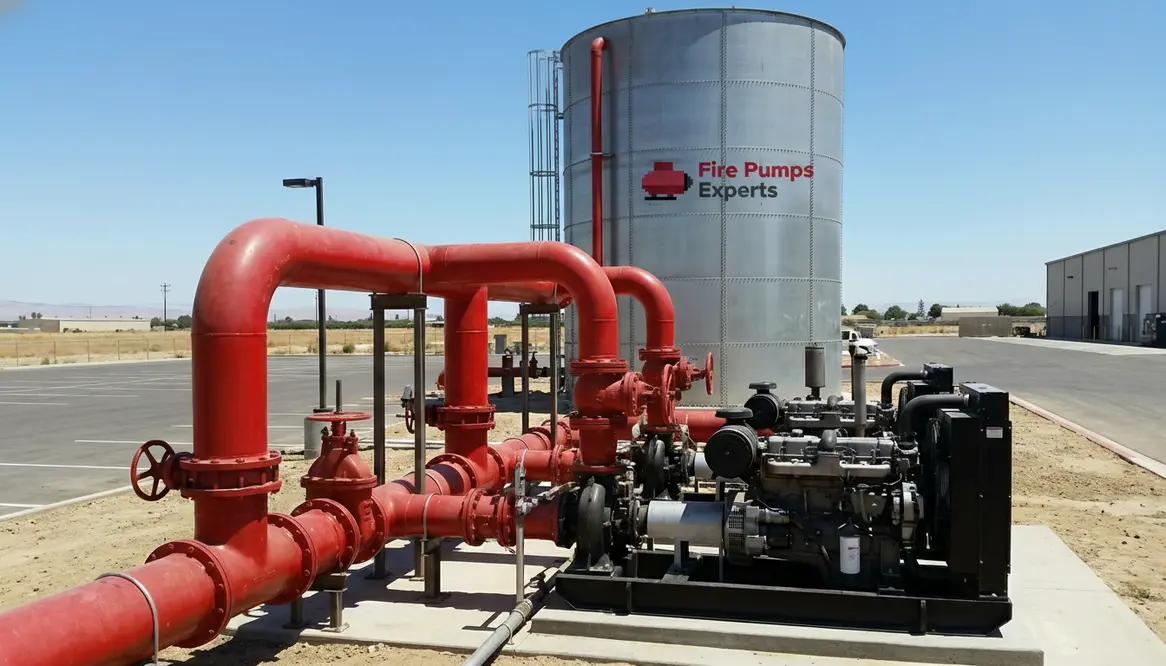
Fire Pump Tank System Modesto Design Guide
I have spent years around pumps, pipes, and systems that only get attention when something goes wrong. And in a place like Modesto, where commercial and industrial facilities depend on reliable fire protection, the stakes feel very real. When I talk about a fire pump tank system Modesto, I am talking about a carefully balanced setup that must perform without hesitation. Because when the alarm sounds, nobody wants a system that “usually works.” That is like bringing a butter knife to a lightsaber fight. It just does not end well.
How I approach fire pump selection for tank supplied systems
First, I look at the water source. Storage tanks behave differently than city supply lines. They offer control, yes, but they also demand precision. So I focus on suction conditions, tank elevation, and available volume. If the tank cannot sustain flow during peak demand, the pump becomes an expensive decoration.
Next, I match the pump type to the facility’s risk profile. For large industrial properties, I often lean toward split case or vertical turbine pumps. They deliver steady performance and handle high flow rates with confidence. Meanwhile, I always verify compliance with NFPA standards because cutting corners here is like ignoring a check engine light on a cross country road trip. You might get away with it. But probably not.
Why demand calculations matter
I calculate demand by looking at sprinklers, standpipes, and special hazards, then I make sure the pump curve matches what the system will actually see in the field. In Modesto, temperatures, usage patterns, and system wear all affect performance, so “on paper” is never enough.
What makes storage tank systems different in Modesto facilities
Storage tank setups bring independence from municipal variability. However, they also shift responsibility squarely onto the facility. I have seen systems where the tank was sized perfectly on paper but failed under sustained demand because refill rates were ignored.
Therefore, I always evaluate refill strategies and redundancy. A proper fire pump tank system in Modesto should account for extended fire events, not just the first few minutes. Additionally, I consider seismic stability and structural integrity. California does not exactly have a reputation for staying still.
Hidden performance killers
Moreover, suction piping design matters more than most people expect. Poor layout introduces air pockets or friction loss, which quietly undermines performance. It is the kind of problem that hides until the worst possible moment.
When I evaluate a fire pump tank system Modesto facilities depend on, I pay close attention to these “boring” details, because they are often the difference between a system that actually protects people and one that only looks good on drawings.
Choosing between electric and diesel pumps without overthinking it
I like to keep this simple. If power reliability is strong, electric pumps offer efficiency and lower maintenance. However, when uptime is critical and grid interruptions are a concern, diesel becomes the dependable workhorse.
That said, I never choose based on preference alone. I evaluate:
Electric pump considerations
- Stable power supply
- Lower operational noise
- Reduced maintenance cycles
- Cleaner operation
Diesel pump considerations
- Independence from grid power
- Strong reliability in emergencies
- Higher maintenance needs
- Fuel storage requirements
In many Modesto commercial properties, I end up recommending a combination. One primary and one backup. Because redundancy is not overkill. It is peace of mind, especially when a fire pump tank system Modesto properties rely on has to perform under worst-case conditions.
Can one pump handle everything in a large facility?
Short answer vs. reality
Short answer. No.
Longer answer. I would not trust a single pump to protect a large scale industrial or commercial building. Demand varies across zones, and system pressure requirements can differ dramatically. So I often design multi pump configurations or zoned systems.
Additionally, I factor in future expansion. Facilities grow. Operations change. A system that barely meets today’s needs becomes tomorrow’s liability. Therefore, I build in flexibility from the start.
And yes, I have seen facilities try to “save money” with undersized systems. It usually costs more later. Kind of like skipping oil changes and then acting surprised when the engine gives up.
Key design details I never ignore in tank based systems
Some details may seem small, yet they carry serious weight. For example, net positive suction head must be carefully calculated. If the pump cannot draw water properly, nothing else matters.
Furthermore, I always verify controller reliability and alarm integration. A pump that runs without proper monitoring is like a security guard who sleeps through their shift.
I also prioritize accessibility. Maintenance teams need room to inspect, test, and repair components. If a system is hard to reach, it tends to be ignored. And ignored systems fail quietly.
Testing and proof of performance
Finally, I insist on thorough testing. Not just initial commissioning, but ongoing performance checks.
Because a fire pump tank system Modesto facilities invest in must prove itself long before an emergency ever occurs. The goal is simple: no surprises when the alarm hits.
FAQ about fire pump selection in Modesto facilities
A well designed fire pump tank system Modesto commercial and industrial sites can trust always starts with clear answers to the questions owners and operators ask most often.
Bringing it all together with confidence
When I design or evaluate these systems, I do not chase trends or shortcuts. I focus on performance, reliability, and long term value. Because in commercial and industrial environments, failure is not just inconvenient. It is costly and dangerous.
If you are planning or upgrading a system, now is the time to get it right. Let’s build something that works when it matters most. Whether you are dealing with a new fire pump tank system Modesto project or upgrading an older installation, taking a design first approach will always beat last minute fixes.
Reach out today and take the first step toward a safer, stronger facility. If you want to explore technical standards and best practices in more depth, resources such as https://firepumps.org are a useful reference alongside local codes and NFPA guidelines.