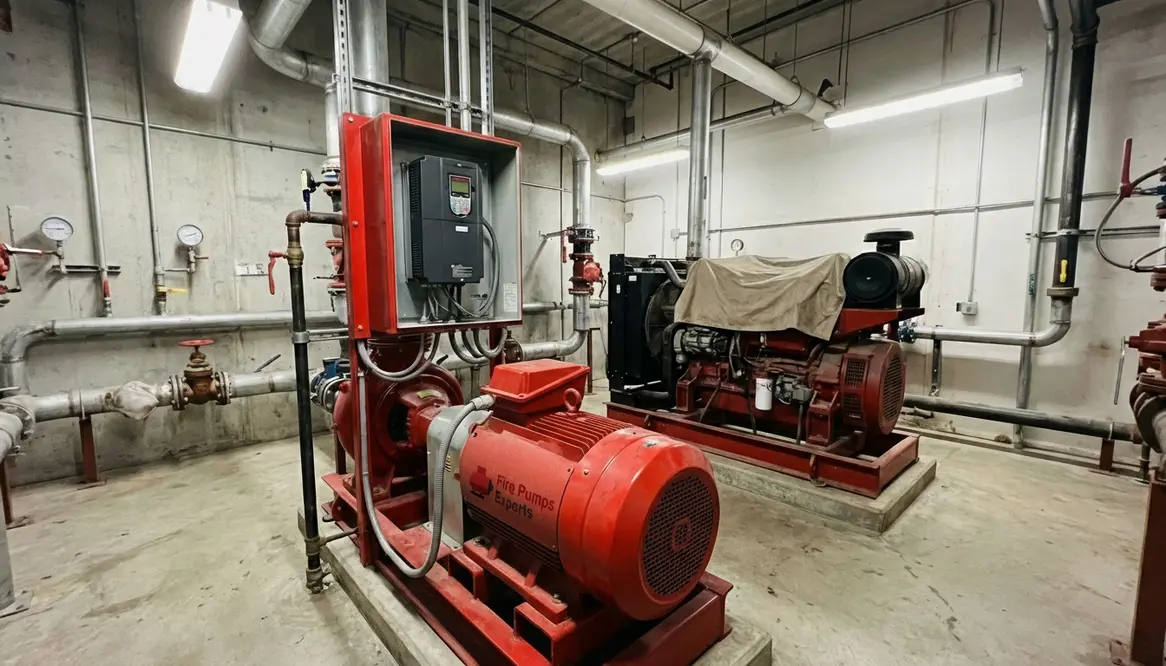
Fire Pump Variable Load Performance Escondido Guide
I have spent years around mechanical rooms that hum like a quiet orchestra, and I can tell you this much: when demand shifts, only the smartest systems keep their composure. That is why fire pump variable load performance Escondido matters more than most people realize. In large commercial and industrial buildings, water demand is never steady. One moment it is idle, the next it surges. So the question is simple. Which fire pump types actually keep up without breaking a sweat or your budget?
Understanding Fire Pump Variable Load Performance Escondido in Real Facilities
Let me paint a picture. A distribution center wakes up at dawn, systems cycle on, sprinklers sit ready, and pressure requirements shift as zones activate. Therefore, the pump cannot behave like a stubborn old engine that only runs at one speed. It must adapt. That is the heart of fire pump variable load performance Escondido.
In practice, variable load means the system must maintain stable pressure even as flow demand rises or falls. Consequently, poorly matched pumps either overwork themselves or underdeliver. Neither is charming. In fact, both can lead to compliance issues, and no facility manager enjoys surprise inspections the way people enjoy surprise cake.
Which Fire Pump Types Handle Changing Demand Best
Not all pumps are built for flexibility, and some handle change like a cat handles bath time.
Electric Fire Pumps with VFD
These are the smooth operators. A variable frequency drive adjusts motor speed in real time. As a result, pressure stays consistent without waste. I often recommend these for large campuses and high rise systems where demand fluctuates constantly.
Diesel Fire Pumps
Reliable and independent, diesel pumps shine during power loss. However, they are less flexible under variable loads unless paired with advanced controls. Still, when the grid fails, these are the heroes that do not ask questions.
Vertical Turbine Pumps
Ideal for facilities drawing from deep water sources. They perform well under changing conditions, especially when engineered with the right staging. Think of them as marathon runners. Not flashy, but incredibly consistent.
Split Case Pumps
These offer high efficiency at steady loads, but with proper controls, they can manage variation respectably. They are the dependable middle ground, like that one employee who never calls in sick.
Why Variable Speed Technology Changes Everything
Traditional pumps run at fixed speed. That means they either overshoot or lag behind demand. However, variable speed systems adjust instantly. Therefore, energy use drops, wear decreases, and performance improves.
In large scale properties, this translates into real savings and fewer maintenance headaches. Additionally, smoother operation reduces stress on pipes and valves. It is like switching from stop and go traffic to a calm highway cruise. Same destination, far less drama.
How Do I Choose the Right Fire Pump for My Building
I get this question often, and the answer is never one size fits all. First, I look at the facility type. A manufacturing plant behaves very differently from a hospital complex. Next, I evaluate water supply conditions and system demand curves.
Then, I match the pump to the most demanding scenario, not the average one. Because when a fire event happens, average performance will not cut it. Finally, I factor in compliance standards and long term operating costs. A cheaper pump upfront can quietly become the most expensive decision you ever made.
Fire Pump Variable Load Performance Escondido in Compliance and Safety
Codes and standards are not suggestions. They are the rulebook, and inspectors follow them like die hard fans quoting movie lines. Therefore, selecting a pump that handles variable loads is not just about efficiency. It is about passing inspections and protecting assets.
Systems that maintain steady pressure across changing demand reduce the risk of failure during critical moments. Moreover, they align better with NFPA requirements for performance consistency. In other words, they keep both your building and your paperwork in good standing.
Common Mistakes I See in Large Facility Installations
Even well funded projects can miss the mark. One common issue is oversizing pumps without considering control strategy. Bigger is not always better. Sometimes it is just louder and more expensive.
Another mistake involves ignoring future expansion. Facilities evolve. Therefore, a pump system should have room to adapt. Lastly, I often see underinvestment in control systems. That is like buying a sports car and refusing to use the steering wheel properly.
Where Fire Pump Variable Load Performance Escondido Really Shows Its Value
The more a facility’s occupancy, production schedule, or hazard profile changes during the day, the more critical smart control becomes. Office towers that partially empty overnight, hospitals with 24/7 activity, and logistics hubs that spike during certain shifts all depend on reliable response when fire protection zones open and close.
In these environments, fire pump variable load performance Escondido is not a luxury feature. It is the difference between a system that quietly adapts and one that constantly fights against real world demand, wearing itself out long before its time.
Tying Performance to Maintenance and Lifecycle Costs
There is a straight line between how a fire pump handles variable loads and how much attention it demands from your maintenance team. Systems that constantly cycle on and off, slam valves, or surge pressure do not age gracefully. Bearings, seals, and drivers all pay the price.
When you focus on fire pump variable load performance Escondido at the design stage, you are not just hunting for smooth pressure curves. You are quietly reducing unplanned shutdowns, cutting emergency callouts, and giving your team a system that behaves predictably instead of throwing surprises into the schedule.
FAQ
Conclusion
If your facility depends on consistent protection under shifting demand, it is time to take a closer look at your system. The right fire pump does more than move water. It safeguards operations, supports compliance, and brings peace of mind. Connect with a specialist who understands complex commercial environments and demand patterns. Because when performance matters most, guessing is not a strategy you want to rely on.