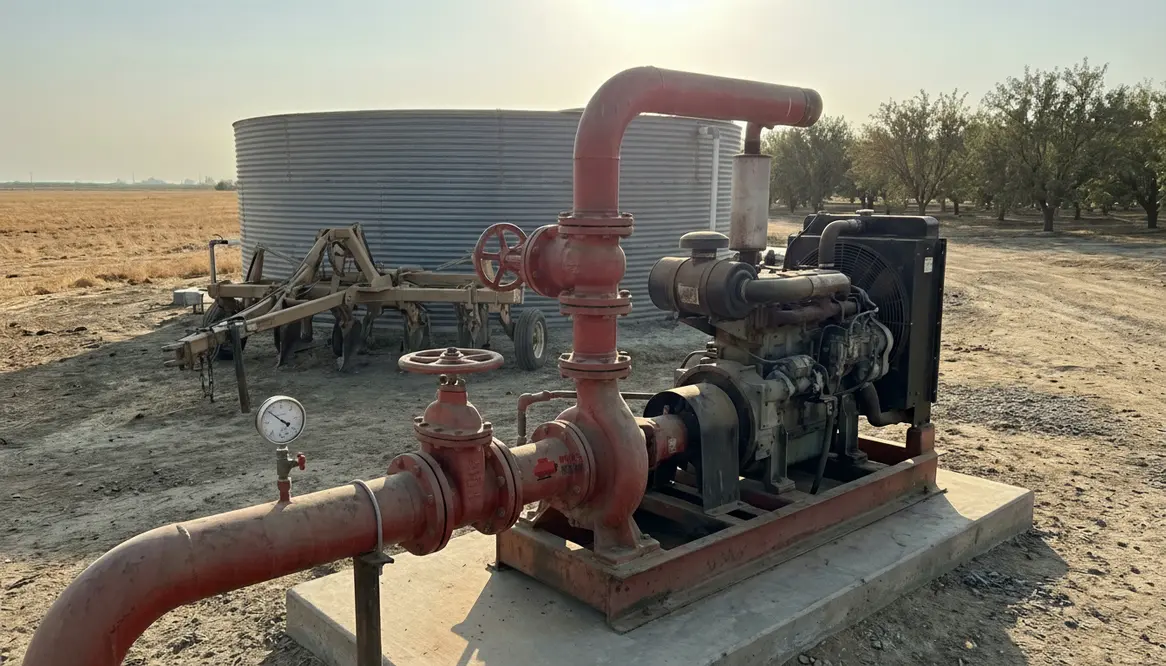
Fire Pump Water Supply Instability Visalia Guide
I have spent years around pumps that hum like they have stories to tell. And if there is one story that keeps repeating itself in California’s agricultural backbone, it is fire pump water supply instability Visalia. It sounds technical, maybe even a little dry, but trust me, when a system hesitates during a critical moment, it becomes the most dramatic thing in the room. In commercial and industrial facilities across rural Visalia, I have seen how inconsistent water supply can quietly undermine even the most well designed fire protection systems.
The pattern is rarely obvious at first. A test here, a routine inspection there, everything appears fine. Then someone checks performance during busy irrigation hours or when multiple processes are running, and suddenly the pressure readings look like a heart monitor during a sprint. That unpredictable behavior is the core of fire pump water supply instability Visalia facilities struggle with, and it is exactly what this guide is here to unpack in plain language.
Why rural water systems behave like moody celebrities
Out here, water does not always play nice. Unlike urban systems with steady municipal pressure, rural infrastructure depends on wells, storage tanks, and long distribution lines. As a result, pressure can fluctuate like a plot twist in a streaming series.
Moreover, agricultural demand often competes with fire protection reserves. One minute the system feels strong, the next it dips without warning. Therefore, fire pumps must constantly adapt. However, even the best equipment cannot compensate for a supply that lacks consistency.
I like to say, a fire pump without stable supply is like a sports car with questionable fuel. It looks impressive, but you are not winning any races. The same goes for fire pump water supply instability Visalia operators ignore until a real emergency shows up and exposes every hidden weakness in the system.
If the everyday water system behaves like a temperamental celebrity, the fire pump is the quiet professional trying to keep the show running on schedule. The more predictable and steady the water source, the less drama when it is time for the system to perform.
What causes fire pump water supply instability Visalia facilities face?
I get this question a lot, and the answer is never just one thing. Instead, it is a combination of factors working together like a band that refuses to rehearse.
Here are the usual suspects
- Variable well output: Groundwater levels shift throughout the year. Consequently, pump intake conditions change.
- Undersized storage tanks: Many facilities rely on tanks that were never designed for peak fire demand.
- Long pipe runs: Friction loss increases over distance, which reduces available pressure.
- Shared system demand: Irrigation or industrial processes can pull water away at the worst possible time.
Because of these factors, I often see systems that technically meet code but struggle in real world conditions. And let’s be honest, fire does not care about technicalities.
How do I stabilize fire pump performance in a rural commercial site?
Start with realistic testing
Fixing instability is not about guesswork. It requires a deliberate approach and a bit of humility.
First, I always evaluate the water source under realistic demand conditions. Testing during low usage hours tells you very little. Instead, I simulate peak scenarios. Then, I measure how the system behaves when it is under pressure, both literally and figuratively.
Upgrade storage and buffering
Next, I look at storage. Adding or upgrading tanks often creates immediate improvement. In addition, I consider break tanks or buffer systems to isolate the fire pump from upstream fluctuations.
Smarter controls and accurate data
Finally, I assess pump controls. Modern controllers can adjust performance more intelligently. However, they need accurate data to work effectively. Sensors, flow meters, and pressure transducers all play a role in catching fire pump water supply instability Visalia sites may not notice during simple pass/fail inspections.
Once these pieces align, the system begins to behave less like a wild card and more like a reliable partner.
What I focus on
- Accurate flow testing
- Tank capacity review
- Control system calibration
- Pipe friction analysis
What improves stability
- Dedicated water reserves
- Consistent pressure zones
- Smart pump controls
- Reduced competing demand
The hidden cost of ignoring instability
I have seen facilities delay upgrades because everything seemed fine on paper. However, instability does not always announce itself loudly. Instead, it lingers quietly until the moment it matters most.
Inconsistent supply can lead to delayed pump startup, reduced discharge pressure, or incomplete sprinkler coverage. As a result, fire events escalate faster than expected. And in commercial or industrial environments, that translates to downtime, asset loss, and serious liability.
There is also a compliance angle. Inspections may pass under ideal conditions, yet fail during real emergencies. Therefore, relying on minimum standards without deeper evaluation is a gamble.
If this sounds dramatic, that is because it is. Fire protection is one of those things where boring reliability is the goal. Anything less is unacceptable.
Fire pump water supply instability Visalia solutions that actually work
Layered design beats quick fixes
When I approach a rural facility in Visalia, I do not chase quick fixes. Instead, I build layered solutions.
For example, I often recommend dedicated fire water storage separate from operational demand. In addition, I integrate pressure sustaining valves to protect system balance. Then, I ensure the fire pump is matched precisely to available supply conditions.
From “it seems fine” to “we know it works”
Sometimes the solution is surprisingly simple. Other times, it requires system redesign. Either way, the goal remains the same. Predictable performance when it counts.
And yes, I have had clients say, “It has worked fine for years.” To which I usually reply, “So has skipping leg day, until suddenly it has not.” That is the energy behind fixing fire pump water supply instability Visalia facilities have tolerated for far too long.
FAQ quick answers for facility owners
Conclusion and next steps
If you manage a commercial or industrial facility in Visalia, you cannot afford uncertainty in your fire protection system. I encourage you to take a closer look at your water supply behavior, not just your equipment. When you are ready, work with specialists who understand rural system challenges and can design for real conditions. Stability is not a luxury. It is the foundation of protection. Let’s make sure your system stands ready when it matters most.
If you want a deeper technical reference point while planning upgrades, you can start with resources such as https://firepumps.org and then compare what you learn to how your own site behaves day to day. The more clearly you understand fire pump water supply instability Visalia systems are prone to, the easier it becomes to turn a fragile setup into a confident, resilient one.