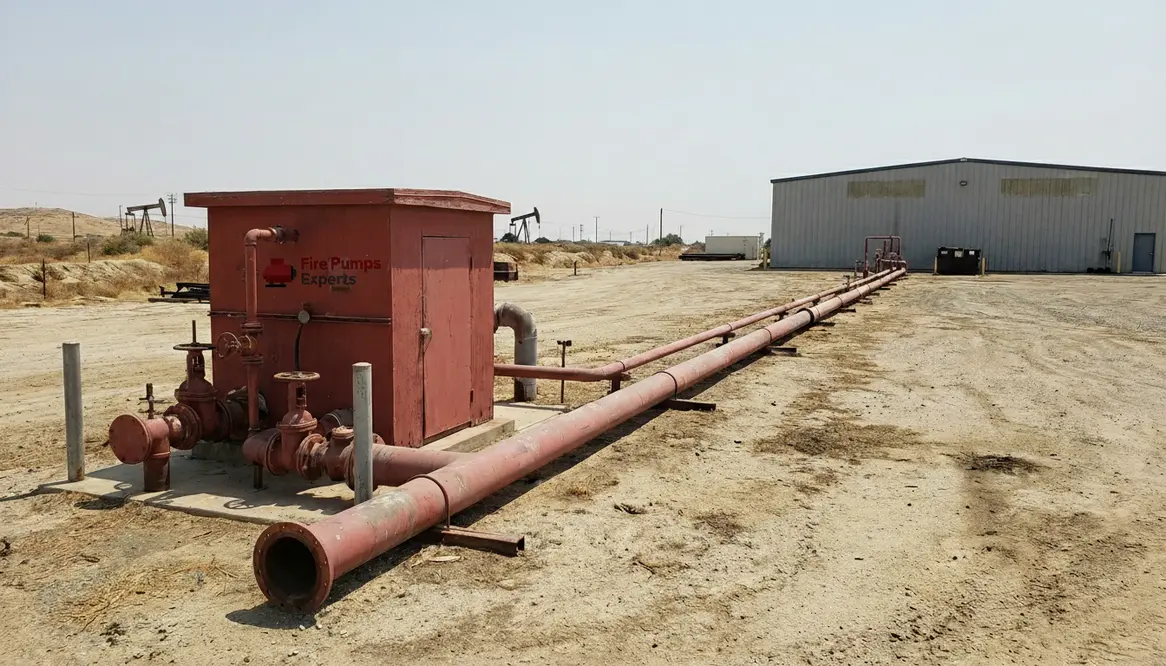
Fire Pump Long Pipe System Bakersfield Guide
I have spent years studying how water moves, how pressure fades, and how systems either rise to the occasion or fall short when it matters most. And here in Kern County, where distances stretch and infrastructure must work harder, the fire pump long pipe system Bakersfield conversation becomes more than technical talk. It becomes a matter of reliability. Because when you run water across long distances inside large commercial and industrial properties, every foot of pipe tells a story. And sometimes, it whispers problems before anyone notices.
So let’s walk through what really happens inside these systems. Not the brochure version. The real one.
Why Long Pipe Runs Change Everything in Fire Protection
At first glance, a pipe is just a pipe. Water goes in, water comes out. Simple, right? Well, not quite. Because as pipe length increases, friction builds. And that friction quietly steals pressure like a pickpocket in a crowded elevator.
As a result, fire pumps must work harder to maintain flow across large commercial campuses, distribution centers, and industrial plants. In Bakersfield, where facilities often sprawl across wide footprints, this becomes a design-defining factor.
Moreover, every elbow, valve, and fitting adds resistance. So even a well sized pump can underperform if the system layout does not respect these losses. It is not dramatic. It is gradual. And that is what makes it dangerous.
How do I maintain pressure across long fire protection pipelines?
I get this question a lot. And the answer is both simple and layered.
First, I ensure the pump is sized not just for flow, but for distance. That means calculating total dynamic head with precision. Then, I account for future expansion because buildings rarely stay frozen in time.
Next, I look at pipe diameter. Larger pipes reduce friction loss. It sounds obvious, yet it is often overlooked in cost driven designs. However, cutting corners here is like buying a sports car and filling it with low grade fuel. It will run, but not well.
Finally, I verify system performance through testing. Because on paper, everything works beautifully. In reality, water has opinions.
Designing a fire pump long pipe system Bakersfield for real world performance
Designing for long runs in Bakersfield means respecting both physics and environment. Heat plays a role. So does elevation change. Even minor shifts across a large property can impact pressure zones.
What I prioritize:
- Accurate hydraulic calculations
- Strategic pump placement
- Minimized sharp turns and restrictions
- Allowance for system expansion
What I avoid:
- Undersized piping
- Ignoring friction loss over distance
- Overreliance on a single pump without backup
- Assuming uniform pressure across zones
Additionally, I always plan for redundancy. Because in large scale facilities, failure is not just inconvenient. It is costly. And sometimes, it is catastrophic.
Common Performance Issues I See in Large Properties
Now here is where things get interesting. Or frustrating, depending on your perspective.
One of the most common issues I encounter is pressure drop at the farthest points of the system. The pump performs beautifully near the source, yet struggles at the edges. It is like Wi Fi in a warehouse. Strong at the router, questionable in the back corner.
Then there is flow imbalance. Some zones receive more water than needed, while others barely meet requirements. Consequently, the system becomes unreliable under real fire conditions.
Another frequent issue involves aging infrastructure. Over time, scale buildup and minor corrosion increase resistance inside pipes. So even a system that once worked perfectly can slowly drift out of compliance.
And yes, sometimes the problem is simply poor original design. I wish I could say otherwise, but I have seen systems where the math clearly took a day off.
Upgrading Aging Fire Pump Systems Without Starting Over
Not every solution requires tearing everything out and starting fresh. In fact, I often recommend targeted upgrades.
For example, adding a booster pump can restore pressure in distant zones. Similarly, replacing key pipe segments with larger diameters can significantly reduce friction loss. These changes may seem small, yet their impact is anything but.
In other cases, modern control systems help optimize pump performance in real time. That means smarter response, better efficiency, and fewer surprises during inspections.
And let’s be honest. If your system still runs like it is stuck in a 1990s action movie, complete with dramatic pauses and questionable timing, it might be time for an upgrade.
Testing and Monitoring for Long Term Reliability
I never trust a system that has not been tested under real conditions. Because theory does not put out fires. Performance does.
Routine flow testing ensures that pumps deliver the required pressure across the entire network. Meanwhile, pressure monitoring at key points reveals hidden weaknesses before they become critical failures.
Additionally, I recommend periodic reviews of system demand. Facilities evolve. Equipment changes. Water needs grow. Therefore, your fire protection system must keep up.
Think of it like maintaining a high performance engine. Ignore the warning signs, and eventually, something gives.
Conclusion: Keeping Your System Strong When Distance Works Against You
When I design or evaluate systems across large commercial and industrial properties, I treat distance as both a challenge and an opportunity. A well built system does not just move water. It delivers confidence. If your setup struggles with long runs or uneven pressure, now is the time to act. Connect with specialists who understand these systems deeply, and ensure your protection stands firm when it matters most.
If you are evaluating a fire pump long pipe system Bakersfield facility owners rely on, pay close attention to friction loss, zoning, and redundancy. Small assumptions can snowball into major vulnerabilities when water has to travel a long way under stress.
The strongest fire pump long pipe system Bakersfield properties can invest in is one that treats testing, monitoring, and upgrades as an ongoing practice instead of a one time project. That mindset keeps performance consistent, even as buildings and processes evolve.