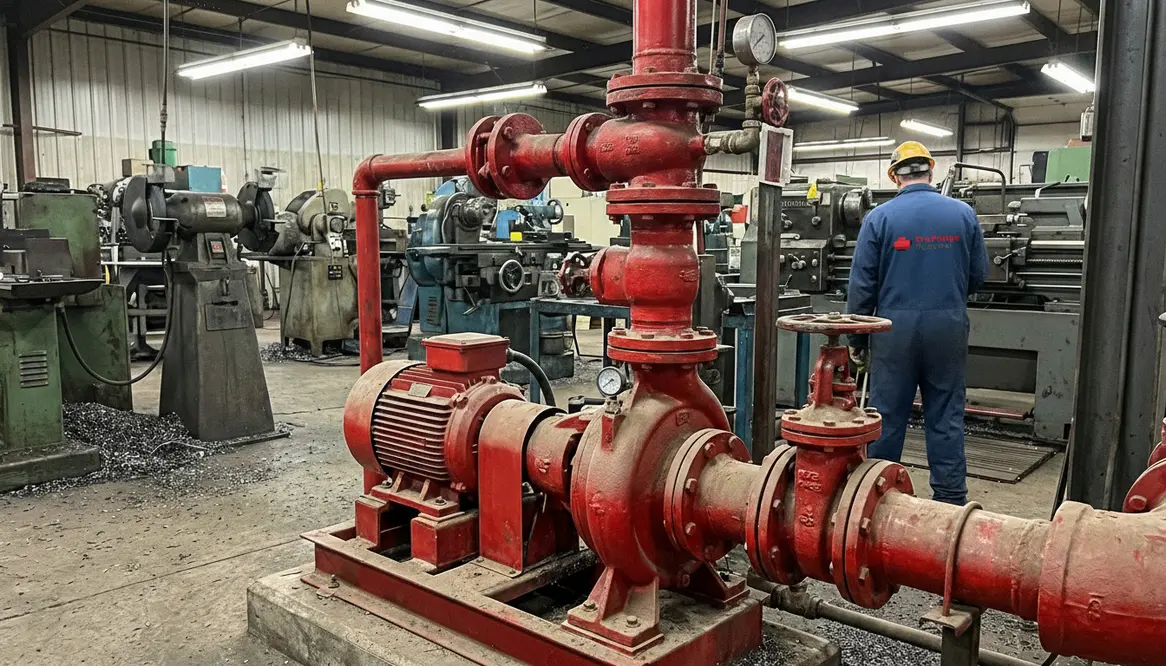
Fire Pumps for Metalworking High-Heat Fire Risk
I have spent enough time around metalworking floors to know one truth: when heat, sparks, and oil decide to mingle, they do not ask for permission. They simply go to work. That is why Fire risk in high-heat industrial settings is not just a line in a safety manual. It is a living, breathing concern that shapes how we design protection systems. In facilities where furnaces roar and grinders sing, fire pumps are not a luxury. They are the quiet guardians waiting for their moment to act.
Why Metalworking Facilities Demand Serious Fire Pump Systems
Metalworking operations create a unique blend of hazards. You have flammable fluids, airborne particles, and constant ignition sources. Because of that, I approach every facility with the same mindset: assume a fire will happen, then build a system that refuses to lose.
Fire pumps in these environments must deliver reliable pressure and flow, even when conditions get ugly. For example, machining oils can accelerate flame spread, while enclosed areas can trap heat. Therefore, the system must respond fast and maintain consistent water delivery across large industrial footprints.
Additionally, code compliance is not optional. Standards like NFPA 20 guide fire pump installation, but real world conditions often push beyond minimum requirements. I always recommend designing for performance, not just compliance. After all, minimum effort rarely wins maximum safety.
What Fire Pump Capacity Do I Need for a Metalworking Plant?
This is the question I hear most often, and thankfully, it has a clear path to an answer.
The required capacity depends on hazard classification, building size, and suppression system demand. However, in metalworking facilities, I typically see higher flow requirements due to elevated hazard levels.
Here is how I break it down:
- Evaluate sprinkler system demand based on hazard classification
- Factor in hose stream allowances
- Account for pressure losses across large industrial layouts
- Ensure redundancy where downtime is not acceptable
Moreover, facilities with large-scale operations often benefit from split systems or multiple pumps. That way, if one unit decides to take an unscheduled vacation, the rest of the system keeps working. And yes, machines fail. Usually at the worst possible time. It is almost a talent.
Fire Risk in High-Heat Industrial Settings and System Design Choices
Designing for Fire risk in high-heat industrial settings requires more than selecting a pump off a catalog page. It means thinking about how heat, debris, and operational intensity affect every component.
For instance, I prioritize durable pump types like diesel driven systems in facilities where electrical reliability may be compromised. Likewise, I consider vertical turbine pumps when water supply comes from static sources like tanks or reservoirs.
Then there is placement. Pumps should sit in protected environments, away from the very hazards they are meant to defend against. It sounds obvious, yet I have seen systems placed in areas where heat exposure could compromise performance. That is like parking a fire truck inside a bonfire and hoping for the best.
Finally, I always integrate monitoring systems. Real time alerts ensure that pressure drops or mechanical issues do not go unnoticed. In industrial settings, silence is rarely a good sign.
Key Components That Make or Break Performance
Mechanical Reliability
Pumps must operate under stress without hesitation. That includes strong casings, quality impellers, and dependable drivers.
Water Supply Integrity
A powerful pump means nothing without a steady supply. I always verify source capacity and refill rates.
Control Systems
Modern controllers provide precision and diagnostics. They are the brains behind the operation.
Redundancy Planning
Backup pumps or dual power sources ensure continuous protection.
Pressure Management
Relief valves and pressure regulators prevent system overload.
Maintenance Access
If technicians cannot reach it easily, it will not get serviced properly. That is just human nature.
Installation and Maintenance That Actually Works
I have seen beautiful designs fail because of poor installation. Alignment issues, incorrect pipe sizing, or even rushed commissioning can undermine the entire system. Therefore, I stay involved from design through final testing.
Once installed, maintenance becomes the real hero. Weekly churn tests, regular inspections, and annual flow testing keep the system ready. Skipping maintenance in a metalworking facility is like skipping oil changes in a race car. It might run for a while, but the ending will not be pretty.
Furthermore, I always recommend training on site personnel. A well trained team can spot issues early and respond quickly. Technology helps, but people still make the difference.
Common Mistakes I See and How to Avoid Them
Even experienced operators make missteps. Fortunately, most of them are preventable.
- Undersizing pumps for future expansion needs
- Ignoring system pressure losses across large layouts
- Overlooking backup power requirements
- Delaying maintenance due to production schedules
However, the biggest mistake is treating fire protection as a checkbox. In high demand environments, that mindset does not hold up. A thoughtful, proactive approach always wins.
FAQ: Fire Pump Requirements for Metalworking Facilities
Fire risk in high-heat industrial settings sits at the center of every decision here, from pump selection to layout and testing frequency.
Conclusion
When I look at a metalworking facility, I do not just see machines. I see heat, motion, and risk waiting for the right moment. A well designed fire pump system stands ready to meet that moment without hesitation. If you are planning or upgrading a system, now is the time to act. Reach out to experts who understand industrial demands and build protection that does not flinch when it matters most.