Fire Sprinkler Pressure Essentials for Commercial Systems
Fire Sprinkler Pressure Requirements: What I Want Every Commercial Property Owner to Know
When I talk about fire sprinkler pressure, I am talking about the quiet force that helps a sprinkler system do its job when the heat rises and the room gets serious. In a commercial or industrial building, pressure is not a nice extra. It is the difference between a system that reacts fast and one that just stands there looking important. And yes, that is about as useful as a security guard asleep on a couch. I want to walk you through what pressure means, why it matters, and how I keep a system ready for real life.
How I define sprinkler pressure in plain terms
Sprinkler pressure is the force that pushes water through the pipes and out of the heads when heat opens them. In simple terms, it decides how far and how fast the water can reach the fire. If the pressure is too low, the spray can fall short. If it is too high, the system may waste water or create control issues. Either way, balance matters.
For commercial and industrial properties, I always treat pressure as part of the full fire protection plan, not a side note. The building size, ceiling height, occupancy, hazard level, and pipe layout all shape the final number. That is why one building may need a very different setup from another, even if both look strong on paper. Buildings, like people, can be dramatic in different ways.
What affects fire sprinkler pressure in a building
I look at several things before I call a system ready:
- Water supply strength from the main source
- Pipe size and pipe length
- Number of sprinkler heads in use
- Height of the building and upper floor demand
- Type of hazard inside the space
- Backflow devices, valves, and fittings that can slow flow
Each part can reduce or support pressure. For example, a warehouse with high storage racks may need a different setup than an office tower. Also, long pipe runs can lose pressure as water travels. That means the first plan is not always the final answer. I have seen systems that looked fine until the math started talking back.
What fire sprinkler pressure should be for commercial systems
There is no single number that fits every building. Instead, codes and design standards guide the needed pressure based on the system type and the building risk. A light hazard office area may need less demand than a high challenge industrial space. However, the key idea stays the same. The system must deliver enough water at the right time and at the right location.
Here is the practical way I think about it. The pressure must support the sprinkler density, the required flow, and the most remote area of the system. That remote area is often the toughest part to serve, because water must travel farther and fight more friction on the way. In other words, the system needs to perform at the far edge, not just near the pump room where life is easy.
How I test and verify the system
First column
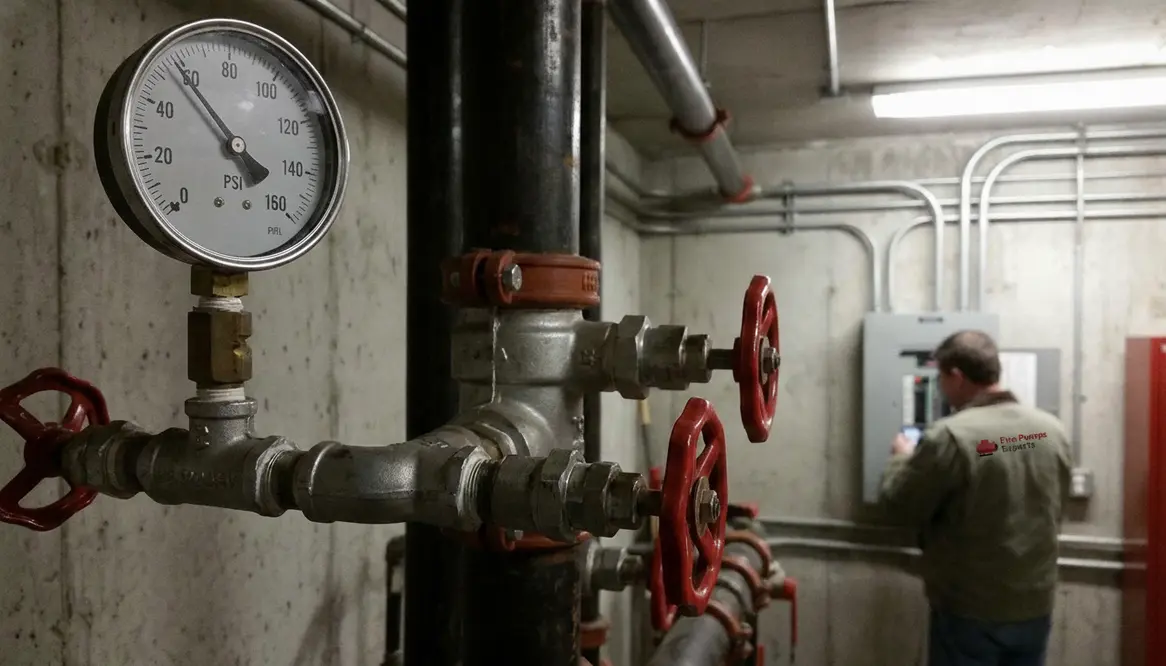
I start with a visual review of gauges, valves, and pump status. Then I check static pressure, which tells me what the system shows at rest. After that, I review residual pressure during flow, because that gives me the real story under demand. Finally, I compare the readings with the design intent and code needs.
Second column
I also watch for signs of trouble like weak pressure, surging, slow response, or odd gauge movement. Those clues often point to a clogged line, a failing valve, or a supply issue. A system can look calm and still hide a problem. Fire protection, much like a good movie plot, usually gets interesting right before things go wrong.
When I work with commercial and industrial facilities, I also keep maintenance records close. They help me spot pressure loss over time. A drop in performance can reveal aging equipment, hidden leaks, or pump wear long before an emergency does.
Why fire pump support matters
Some buildings cannot rely on city supply alone. In those cases, a fire pump helps boost water pressure so the system can meet demand. That is especially important in large facilities, tall buildings, or sites with high hazard areas. If the pressure demand is too much for the supply, the sprinkler system may fall short when it matters most.
If you want a deeper look at pump support, I recommend reviewing this Los Angeles fire pump service resource. It helps explain how pump performance supports sprinkler demand in larger properties. I also like to compare system planning with guidance from Kord Fire, since good fire safety always starts with clear design and reliable service.
FAQ
Conclusion
I never treat sprinkler pressure like background noise, because it decides whether a system can do its job under stress. If you manage a commercial or industrial property, now is the time to check your readings, review your design, and confirm your pump support if needed. A strong system protects more than equipment. It protects people, uptime, and peace of mind. Reach out today and make sure your building is ready before the alarm ever speaks.